

Rooster spurs are easy to ignore until one gets long, hooks toward the leg, or catches you during handling. Most of the time they are simply a normal part of an adult rooster. The trouble starts when a spur becomes overgrown, breaks, or begins injuring another bird.
I would not trim every rooster just because the spurs look sharp. A normal spur usually needs no treatment. What matters is whether it is interfering with walking, rubbing the leg, repeatedly tearing a hen during mating, or creating a real safety problem for the bird or handler.
That distinction is important because a mature spur is not just a big toenail. There is a bony core under the hard outer layer, so aggressive cutting, twisting, or trying to pull the entire spur off can cause pain and bleeding.
What Are Rooster Spurs?
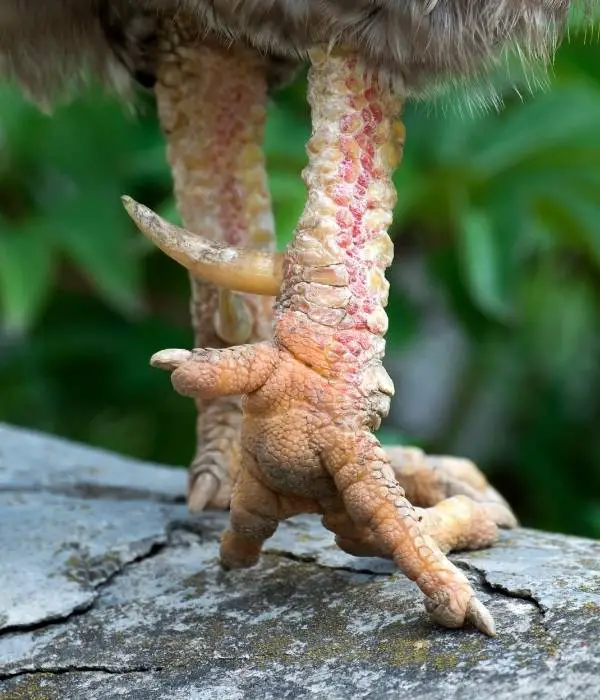
A rooster spur grows from the back and inner side of the lower leg. The visible outer part is hard and keratinized, but underneath it is a bony projection connected to the leg.
That is why I treat spur care differently from ordinary nail trimming. You can safely blunt or shorten the outer tip when necessary, but cutting too deeply can reach living tissue and cause significant bleeding.
Spurs vary a lot from bird to bird. Some stay fairly short and blunt. Others become long, sharp, or curved with age. Breed, genetics, age, and individual growth all play a part.
If you are still trying to work out whether a young bird is male or female, spur development is only one clue. Our hen vs. rooster guide looks at several differences together.
When Do Rooster Spurs Start Growing?
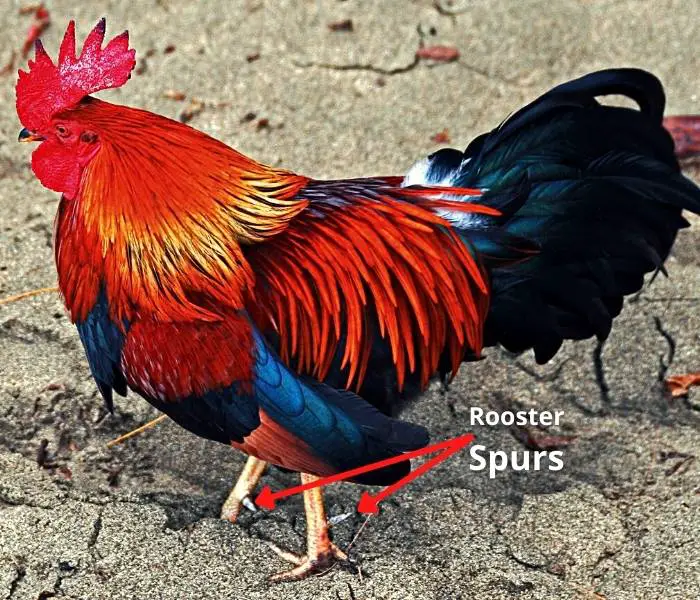
You may notice small spur buds while a cockerel is still young. They become more obvious as he matures and can keep growing throughout his life.
I would avoid giving one exact age such as six months because birds do not develop at the same rate. A fast-maturing rooster can show obvious spur growth earlier than a slower-maturing bird.
Older roosters are the ones I watch most closely. Their spurs have had more time to lengthen and curve, so the chance of a tip turning back toward the leg or snagging on something is greater.
Can Hens Have Spurs Too?
Yes. A spur does not automatically mean a chicken is a rooster.
Roosters usually develop the larger, more prominent spurs, but some hens also grow noticeable ones. In hens they are often smaller, although there are exceptions.
Why Do Roosters Have Spurs?
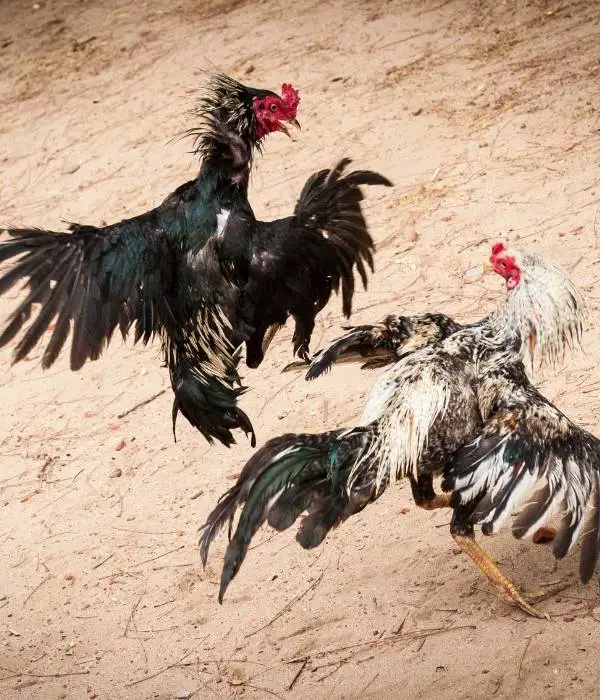
Spurs are natural weapons. A rooster can use them while fighting another rooster, defending himself, or striking at something he sees as a threat.
I would not describe large spurs as a dependable predator-control system, though. A rooster may challenge a dog, hawk, or other threat, but that does not make the flock safe. Secure housing and predator protection still do the real work.
Spurs can also become part of the problem inside the flock. Roosters use their legs during fights, and a sharp spur can turn a short dominance dispute into a serious injury. If you keep more than one male, our guides on roosters fighting and chicken pecking order are more useful than simply trying to trim every spur.
Do Rooster Spurs Need to Be Trimmed?
Usually, no.
I would leave a normal spur alone. Trimming becomes worth considering when the spur itself is creating a welfare or safety problem.
Signs a spur has become too long
- The tip curls toward or presses into the rooster’s leg.
- The bird’s gait changes or he struggles to walk normally.
- The spur repeatedly catches on wire, bedding, fencing, or other objects.
- It breaks or develops a crack.
- Hens are repeatedly being cut during mating.
- The sharp point is creating a recurring handling problem.
Overgrown spurs can eventually interfere with movement or curve inward. That is when shortening the tip can improve comfort and reduce injury risk.
How to Safely Shorten an Overgrown Rooster Spur
The safest home approach is conservative. You are shortening the outer point, not trying to remove the entire spur.
University Extension guidance commonly recommends taking only a limited amount from the tip. A practical upper limit is roughly the outer one-third of the spur, followed by smoothing the edge. If you cannot judge where the living tissue begins, stop and ask a poultry veterinarian or experienced avian veterinarian to do it.
- Have another person hold the rooster securely if possible.
- Work in good light so you can see the spur clearly.
- Remove only the sharp outer tip, not the base.
- Smooth a rough edge with a file rather than continuing to cut deeper.
- Stop immediately if you reach sensitive tissue or bleeding starts.
I would rather leave a spur slightly longer than cut too far. The aim is to blunt the dangerous point while protecting the tissue underneath.
Why I Would Not Use the Potato, Oil, or Pliers Methods
You will find home methods online that suggest heating the spur with a potato, coating it with oil, or gripping it with pliers and twisting until the outer sheath comes off.
I do not recommend those methods as routine backyard care.
The spur has living structures underneath the hard outer layer. Pulling or twisting the sheath off can expose sensitive tissue and cause pain, bleeding, or damage. A controlled, conservative trim is easier to judge and easier to stop.
When a Veterinarian Should Remove a Spur
Permanent spur removal is different from trimming the tip.
In an adult rooster, complete surgical removal involves the bony portion of the spur. That makes it a veterinary procedure, not a home grooming job.
I would contact a veterinarian if the spur is badly deformed, deeply cracked, embedded in the leg, repeatedly bleeding, infected, or damaged close to the base. The same applies if the bird is limping or you suspect the underlying bone is involved.
Broken or Bleeding Rooster Spur: What to Do
A broken spur can bleed more than you expect. Keep the rooster calm first, then look at where the damage occurred.
For a minor superficial injury, apply gentle pressure with clean gauze until bleeding slows. Flush dirt away with sterile saline. If you use an antiseptic such as chlorhexidine or iodine, use an appropriately diluted veterinary preparation according to its directions rather than pouring a strong household disinfectant into the wound.
I would avoid repeatedly using hydrogen peroxide or alcohol on a healing wound because they can irritate tissue. I would also skip household raw honey and dish-soap treatments in favor of simple wound cleaning and veterinary advice when the injury is more than superficial.
Keep the injured bird somewhere clean if flockmates are pecking the wound. Watch for continued bleeding, swelling, heat, discharge, bad odor, limping, lethargy, or loss of appetite.
If bleeding does not stop with pressure, the spur is torn close to the base, the wound is deep, or the rooster seems unwell, call a veterinarian.
Can Rooster Spurs Injure Hens During Mating?
Yes. A rooster grips and balances with his feet during mating, and long sharp spurs can scratch or tear the hen’s sides or back.
If the same hens keep developing cuts, look at the whole situation. Overgrown spurs may need blunting, but also check rooster-to-hen pressure, feather loss, crowding, and whether one particular hen is being overmated.
Rooster Spurs and Human Aggression
Trimming a sharp spur can reduce the severity of an accidental scratch, but it does not fix an aggressive rooster.
I would not kick, roll, pin, or hold an attacking rooster for long periods to “show dominance.” Those methods can injure the bird and keep you within striking distance.
Give yourself space instead. Use a barrier such as a bucket, board, or feed container if you need to move through the run safely. Wear sturdy clothing and footwear, avoid crouching beside a rooster that has already attacked people, and change the management setup if you have to.
Young children should not be sent into an enclosure unsupervised with a rooster that has shown human-directed aggression. A spur puncture can be deep even when the rooster is not large.
Stress and flock changes can affect behavior, so our stress in chickens guide may help when aggression appears suddenly. But persistent attacks on people should be treated as a management and safety issue, not just a spur problem.
FAQs About Rooster Spurs
At what age do roosters develop spurs?
Small spur buds can appear while a cockerel is still young, but there is no single age when every rooster develops a large spur. Growth varies with breed, genetics, and maturity, and the spurs can continue growing throughout life.
Can hens grow spurs too?
Yes. Roosters usually develop the larger and more obvious spurs, but some hens also grow noticeable spurs. A spur alone does not prove that a chicken is male.
Do rooster spurs need to be trimmed?
Not routinely. Leave normal spurs alone unless they become overgrown, curl toward the leg, interfere with walking, repeatedly injure hens, break, or create another genuine welfare or safety problem.
How much of a rooster spur can you safely trim?
Be conservative and shorten only the outer tip. Extension guidance commonly limits trimming to roughly the outer one-third of the spur. If you cannot judge the safe depth, have a veterinarian or experienced poultry professional do it.
Do rooster spurs grow back after trimming?
Yes. If you only blunt or shorten the keratinized outer portion, it will continue growing and may need maintenance again later. Regrowth speed varies from bird to bird.
Are rooster spurs poisonous?
No. Rooster spurs are not poisonous or venomous. However, a spur puncture can be deep and contaminated, so human wounds should be cleaned promptly and medically assessed if they are deep, dirty, swollen, very painful, or otherwise concerning.
Final Thoughts
Most rooster spurs are easier to manage when you leave them alone and simply check them from time to time.
I pay closer attention once a spur starts curving toward the leg, changing the rooster’s gait, breaking, or causing repeated injuries. At that point, a small conservative trim is very different from trying to remove the whole spur.
If the damage is close to the base, the spur is embedded, or you cannot tell how much can safely be shortened, that is a good place to stop and let a veterinarian handle it.
Sources
- Cooperative Extension: Trimming Spurs on Roosters
- UC Davis Poultry Health: Care of Beak, Nails, and Spurs
- Western University of Health Sciences: Rooster Spur
- University of Minnesota Extension: Small-Scale Poultry Care
- Merck Veterinary Manual: Injuries and Accidents of Birds
- Cooperative Extension: External Anatomy of Chickens
