
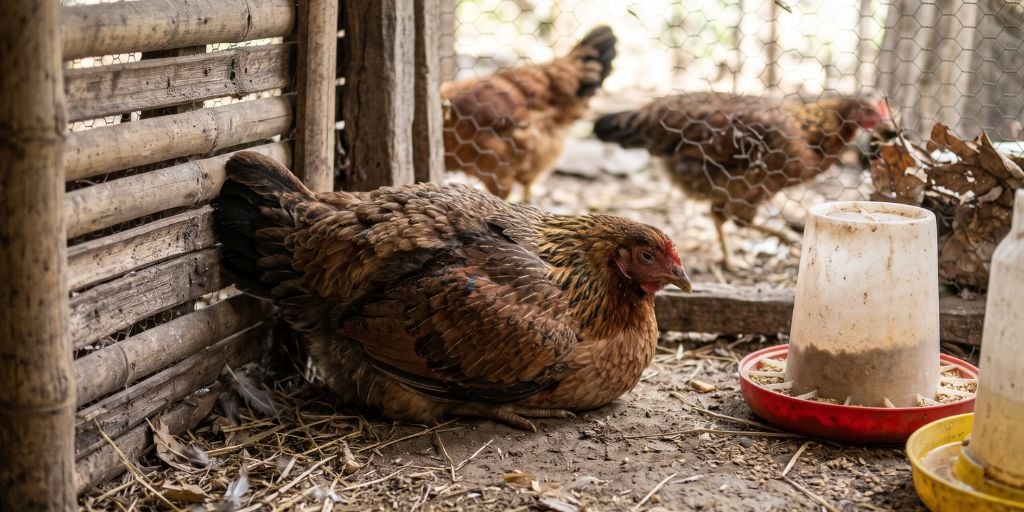
You’ve gone to check your chickens and have noticed one of your hens is standing in a corner with her feathers fluffed up, head tucked, and barely moving.
While fluffed-up chickens can be normal, they can also be a sign of illness. Chickens will fluff their feathers when resting, cold or to get into a comfortable position. However, if your hen is consistently hunched, looking sleepy, and not participating in normal flock behavior, it could be an early sign of illness.
It is important to look at the overall behavior of your chicken. If your chicken is not eating, drinking, or breathing normally; has abnormal droppings; or is hunched and not interacting with the rest of the flock, then this can give you an idea of how quickly your chicken needs attention.
This article explains why your chicken may be fluffed-up and not moving, what to look for, and how to identify any signs that your chicken needs to see a vet.
Why Is My Chicken Fluffed-Up and Not Moving?
Chickens will often fluff up their feathers to trap air around their body or to change where their feathers are. However, they can also do this when they are unwell, uncomfortable, or conserving energy.
If your chicken is sick, they may be hunched with their head tucked, eyes half-closed, and feathers look very loose. They may also stand or sit for long periods of time without exploring or interacting with the rest of the flock.
Changes in activity, posture, eating, and behavior are important to assess any health issues your chicken may have. Chickens often hide when they are unwell so even small changes in behavior can be significant. (Merck Veterinary Manual)
The most important thing to consider is whether this type of behavior is normal for your chicken. Our guide to chicken behavior explains other normal behaviors you can look for.
Is It Normal for Chickens to Fluff Up Their Feathers?
It can be completely normal for chickens to fluff up their feathers. However, healthy chickens will still be responsive and interact with their normal behaviors.
1. Cold
Chickens will often fluff up their feathers when it is cold to create an insulating layer of air. You may also notice a few chickens huddling together with one foot tucked into their feathers.
If your chickens are fluffing up and huddling, then they may just be reacting to the cold. As long as they are still alert, eating normally and active then it is likely just to keep warm.
However, if your bird is still looking weak, unresponsive, or not interacting with the rest of the flock, then it is not necessarily due to them being cold. They can still get ill during the winter.
2. Resting/Sleeping
Chickens can be quite quiet during the day, especially if they have just eaten or been outside. They may lie down and slightly fluff up their feathers while closing their eyes for a short rest.
If your chicken is resting, then they should still behave appropriately when something happens. If they are frequently closing their eyes when the rest of the flock are active and looking very hard to wake, then you should investigate further.
To learn more about normal roosting and resting behaviors, please see our guide to how chickens sleep.
3. Preening and Dust Bathing
Chickens will often shake and fluff their feathers while preening. This helps them to rearrange their feathers and remove any loose material.
A healthy chicken may look very round for a short period of time. However, they should quickly shake their body and return to normal.
4. Broody
If your hen is broody, then she may fluff up her feathers when someone approaches her nest. She may also make noises to protect herself, peck and spend a lot of time on her nest.
While this behavior can explain some changes in behavior, do not ignore any obvious signs of weakness or breathing issues. For more information on typical nesting behavior, please see our article on caring for a broody hen in winter.
5. Molting
Chickens going through molt can look quite scruffy and inactive. Some chickens may prefer to stay in quieter areas of the coop.
However, if they are molting normally, they should not be extremely weak, not drinking, and struggling to stand. Our chicken molting guide explains how to differentiate between normal molting and signs to investigate further.
Fluffed-Up Chicken vs Sick Chicken
The easiest way to assess your chicken is to look at their behavior and compare it to what is normal for your flock. Usually one sign on its own will not tell you the reason for the issue.
| Issue | Possible Cause | Action to Take |
|---|---|---|
| Shortly fluffed-up while resting | Normal behavior or feather adjustment | Observe if they return to normal behaviors |
| Fluffed-up due to cold | Possibly cold | Check they have good shelter and water and are active |
| Fluffed-up due to being broody | Normal behavior while protecting the nest | Check they are eating, drinking, and in good condition. |
| Standing alone with closed eyes | Possibly ill or weak | Check for any other signs and contact a vet |
| Hunched with poor appetite | Pain, disease or other issues | Get them seen by a vet as soon as possible |
| Fluffed-up chick with weakness or abnormal droppings | Possibly a serious illness including intestinal disease | Get them seen by a vet as soon as possible |
| Unable to stand, collapsing or struggling to breathe | Medical emergency | Contact an emergency vet |
| Multiple birds suddenly weak or dying | Environmental problem or possibly contagious disease | Contact a vet or animal health authority as soon as possible |
Generally, if your chicken is just standing with their feathers fluffed up for a short period of time and then going back to scratching, eating and interacting then they are not as concerning. If they are hunched and showing multiple signs, then they should be looked at even if there is no obvious injury.
Signs Your Fluffed-Up Chicken May Be Ill
Some chickens will look very different to the rest of the flock when they are unwell. Look out for:
 Share on Pinterest
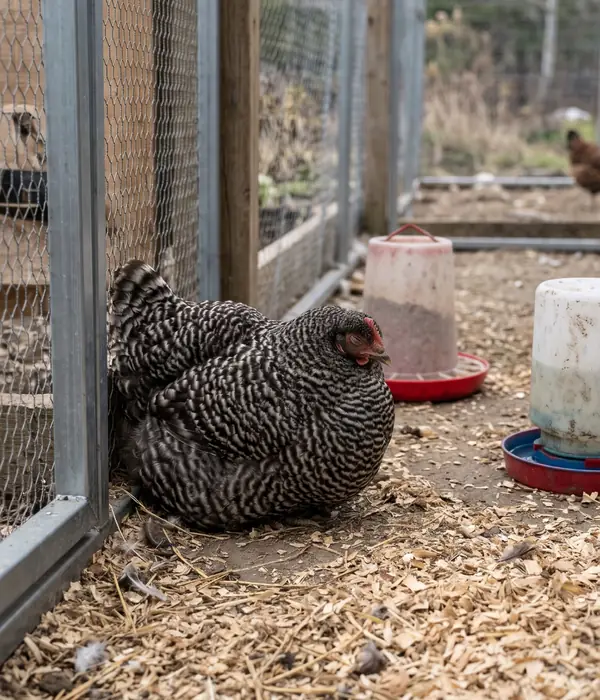
- Standing away from the rest of the flock for long periods of time
- Eyes closed or half-closed during normal active times
- Not approaching the feeder or waterer
- Wings drooping or head lowered
- Unwilling to walk, weakness or abnormal gait
- diarrhea, blood in droppings or dirty vent
- Struggling to breathe, tail bobbing or gasping
- Very pale, blue or purple comb
- Straining repeatedly or swollen belly
- Sudden changes in egg laying
- Multiple chickens with similar symptoms
- Sudden unexplained deaths
These signs do not necessarily indicate the same illness and cannot be used on their own to diagnose a disease. However, they are important to look out for as they can indicate a pattern, sudden changes, and the chicken getting worse.
Common Causes of Hunched Chicken With Fluffed-Up Feathers
1. General Illness/Infection
Many illnesses can cause chickens to become less active and rest more. This can cause them to have fluffed-up feathers as they are uncomfortable and not preening and moving normally.
Viral, bacterial, and other diseases can cause similar symptoms, so it can be difficult to tell what infection they have. A vet may need to examine your chicken and suggest tests.
If your hen is also refusing to eat and drink, then please see our guide on chicken not eating or drinking to find out why this is a concern.
2. Coccidiosis and Other Intestinal Issues
Coccidiosis is an intestinal disease caused by microscopic parasites called Eimeria. Young chickens are particularly prone to this illness, but older chickens can also get it under certain circumstances.
Your chickens may show signs of having ruffled feathers, becoming less active, having a poor appetite, and having abnormal droppings. (Mississippi State University Extension)
Blood in their droppings can be a worrying sign. However, not all chickens will have this. Dark cecal droppings can be normal, so do not assume they have coccidiosis.
A vet can investigate any intestinal issues using their history, examination, and correct tests. Our chicken poop guide explains what normal chicken poop looks like, what diarrhea looks like, and what to look out for.
3. Crop Issues
A chicken with crop issues may be uncomfortable, eat less, or just stand still. Their crop may look very large or not empty normally overnight.
However, just because their crop is full doesn’t mean they have impacted crop or sour crop. Their history, droppings, overall condition, and a vet examination are important.
If you notice your chicken has a consistently full crop, please see our article on chicken crops that are still full in the morning. Do not try to squeeze their crop, turn them upside down, or make them vomit.
4. Egg Binding and Other Reproductive Issues
A laying hen with reproductive issues may stand in an abnormal position and be unwilling to move. Some hens will strain repeatedly, tail pump or stand upright.
Egg binding can be a possible cause, but internal laying, inflammation, and other reproductive issues can cause similar signs. It can be difficult to tell the difference between these issues based on their posture.
If your hen is repeatedly straining, weak, or has a swollen belly, then they need to be seen by a vet as soon as possible. Our egg-bound chicken guide explains the warning signs.
5. Respiratory Disease
Chickens with respiratory issues may become quieter and not as interested in their usual activities. Some chickens will also start to sneeze, cough, have runny noses, swollen eyes, or abnormal breathing.
If your chicken has respiratory symptoms and is fluffed up, then they may be uncomfortable, have an infection, or have another issue. Different causes can cause similar symptoms; see our guide to chicken sneezing and coughing.
If they are struggling to breathe badly, then this is an emergency. If they are stretching their neck, gasping, or showing strong breathing efforts while resting, then please see our guide on chickens gasping for air.
6. Mites, Lice and Other Parasites
External parasites can make chickens uncomfortable. If they have a heavy infestation, then this can cause them to become weak, in poor condition, or anemic.
Look out for excessive scratching, damaged feathers, visible parasites, or clumps of eggs on the shaft of their feathers. Our chicken mites, lice and fleas guide explains where to look and how they differ.
Not all fluffed-up chickens will have parasites. Don’t try to treat them with something random, as this can delay finding the real issue. If they are significantly weak and pale, then get them seen by a vet.
7. Injury/Pain/Bullying
A chicken may be standing in one place, as it is painful to walk/stand. They may have an injured foot, swollen joint, wound, or other issues.
They may also be being bullied, and so a shy chicken may not want to go to the feeders. Our chicken pecking order guide explains how repeated aggression can be an issue.
Look for any visible injuries and how the other chickens are interacting with your chicken. Don’t assume it is a social issue if they are also looking lethargic, with closed eyes, and not walking normally.
8. Cold/Heat Stress or Poor Coop Conditions
If multiple chickens are fluffing up their feathers, then it may be due to the cold. However, if just one chicken is hunched and the rest are acting normally then there may be other causes.
Heat stress will generally have a different pattern. They will pant, need more water, and may have drooping wings. Poor ventilation, damp bedding, extreme temperatures, and no suitable shelter can make any existing health issues worse.
Before assuming they have a specific disease, look at the temperature, airflow, water, and overall conditions in the coop. Improving their conditions can help reduce stress, but they will still need to be seen by a vet if they are seriously ill.
What To Check
You don’t need to do a complicated examination, but there are a few simple things you can do to get useful information.
1. Observe From A Distance
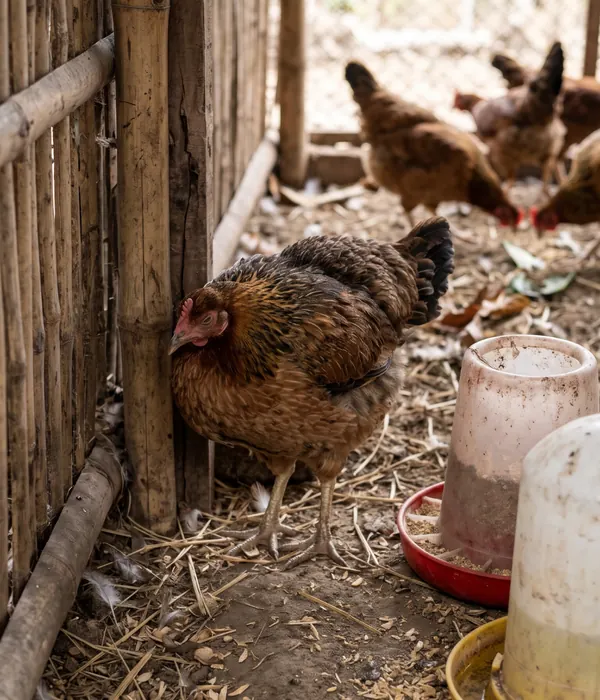
Before trying to catch your chicken, look at how they are behaving. Are they walking normally, interacting with the rest of the flock, opening their eyes and trying to eat and drink?
 Share on Pinterest
Are they consistently hunched or just during a short rest? If possible, record a short video of their posture and behavior to show the vet.
2. Eating and Drinking
Are they going to the feeder? Are they drinking? They may be standing near the waterer but not actually drinking.
If they are not eating as much but are still active, then this is different from refusing to eat and drink and becoming weak. If they are unable to drink, not drinking, or getting worse, then they need to be seen by a vet as soon as possible.
3. Droppings
Look at the droppings in the area they have been resting. Are they having persistent diarrhea, fresh blood, abnormal consistency, or no droppings?
One abnormal dropping won’t confirm a disease. Normal cecal droppings can look concerning to those who aren’t experienced. If they are visibly unwell, then take clear photos and ask the vet if they would like a fresh sample of their feces.
4. Breathing
Look at how they are breathing while resting. Are they breathing with strong tail movement, an open beak, or repeatedly stretching their neck?
If they are struggling to breathe badly, they need to be seen by a vet as an emergency. Try not to handle them unnecessarily, as this can make it harder for them to breathe.
5. Eyes, Comb and Feathers
Are their eyes half-closed, runny, and swollen? Is their comb very pale? Are their feathers dirty around their vent? Can you see any obvious injuries?
A healthy chicken will have a comb that varies in color and size depending on their breed, age, laying status etc. The most important thing is if they are looking abnormal and are weak.
6. Feet, Legs and Belly
Are they putting weight on both legs? Do they have a swollen foot, visible wounds, repeated straining, or an abnormally large belly?
Don’t force their belly. Don’t try to manipulate any eggs or internal organs. If they have any painful or swollen areas, then they need to be carefully assessed by a professional.
7. Rest Of The Flock
Look around the coop to see if any other chickens are displaying similar postures or changes in behavior. Are they all able to access clean water and appropriate feed?
If multiple chickens are suddenly becoming weak, then this can indicate a shared issue with their environment or a contagious illness. Contact a vet or animal health as soon as possible if you think they have a serious disease affecting the whole flock.
Immediate Action
1. Determine If They Need Emergency Treatment
If your chicken is collapsing, unable to stand, struggling to breathe, or showing serious neurological symptoms, then they need to be seen by a vet as an emergency. If they are getting worse quickly or have severe bleeding or trauma, then they need to be seen as an emergency.
If you are unsure how serious their symptoms are, then our article on when to call a vet for chickens can help you recognize any important warning signs. Don’t waste time trying different home remedies.
2. Provide A Quiet Safe Environment
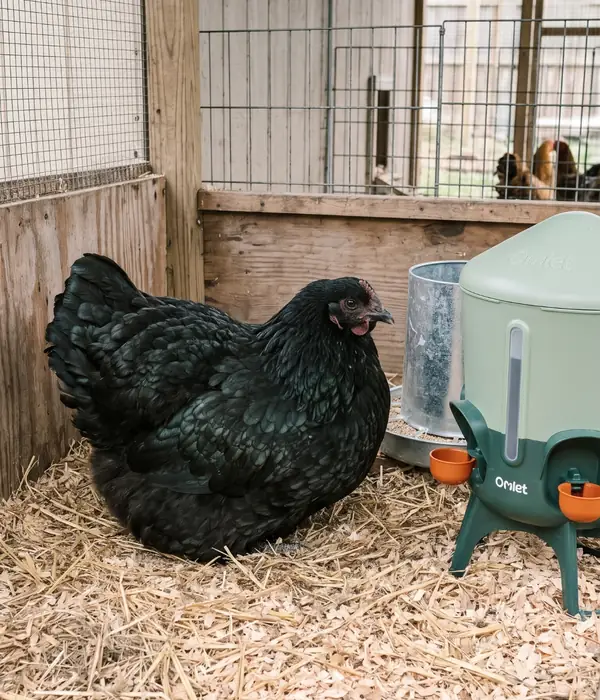
If it is safe to do so and they are not suspected to have a contagious disease, then place them in a quiet, clean, and well-ventilated area to recover. Provide dry bedding, protection from predators, and a suitable environment for the weather.
 Share on Pinterest
If they are already weak then they can get more stressed from being caught multiple times. Handle them gently and support their body. Don’t squeeze their breast as they need to move their chest to breathe.
3. Provide Clean Water and Suitable Feed
Provide them with clean water and suitable chicken feed. If they are alert, then allow them to drink.
Don’t try to pour anything into their beak or force-feed them if they are weak. This can cause them to inhale fluids.
4. Don’t Overheat
If they are cold, then they may benefit from a dry, sheltered area. However, not all sick chickens need extra heat. Overheating can be harmful, especially if they are already panting and struggling to regulate their body temperature.
If they are hot and panting, provide them with shade, airflow, and cool drinking water. If they are struggling badly with heat then they need to be seen by a vet as an emergency.
5. Protect The Rest Of The Flock
If it is safe to do so try to minimize contact between sick and healthy chickens. Use separate equipment where possible and wash your hands after handling poultry items.
If you suspect they have a serious contagious disease such as avian influenza, then don’t move them unnecessarily, and contact your vet or animal health for instructions. Our biosecurity for chickens guide explains simple steps you can take to reduce disease transmission.
What Not To Do
While it may be tempting to try a variety of treatments when your hen seems unwell, it is important to remember that a hunched posture is a symptom and not a diagnosis. Doing the wrong things can make things worse.
- Force-feed.
- Give old antibiotics.
- Give human painkillers, cold medicine, or other human medicines.
- Aggressively rub or squeeze a swollen crop.
- Try to break or push out an egg.
- Turn them upside down.
- Give random dewormers or parasite treatments.
- Move or handle a struggling bird.
- Just assume that they are molting or broody.
- Wait several days if they are obviously unwell.
Your vet will be able to advise you on the best course of action based on what is going on and what could be causing it. Providing supportive care can help make your bird feel more comfortable but will not necessarily cure the underlying disease.
When to See a Vet
If your chicken is fluffed up, hunched, and not as active as usual, this should be checked as soon as possible. If they are becoming reclusive, losing strength or showing multiple signs of illness, see them the same day.
Get them seen urgently if they are:
- Collapsing or unable to stand.
- Very weak or unsteady.
- Gasping, struggling to breathe, or exaggerated tail movements.
- Having seizures or other severe neurological signs.
- Bleeding heavily or having obvious severe injury.
- Straining frequently and are weak or suspected to be egg-bound.
- If they are very weak or rapidly getting worse as a chick.
If you are noticing sudden deaths, multiple birds being very ill, or a combination of respiratory, neurological, and unusual comb issues, this could be a reportable disease. In the US, the USDA APHIS advises that if you are concerned about your flock, you should contact your state vet or USDA Animal Health contacts.
When contacting your vet, tell them when your chicken was last acting normally. Tell them their age, egg laying, appetite, water, feces, and breathing, and if any other birds are affected.
Can a Hunched Fluffed-Up Chicken Get Better?
Depending on the cause of the issue and the severity of the issue, some chickens can recover well if the underlying issue is found and treated. If the issue is due to a temporary environmental issue, they may get better once the environment is corrected. If it is a serious infection, reproductive issue, injury, or if they are very weak, then they may need veterinary treatment, and the prognosis can be much more variable.
Don’t just look at their feathers to see if they are getting better. They should gradually start to eat, drink, move around, be aware and interact with the flock.
How to Minimize Illness in Your Backyard Flock
While you can’t prevent all illness, keeping your flock well managed will help minimize many avoidable issues. The best habits to get into are those that will help you recognize issues early and keep their environment clean and appropriate.
- Feed them a complete feed for their age and purpose.
- Provide clean fresh water.
- Keep their bedding dry and their coop well-ventilated.
- Avoid overcrowding at feeding, watering, and roosting areas.
- Check for mites, lice, injury, and abnormal feathers.
- Monitor their appetite, feces, and egg laying.
- Quarantine and follow biosecurity protocols for new birds.
- Minimize contact with wild bird droppings or contaminated water.
- Have contact details for a poultry vet or local diagnostic lab.
Monitor your flock while they are eating, scratching, resting, and interacting. Knowing what is normal for each bird will help you recognize when they are becoming still, hunched, or reclusive.
Final Thoughts
Your chickens may be fluffed up because they are resting, keeping warm, or just being broody. However, if they are becoming hunched, still frequently shutting their eyes, or becoming reclusive, then you need to take a closer look.
Rather than trying to determine what is wrong based on their posture, check their breathing, appetite, drinking, feces, movement, and environment. This will help you realize how urgent the issue is and provide useful information for your vet.
Don’t try to force-feed them or give them random medication. If they are looking weak, then get them seen by a professional. One of the most useful skills you can have as a backyard chicken keeper is recognizing when they are acting abnormally.
FAQs
Why is my chicken fluffed-up?
Chickens often puff up their feathers when they are cold, resting, broody, or just adjusting their feathers. If they also seem weak, very sleepy, or not interested in food, then they could be unwell.
Why is my chicken standing still with their eyes shut?
Chickens will sometimes shut their eyes while resting, but if they are doing this frequently when they should be active, it could be a sign they are uncomfortable or unwell. Check they are responding normally, walking well, and eating/drinking.
Is a hunched chicken always suffering from coccidiosis?
Chickens can become hunched for many different reasons. While it could be coccidiosis, particularly if they are younger, less active, and have abnormal feces, you may need to get them tested by a vet.
Can chickens become hunched due to cold weather?
Chickens may puff up their feathers and huddle together to keep warm in cold weather. However, if they are becoming weak, shutting their eyes, and not eating, then this shouldn’t be dismissed.
Why is my chick fluffed-up and not moving?
If your chick is looking fluffed-up and not moving, they could be too cold, dehydrated, injured, or unwell. Immediately check the conditions in their brooder. If they are weak, not drinking, or getting worse, then see your vet as soon as possible.
Should I isolate my fluffed-up chicken?
Isolating an obviously unwell or injured chicken can make it easier to monitor them and reduce stress from other birds and potential disease. If you suspect they have a serious contagious disease, then follow the advice from your vet or animal health authority and don’t move them unnecessarily.
Should I give my hunched chicken antibiotics?
No, don’t give them antibiotics just because they are fluffed-up and looking unwell. Different issues will require different treatment, and antibiotics won’t help with viral infections or many non-infectious issues.
How long can my chicken be fluffed-up for?
There isn’t a reliable timeframe for how long they can be fluffed-up for. If they are becoming reclusive, have abnormal breathing, aren’t eating/drinking, or are becoming weak, then they should be seen by your vet as soon as possible.
