
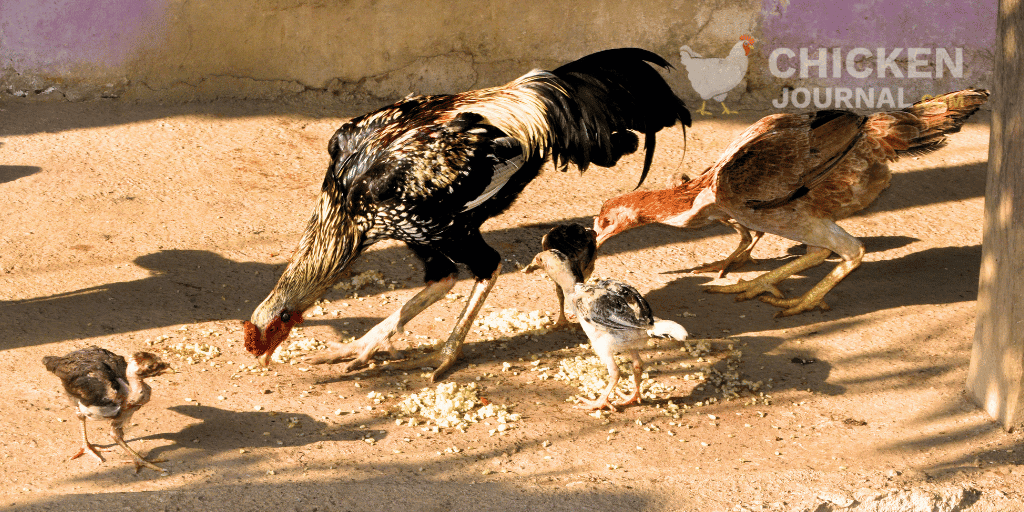
Yes, chickens can eat rice, both cooked and uncooked. Plain rice is safe as an occasional treat, but it should never replace a complete poultry feed.
If you have a little leftover rice from dinner, your flock can usually have some. The key is to keep it plain, fresh, and limited enough that your chickens still fill up on their balanced feed first.
I have fed both cooked rice and dry rice to my own chickens, including Naked Necks and Ayam Cemani. They handle it just fine when it is offered as a small extra rather than a main meal.
The bigger problems come from overfeeding scraps, giving spoiled rice, or serving heavily seasoned leftovers. Those are much more realistic concerns than the old story that dry rice will swell inside a chicken and make it sick.
Can Chickens Eat Cooked Rice?

Plain cooked rice is perfectly fine for adult chickens.
White rice, brown rice, basmati, jasmine, and other plain varieties can all be fed once they have cooled. You do not need to cook rice especially for your flock, but leftover plain rice is an easy treat if you already have some.
I would avoid turning it into a regular bowl-sized meal. Rice is mostly a carbohydrate food, while your chickens need a carefully balanced mix of protein, amino acids, vitamins, minerals, energy, and calcium from their main ration.
Think of rice the same way you would think of other chicken treats: useful for variety and enrichment, but not a replacement for feed.
Can Chickens Eat Uncooked Rice?

Yes. Healthy adult chickens can eat small amounts of uncooked rice too.
Chickens are built to handle whole grains. Food passes through the digestive tract to the gizzard, where muscular grinding and grit help break harder foods into smaller particles.
Poultry nutrition research has also used rice and broken rice successfully in balanced chicken diets. So there is no good reason to tell backyard keepers that a few dry grains are automatically dangerous.
If your flock is eating whole grains regularly, make sure they have access to appropriate insoluble grit. Chickens that live on a complete commercial feed alone may not need added grit, but whole grains and forage increase the need for it.
Will Uncooked Rice Expand in a Chicken’s Crop?
This is the old rice myth that refuses to disappear.
Dry rice does absorb water during cooking, but that does not mean a few grains will suddenly expand inside a chicken and cause the crop to burst or become impacted.
Chickens routinely eat dry grains, seeds, and other hard foods. Their digestive system is designed for exactly that kind of material.
Crop impaction is a real condition, but it is more often associated with long fibrous material, poor access to grit, dehydration, foreign material, or other digestive problems. Plain dry rice is not something I would single out as a typical cause.
How Much Rice Can Chickens Eat?
This matters more than whether the rice is cooked or uncooked.
University of Georgia Extension gives a very practical rule for table scraps: offer only what your flock can clean up in about 10 to 20 minutes.
I like that rule because flock size varies so much. A handful that disappears quickly in a large flock may be too much for three hens.
If rice is still lying around long after the birds lose interest, you offered too much. Remove leftovers before they become wet, moldy, or attractive to rodents.
Your chickens’ complete feed should always make up the bulk of the diet. Rice is the extra, not the foundation.
White Rice vs Brown Rice for Chickens
Both are okay.
White rice has had the bran and germ removed, so it is lower in fiber and some nutrients. It is mainly an easy source of carbohydrate energy.
Brown rice keeps the bran layer, so it contains more fiber and more of several naturally occurring nutrients.
That does not mean brown rice needs to become your flock’s “health food.” Rice is still only a treat in a normal backyard diet, and balanced poultry feed is far more important nutritionally.
Brown rice also tends to contain more inorganic arsenic than white rice because arsenic concentrates in the outer layers of the grain. For an occasional handful, that is not something I would panic about. It is simply another good reason not to rely heavily on rice.
What About Arsenic in Rice?
Rice absorbs arsenic from soil and water more readily than many other cereal crops. That is why arsenic comes up so often when people talk about human diets and rice.
For backyard chickens getting a little rice now and then, the bigger practical concern is still dietary imbalance, not arsenic poisoning from an occasional treat.
If you eat a lot of rice yourself and want to reduce arsenic, the FDA notes that cooking rice in excess water and draining it can reduce inorganic arsenic by roughly 40 to 60 percent, although that method can also wash away some nutrients from enriched rice.
For the flock, variety is the easiest answer. Rice can be one treat among many rather than something offered every day.
Can Baby Chicks Eat Rice?

I would keep rice very limited for young chicks.
The reason is not that dry rice will swell in the crop. The real issue is that chicks grow quickly and need a complete starter feed with the right protein, amino acids, vitamins, and minerals.
A few grains are unlikely to cause a healthy chick a problem, but there is no advantage to letting chicks fill up on rice when starter feed already gives them what they need.
If chicks eat treats or grains beyond complete starter feed, make sure they also have access to chick-sized grit.
Can Chickens Eat Paddy Rice?

Yes, chickens can eat paddy or whole-grain rice, including rice that still has the hull.
The hull makes it much more fibrous than polished white rice, so I would treat it more like a whole grain than a soft table scrap.
Birds eating whole grains should have access to grit, and the main diet still needs to be nutritionally complete. A flock scratching through a little spilled paddy is very different from trying to formulate the entire ration around whole rice.
Can Chickens Eat Rice Bran?
Rice bran can be used in poultry diets, but I would not treat it like a free-choice supplement.
It contains useful nutrients, but it is also high in fiber, contains phytate and other antinutritional factors, and can become rancid because of its fat content.
That means rice bran makes more sense as a measured ingredient in a properly formulated feed than as something you casually dump into the feeder because it sounds healthy.
Can Chickens Eat Sticky Rice?
Yes, a small amount of plain sticky or glutinous rice is fine.
I would break up large sticky clumps before tossing them to the flock so one bird does not try to swallow a big lump while everyone else piles in.
There is no strong reason to treat ordinary sticky rice as a special crop-impaction hazard in a healthy chicken. The same rule applies as with other rice: keep portions small and keep the main diet balanced.
Can Chickens Eat Leftover Rice?
Yes, if the rice is still fresh and has been stored safely.
This is where I am more cautious than I am with dry rice. Cooked rice can support bacterial growth if it sits warm for too long.
USDA food-safety guidance says perishable leftovers should normally be refrigerated within 2 hours, or within 1 hour when the temperature is above 90°F.
So if a pot of rice has been sitting on the counter all afternoon, I would not give it to the chickens just to avoid wasting it.
Fresh scraps are fine. Spoiled scraps belong in the trash or compost, not in the coop.
Can Chickens Eat Fried Rice?
I would usually skip it.
Fried rice often contains extra oil, butter, soy sauce, salt, sauces, and other seasonings. None of that improves the treat for your flock.
A teaspoon-sized taste is unlikely to cause a crisis in a healthy adult bird, but if you have plain rice available, the plain version is the better choice.
Can Chickens Eat Rice Cakes or Rice Cereal?
Plain, unsalted rice cakes can be offered in small pieces, but they do not add anything your chickens actually need.
Sweetened breakfast cereals and flavored rice snacks are less useful because they may contain extra sugar, salt, flavorings, or oils.
If you are choosing between a processed rice snack and a handful of plain rice, I would choose the plain rice every time.
Can Chickens Eat Rice and Beans?
Plain rice with fully cooked beans can be offered in a small amount.
Do not feed raw or undercooked dried beans. Some raw beans contain lectins and other compounds that are reduced by proper cooking.
I also would not call rice and beans a “complete protein” for chickens and treat it like a complete poultry ration. Chickens have very specific requirements for amino acids, vitamins, minerals, energy, and calcium that a casual bowl of rice and beans does not cover.
What Is the Best Way to Feed Rice to Chickens?
- Use plain cooked or uncooked rice.
- Let cooked rice cool before offering it.
- Avoid spoiled or moldy rice.
- Keep heavily salted, oily, sugary, or sauced rice out of the flock’s regular treats.
- Offer only what the flock can finish within about 10 to 20 minutes.
- Make sure complete feed remains the main diet.
- Provide grit when birds eat whole grains or forage heavily.
That is really all you need. Rice does not require complicated preparation for adult chickens.
When Should You Not Feed Rice?
Skip the rice if it is moldy, sour-smelling, slimy, or has been left at room temperature for too long.
I would also avoid offering a large amount when your birds are already filling up on treats, because the real nutritional risk is displacement of complete feed.
For chicks, sick birds, or underweight birds, prioritize the diet they actually need rather than trying to fill them with scraps.
Frequently Asked Questions
Can chickens eat white rice?
Yes. Chickens can eat plain white rice either cooked or uncooked in moderation.
Can chickens eat brown rice?
Yes. Brown rice is safe in small amounts. It contains more fiber and nutrients than white rice, but it can also contain more inorganic arsenic, so there is no reason to feed large amounts.
Can chickens eat uncooked rice?
Yes. Healthy adult chickens can digest uncooked rice. The idea that a few dry grains will swell dangerously inside the crop is a myth.
Can chickens eat cold cooked rice?
Yes. In fact, cooked rice should be cooled before feeding. Just make sure it was stored safely and has not spoiled.
Can chickens eat rice every day?
I would not make rice a daily staple. Complete poultry feed should provide most of the diet, while rice and other table scraps remain occasional extras.
Can baby chicks eat rice?
A few grains are unlikely to hurt a healthy chick, but starter feed is far more important. Young chicks should not fill up on rice instead of a complete starter ration.
Can chickens eat rice with salt?
A tiny accidental amount is unlikely to be a problem, but heavily salted rice should not be a regular chicken treat. Plain rice is the simpler option.
Conclusion
Rice is one of the easier kitchen leftovers to share with chickens.
You can offer it cooked or uncooked, white or brown, as long as it is plain, fresh, and kept to a sensible amount.
You do not need to worry about dry rice exploding in the crop, and you do not need to cook rice specially for adult chickens.
The rule I would remember is much simpler: complete feed first, rice second. If your flock finishes a small rice treat quickly and then goes back to eating its normal ration, you are using it exactly as a treat should be used.
For more on building a balanced flock diet, see my complete guide to feeding chickens.
