

Do chickens lay black eggs? No recognized domestic chicken breed is known to naturally lay a truly black eggshell.
That surprises a lot of people because some chickens, especially the Ayam Cemani and Kadaknath, have dramatically dark skin, feathers, and tissues. It is easy to assume a black chicken must also lay a black egg, but eggshell color and body pigmentation are controlled by different biological processes.
If you want the darkest chicken eggs you can realistically collect, look at breeds such as Marans. Their eggs can be very dark reddish brown or chocolate-russet, but they are still brown rather than black.
In this guide, I’ll explain where the black-egg myth comes from, what Ayam Cemani and Kadaknath hens actually lay, how black chicken genetics work, which birds really can produce very dark eggs, and what you should know if an egg from your flock looks unusually dark.
Black Egg Quick Answer
| Bird | Typical egg color |
| Ayam Cemani chicken | White-tinted to cream |
| Kadaknath chicken | Light brown to brown |
| Black Copper Marans chicken | Very dark reddish brown or chocolate-russet |
| Cayuga duck | Can be black early in the laying season, fading lighter later |
| Emu | Dark green |
Do Any Chicken Breeds Lay Truly Black Eggs?
No recognized chicken breed naturally produces a truly black shell as its normal egg color.
Chicken eggs can be white, cream, tan, brown, very dark brown, blue, green, or shades created by combinations of those pigments and surface coatings. Research on domestic poultry eggshells identifies pigments such as protoporphyrin IX, which is strongly associated with brown shells, and biliverdin, which contributes to blue-green coloration.
That pigment system can create some amazingly dark eggs, but in chickens it does not create the naturally black shell many social-media posts claim to show.
If a chicken egg looks almost black in a photo, it may actually be an exceptionally dark brown egg, an egg photographed in poor lighting, an egg with a heavy surface bloom, or an edited image.
For a wider look at shell colors, see my guide to chickens that lay colored eggs.
Do Ayam Cemani Chickens Lay Black Eggs?
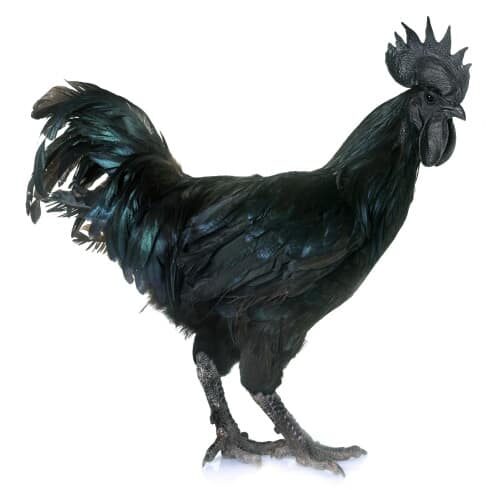
No. Ayam Cemani hens do not lay black eggs.
The Ayam Cemani Breeders Association lists the breed’s eggshell color as white-tinted to cream. That is a much more reliable description than the black-egg photos and rumors that circulate online.
The confusion comes from the bird itself. A well-pigmented Ayam Cemani can have black feathers, skin, comb, wattles, mouth tissue, connective tissue, bones, and internal tissues. That dramatic appearance makes a black egg sound believable even though the shell does not follow the same pigment pattern.
I would also ignore old claims that a “real” Ayam Cemani must cost a specific amount. Prices vary by breeder, bloodline, age, quality, location, and demand. Egg color is not a way to verify whether an Ayam Cemani is genuine.
If you want the full breed profile, see my updated Ayam Cemani chicken guide.
Do Kadaknath Chickens Lay Black Eggs?

No. Kadaknath hens do not normally lay black eggs either.
A published study evaluating Kadaknath egg quality found the shells were brown or light brown. In that dataset, brown shells were more common than light-brown shells.
Kadaknath chickens are famous for dark pigmentation in the body, but just like the Ayam Cemani, that does not mean the pigment is transferred into the eggshell as black color.
You can read more about their traits in my Kadaknath chicken guide.
Why Are Ayam Cemani and Kadaknath Chickens So Black?
The answer is a condition called fibromelanosis, often shortened to Fm.
Fibromelanosis causes unusually heavy deposition of dark pigment in tissues such as skin, connective tissue, blood vessels, and some internal organs.
Genetic research on Ayam Cemani and Silkie chickens links this trait to a complex rearrangement on chromosome 20 involving duplication around the EDN3 gene. EDN3 helps regulate pigment-cell development, and increased activity associated with the duplicated region contributes to the striking dark-tissue phenotype.
This is more complicated than saying a chicken simply “inherits extra melanin” from one parent. The trait has a specific genetic basis involving structural changes and altered pigment-cell biology.
Most importantly, fibromelanosis affects body pigmentation, not the eggshell in the same way. An Ayam Cemani can look black from comb to toes and still lay a cream-colored egg.
How Chicken Eggshell Color Actually Works
Eggshell color develops as the egg moves through the hen’s reproductive tract.
White shells have little visible pigment. Brown eggs get much of their color from protoporphyrin IX, while blue-green eggs are associated strongly with biliverdin. Different genes, pigment amounts, and deposition patterns create the range of colors you see in backyard flocks.
Brown pigment is concentrated heavily toward the outer shell and cuticle. That is why a very dark brown egg can sometimes look lighter when scratched or after parts of the surface coating wear away.
Shell color is strongly genetic, but intensity can also change with age, stress, laying cycle, and individual variation. One hen can lay her darkest eggs at one point in the season and lighter eggs later without changing breeds.
What Chicken Lays the Darkest Eggs?
If your goal is the darkest chicken egg rather than a truly black egg, Marans are one of the best places to look.
The Marans Chicken Club USA describes Marans as famous for large, very dark chocolate-russet eggs. Egg shade varies with genetics, laying cycle, stress, and breeding quality, so not every Marans hen lays the dramatic dark shells you may see in show photos.
Black Copper Marans are especially popular with backyard keepers who want dark brown eggs. The best examples can look almost chocolate-colored, sometimes with darker speckles.
They still are not black eggs. Think very dark reddish brown, not coal black.
For more detail, see my Black Copper Marans chicken guide.
Do Emus Lay Black Eggs?

Emu eggs are sometimes described casually as black because they can be extremely dark, but dark green is the more accurate description.
The New South Wales government describes emu clutches as dark green. In dim light, mature emu eggs can look almost black, which is probably why they often appear in lists of “black eggs.”
They are also dramatically larger than chicken eggs, so there is little chance of confusing the two in real life.
Do Cayuga Ducks Lay Black Eggs?

Yes, Cayuga ducks can lay eggs that look black, especially early in the laying season.
The Livestock Conservancy lists Cayuga egg color as black fading to white late in the season. It also notes that eggs often become gray or greenish-blue as the season progresses before becoming much lighter.
The important correction is that an individual egg does not need to sit in the nest for weeks and slowly turn from black to white. The change happens across the sequence of eggs the duck lays during the season.
So if someone shows you a genuinely black-looking domestic poultry egg, a Cayuga duck is a much more believable source than a chicken.
Can a Chicken Egg Look Almost Black?
Yes. A chicken egg can look nearly black without actually being black.
- Very dark Marans eggs: Deep reddish-brown shells can look almost black in dim light.
- Heavy speckling: Dense dark spots can visually merge together.
- Bloom: The natural cuticle can change how a shell reflects light and may give some eggs a gray, plum, or dusty cast.
- Lighting and camera exposure: Phone cameras can make dark brown eggs look much darker than they are.
- Dirt or staining: Mud, manure, or nest material can make part of a shell look black.
If you are unsure, look at the clean, dry egg in natural daylight next to a white or medium-brown egg. That makes the true shell color much easier to judge.
Are Black Chicken Egg Yolks Real?
Black chickens do not normally produce black yolks.
USDA food-safety guidance explains that normal yolk color varies through shades of yellow depending largely on the hen’s diet. Hens eating more yellow-orange plant pigments can produce darker yellow or orange-looking yolks.
A green-gray ring around the outside of a hard-cooked yolk is also not automatically a spoilage sign. USDA says it commonly comes from overcooking or from iron and sulfur reacting at the yolk surface, and the green color is safe to eat.
On the other hand, a raw egg with a clearly abnormal appearance, unusual odor, pink or iridescent albumen, or obvious spoilage should be discarded. Egg safety depends on handling, refrigeration, shell condition, contamination, and cooking, not on whether the hen has black feathers.
Does Eggshell Color Affect the Inside of the Egg?
Not in the simple way many people assume.
A dark brown Marans shell does not mean the yolk must be darker than a white Leghorn egg. Yolk color is influenced strongly by diet, while shell color comes mainly from genetics and pigment deposition in the shell gland.
When you crack a healthy dark-shelled chicken egg, the inside looks like a normal chicken egg: albumen, yolk, chalazae, and the usual membranes. The old version of this article incorrectly suggested that cracking a Marans egg could reveal “another egg inside.” That is not a normal breed trait.
Why the Black Chicken Egg Myth Keeps Spreading
The myth is easy to understand because Ayam Cemani chickens are visually extreme.
When people hear that a chicken can have black feathers, skin, mouth tissue, bones, and organs, the next assumption is often, “Then the eggs must be black too.”
Social media makes the rumor stronger. A dark Cayuga duck egg, an emu egg photographed in low light, a heavily edited image, or an extremely dark Marans egg may be reposted with the wrong breed name.
The simple way to avoid the confusion is to separate body pigment from eggshell pigment. They are related to different biological systems.
Frequently Asked Questions
What breed of chicken lays black eggs?
No recognized domestic chicken breed is known for naturally laying a truly black eggshell. Marans can lay extremely dark brown eggs, but they are still brown.
What color eggs do Ayam Cemani chickens lay?
The Ayam Cemani Breeders Association describes their eggs as white-tinted to cream.
What color eggs do Kadaknath chickens lay?
Published Kadaknath egg-quality research reports brown and light-brown shells, not black shells.
Which chicken lays the darkest brown eggs?
Marans are among the most famous dark-egg breeds. Well-bred Black Copper Marans can produce very dark reddish-brown or chocolate-russet eggs, although shade varies by genetics and laying cycle.
Do emus lay black eggs?
Emu eggs can look almost black, but dark green is the more accurate natural color.
Do Cayuga ducks lay black eggs?
Yes, some Cayuga duck eggs are black early in the laying season. Later eggs often become gray, greenish-blue, and eventually much lighter.
Is a green ring around a cooked yolk unsafe?
Usually no. USDA says a green ring around a hard-cooked yolk commonly results from overcooking or iron and sulfur reactions and is safe to eat.
Conclusion
Black chickens are real. Truly black chicken eggs, as a normal breed trait, are not.
Ayam Cemani hens lay white-tinted to cream eggs, while Kadaknath hens lay brown to light-brown eggs. Their striking body color comes from fibromelanosis, a genetic pigmentation trait that does not turn the eggshell black.
If you want very dark chicken eggs, look at Marans. If you want a bird that can produce genuinely black-looking eggs, Cayuga ducks are the better example. Emu eggs can also appear almost black from a distance, but their true color is dark green.
So when you see a viral photo claiming an Ayam Cemani laid a jet-black egg, treat it with skepticism. The bird may be black, but its egg is not.
Sources
- Ayam Cemani Breeders Association: Standard of Perfection
- PLOS ONE / PMC: Origin and Evolution of Fibromelanosis in Domesticated Chickens
- Livestock Research for Rural Development: Kadaknath Egg Quality Traits
- Poultry Science: Recent Advances in Avian Egg Science
- Marans Chicken Club USA
- The Livestock Conservancy: Cayuga Duck
- NSW Environment and Heritage: Emus
- USDA FSIS: Shell Eggs from Farm to Table
Featured image attribution preserved from the original article: Wikimedia Commons contributor Thegreenj.
