

A chicken coop roof does more than keep rain off the roost. It has to shed water, stand up to your local weather, keep predators out, and work with the coop’s ventilation instead of trapping heat and moisture inside.
That is why the “best” roof is not the fanciest one. For most backyard coops, a simple shed or gable roof built correctly will do the job better than a complicated design that is difficult to flash, ventilate, and repair.
The roofing material matters too. Metal is light and durable. Asphalt shingles are familiar and easy to match to a house or shed. Polycarbonate can add daylight, but clear panels can also add heat. Whatever you choose, the roof structure, slope, fasteners, overhangs, and ventilation still have to make sense for your climate.
Penn State’s 2026 small-flock housing guidance puts the priorities in the right order: poultry housing should stay dry, protect birds from weather and predators, and provide adequate ventilation. The roof is a big part of all three.
What a Good Chicken Coop Roof Needs to Do
Before choosing a roof shape, think about the problems the roof has to solve on your property.
- Keep the coop dry. Rain should run off instead of finding its way into bedding, nest boxes, or wall framing.
- Handle local wind and snow. Roof shape helps, but framing, fasteners, span, pitch, and anchoring matter just as much.
- Provide shade. A roof should protect the coop interior and preferably part of the run or doorway from direct sun.
- Work with ventilation. Warm, moist air still needs a way out near the top of the coop.
- Block predators. Roof panels, sheathing, vents, and roof-to-wall joints should not leave easy entry points.
- Be maintainable. A roof that looks clever but is difficult to inspect or repair can become a problem after a few seasons.
If you are building from scratch, also check local building rules before choosing rafter spacing, roof span, or snow-load assumptions. A small coop may not require a permit in some areas, but the weather still puts real loads on the structure.
Best Chicken Coop Roof Designs
Most backyard coops do not need an unusual roof. A few simple shapes cover almost every practical situation.
1. Shed or Lean-To Roof
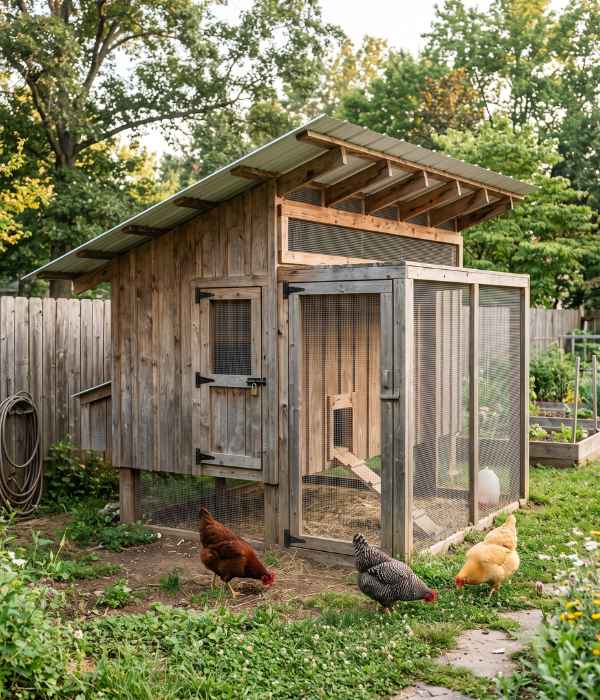
For a small DIY coop, the shed roof is hard to beat. One wall is higher than the other, creating a single slope from high side to low side.
It uses fewer rafters and fewer complicated cuts than most other roof shapes. Rain is easy to direct away from the coop, and the higher wall gives you a convenient place for protected high ventilation.
The main thing to watch is drainage. The slope has to meet the minimum requirements of the roofing material you use. A metal panel system may allow a different minimum slope than asphalt shingles, so follow the manufacturer’s instructions instead of copying one universal roof pitch from the internet.
A generous overhang on the low side can keep rain away from the wall, pop door, and foundation. In windy areas, do not rely on roof orientation alone. Anchor the roof and wall framing for your local wind conditions.
2. Gable Roof
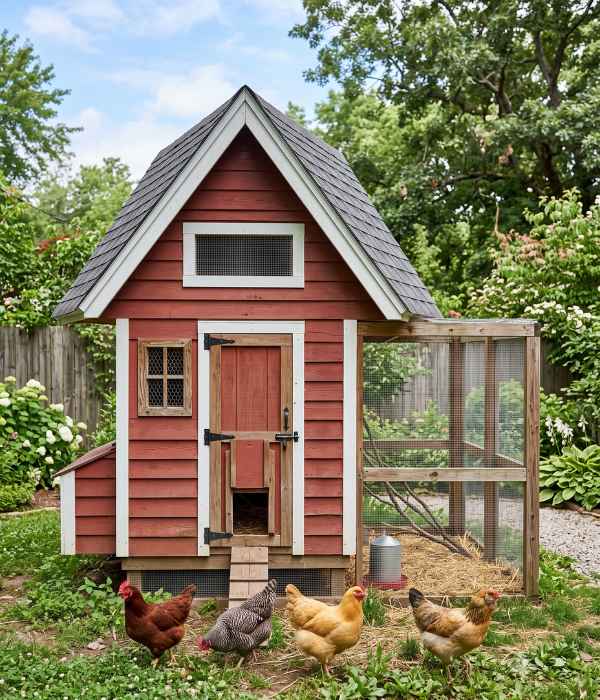
A gable roof has two slopes that meet at a ridge. It is one of the most familiar roof styles and works well on both small walk-in coops and larger backyard houses.
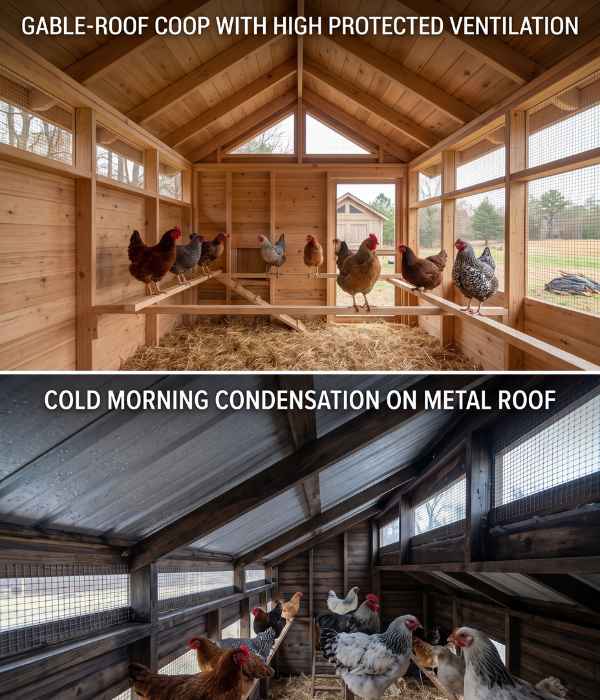
The shape sheds rain well, gives you useful headroom in the center, and makes it easy to add gable vents or a ridge-vent system when the roof assembly is designed for one.
But a gable roof does not automatically ventilate the coop. You still need real openings. Warm, moist air needs an exit near the top while fresh air enters elsewhere without creating a strong draft directly across the roost.
That extra interior height is useful mainly for human access, roost layout, and ventilation space. Chickens themselves do not need a cathedral ceiling.
For a deeper ventilation setup, see our chicken coop ventilation guide.
3. A-Frame Roof
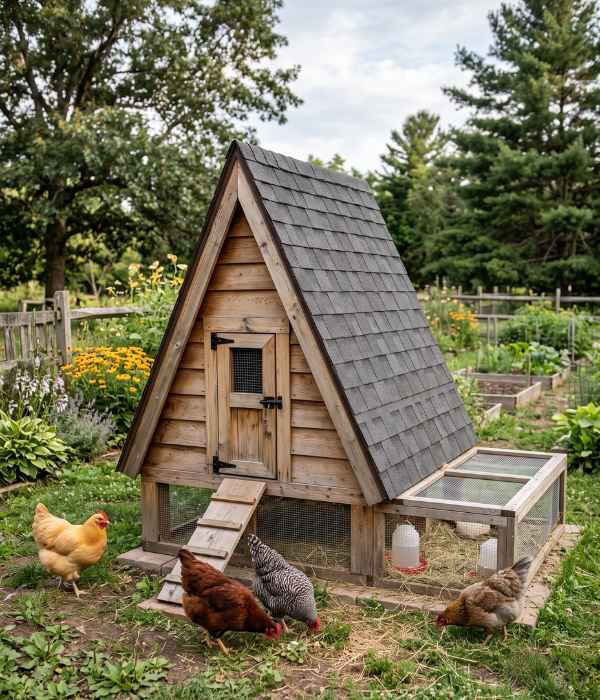
An A-frame uses two steep roof slopes that come down close to the ground or lower wall line. You see this design often on compact coops and chicken tractors.
The steep sides shed rain quickly and can work well where snow is part of the winter. The tradeoff is usable interior space. Near the sloping walls, headroom disappears fast.
For a very small movable coop, that may not matter. For a walk-in coop that you plan to clean with a rake or carry bedding into, a standard gable or shed roof is usually easier to live with.
Do not assume the steep shape alone makes an A-frame safe for heavy snow. Rafter size, spacing, span, joints, and foundation anchoring still need to match local loads.
4. Gambrel Roof
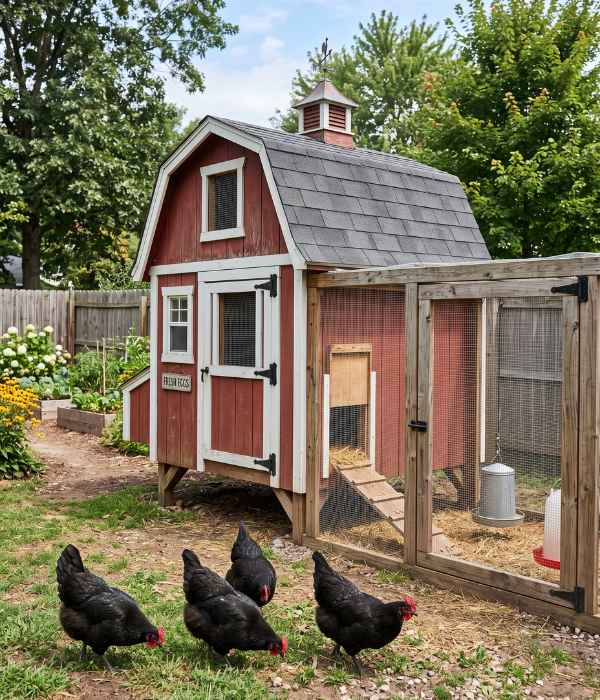
A gambrel roof gives the coop a small-barn look. Each side has two slopes, with a shallower upper section and a steeper lower section.
The real advantage is interior volume. If you want a tall walk-in coop, storage space above the main chicken area, or a barn-style design that matches other buildings, gambrel can make sense.
The downside is construction complexity. More roof angles mean more framing, more cuts, and more places where flashing and roofing details have to be right. For an ordinary backyard flock, you usually do not need this extra complexity unless you genuinely want the extra storage or appearance.
5. Low-Slope or Nearly Flat Roof
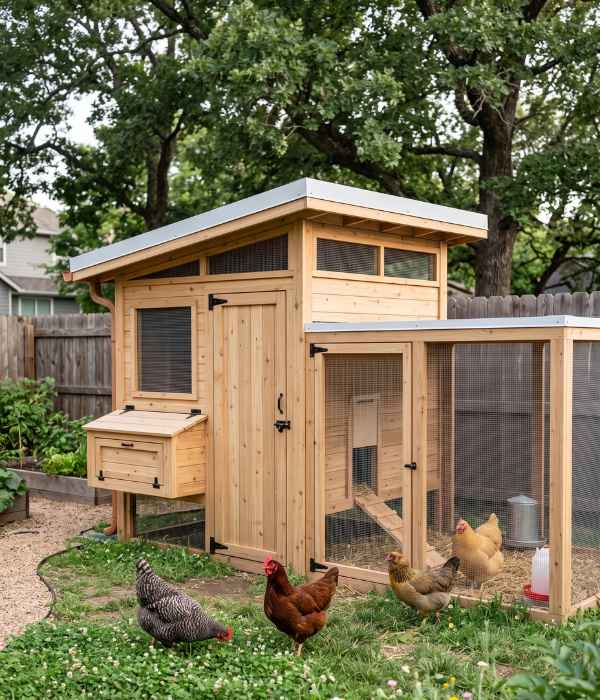
Some modern coops use a roof that looks flat from the ground. The important word is looks. A roof should still be designed so water drains rather than sits in puddles.
Low-slope roofs can work on small structures when the roofing system is specifically rated for the slope. They also keep the overall coop height low.
They are less forgiving if drainage, flashing, or snow loading is ignored. If you regularly get heavy snow or wind-driven rain, a steeper shed or gable roof is often the simpler backyard choice.
Less Common Chicken Coop Roof Ideas
The first five designs above are the roof shapes most backyard keepers are likely to consider. The next three are less common, but they are still part of the same eight-design comparison. I have kept the numbering continuous so you can compare every roof shape without the list restarting or becoming confusing.
6. Rounded or Curved Roof
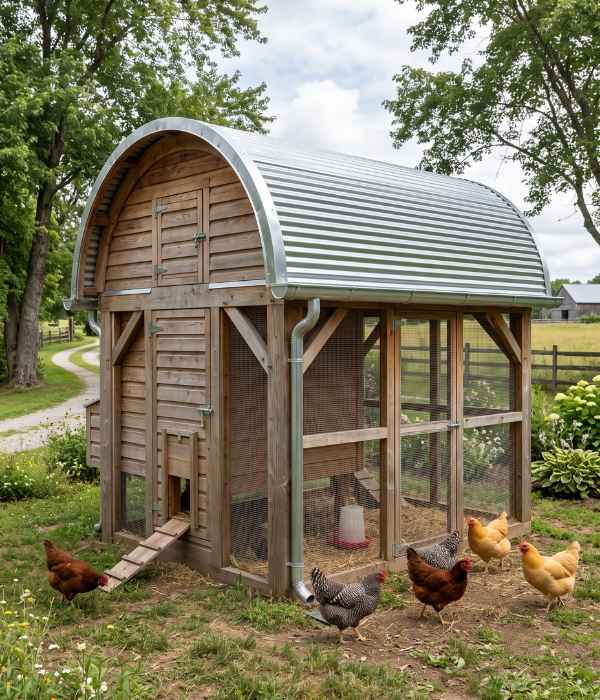
A rounded or curved roof uses an arched profile instead of straight roof planes meeting at a ridge. It can shed rain well and gives a coop a distinctive look, but it usually needs curved metal or polycarbonate panels, hoop-style framing, or carefully built arches. For most backyard keepers, the extra framing and flashing work is worth considering only if you specifically want the shape or are adapting an existing hoop-house style structure.
7. Mansard Roof
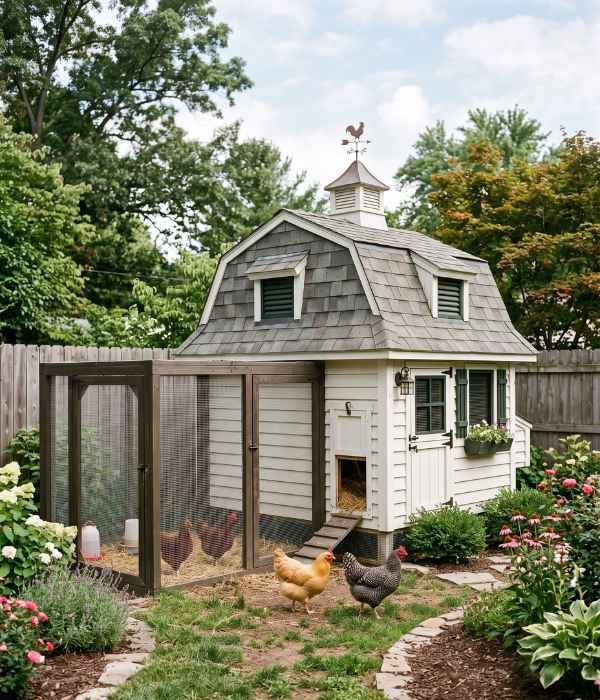
A mansard roof has two slopes on each of its four sides, with a steep lower section and a much shallower upper section. That shape creates more usable space near the roofline and can give a coop a cottage-like appearance. The tradeoff is complexity: extra corners, joints, flashing, and roof area mean more construction work and more places to inspect later. For a normal backyard coop, it is usually an aesthetic choice rather than the most practical roof to build.
8. Thatched Roof
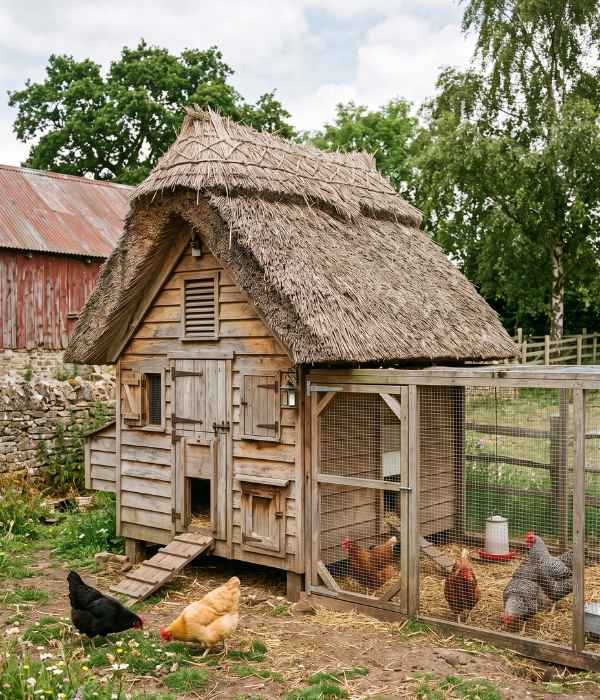
A thatched roof is built from overlapping layers of reeds, straw, or similar plant material rather than conventional shingles or panels. When professionally built it can provide a rustic appearance and some natural insulation, but it needs specialist construction and ongoing maintenance. Fire risk, moisture, pests, and possible local code or insurance restrictions make it a niche choice. For most U.S. backyard coops, metal or asphalt shingles are far easier to build, inspect, and maintain.
Best Roofing Materials for a Chicken Coop
Once you have the roof shape, you still need a weatherproof outer layer. These are the options most backyard keepers are likely to consider.
1. Metal Roofing
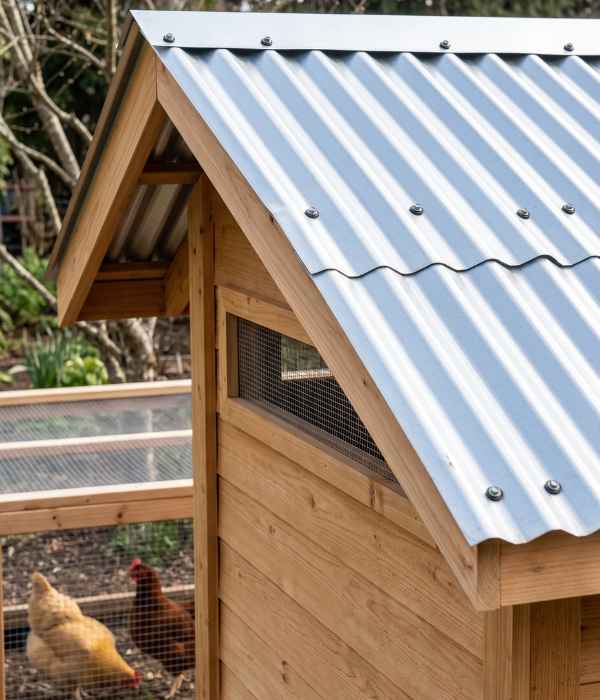
Metal is one of the strongest all-around choices for a backyard coop. Corrugated steel, ribbed metal panels, standing-seam systems, and aluminum are all used on small outbuildings.
It is lightweight, sheds rain well, and can last for many years when installed with the correct fasteners and overlaps.
Two details matter a lot with metal: heat and condensation. Dark metal can become very hot in direct sun, while a cold metal underside can collect condensation when warm, moist coop air reaches it.
Lighter-colored roofing can reduce solar heat gain, and good ventilation helps carry moisture out before it condenses on the roof. Depending on the roof assembly and climate, underlayment or insulation may also be appropriate.
Metal edges are sharp during installation, so cover or finish exposed cut edges where people or chickens could contact them.
2. Asphalt Shingles
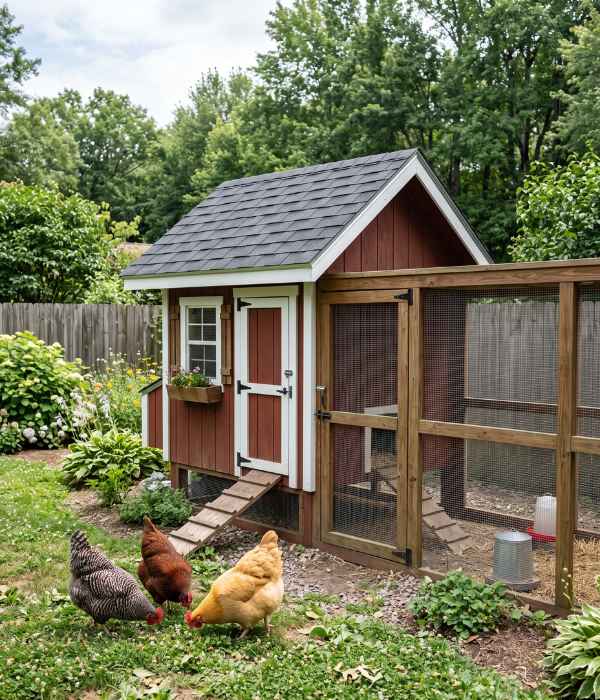
Asphalt shingles make sense when you want the coop to look like a small version of your house or shed.
They are familiar to most DIY builders, widely available, and reasonably easy to repair. The roof structure does need to support solid sheathing plus the shingle system, so shingles generally create a heavier roof than simple metal panels.
Use the underlayment, edge details, and minimum slope required by the shingle manufacturer. On a tiny low-slope coop, another roofing system may be more appropriate.
3. Polycarbonate Roofing
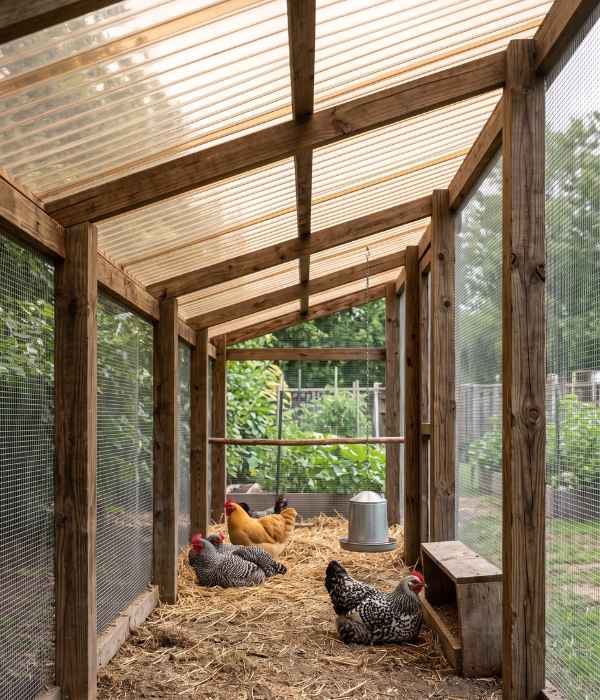
Polycarbonate is useful when you want light without using glass. It is much more impact-resistant than ordinary brittle clear plastic and is available in clear, tinted, and opaque profiles.
For a run roof or a partially covered area, translucent panels can be very useful. Over an enclosed coop in a hot climate, fully clear roofing can add unwanted solar heat, so tinted or opaque panels may be a better choice.
These panels expand and contract with temperature. Follow the manufacturer’s instructions for fastener holes, washers, panel orientation, overlap, and support spacing rather than fastening them as though they were plywood.
4. Corrugated Plastic or PVC Panels
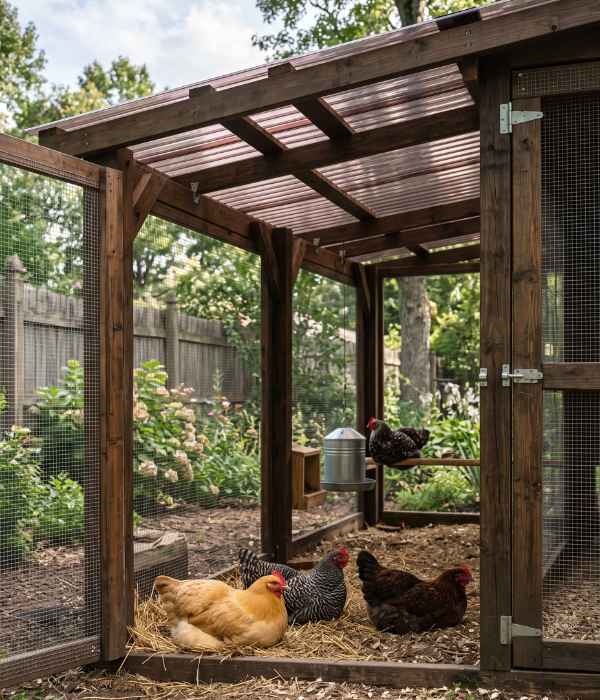
Corrugated plastic panels are inexpensive and easy to lift into place. They can work for run covers, simple shelters, or light-duty coops when the panel is rated for outdoor roofing.
The downside is service life. Cheap panels may become brittle, fade, or crack after years of sun and temperature changes. If you use plastic roofing, choose UV-resistant panels intended for exterior roofing and support them at the spacing recommended by the manufacturer.
5. Wood Shingles or Shakes
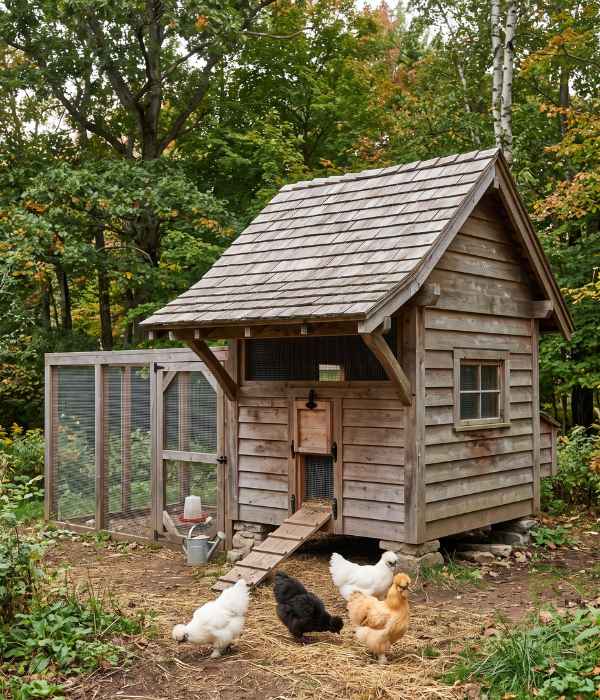
Wood shingles give a coop a traditional look, but they need more maintenance than metal or asphalt. Moisture, insects, fire risk, and local code restrictions all matter.
Wood roofing does not provide ventilation by itself. You still need intentional vents in the coop structure.
6. Tarps and Fabric Covers
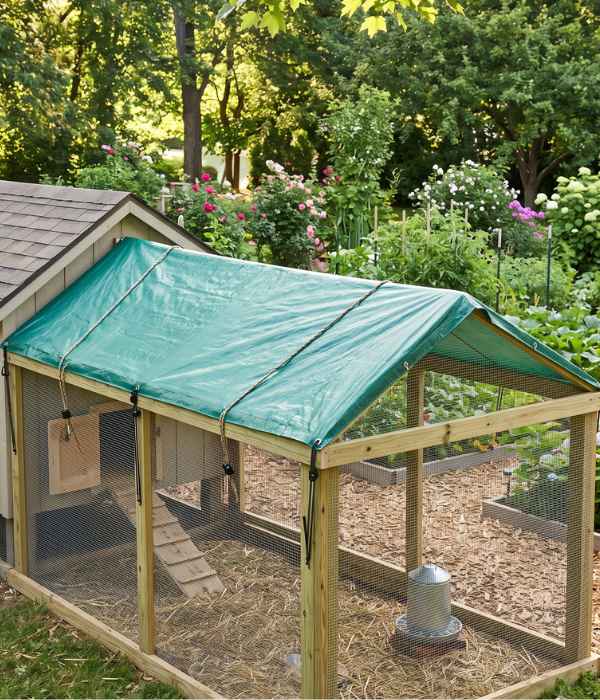
A tarp can be useful for temporary shade, seasonal rain protection, or covering part of a run. I would not use an ordinary tarp as the permanent primary roof over an enclosed coop.
Tarps flap in wind, sag when water collects, degrade in sunlight, and can tear around fasteners. If you use one over a run, pitch it so rain drains off and secure it without closing off all airflow.
| Material | Best for | Main drawback |
|---|---|---|
| Metal | Durable all-purpose coop roofs | Heat gain and condensation need planning |
| Asphalt shingles | Permanent coops that match a house or shed | Heavier and needs solid sheathing |
| Polycarbonate | Run roofs and areas where daylight is useful | Clear panels can add heat |
| Corrugated plastic | Budget run covers and light-duty shelters | Can age faster in sun and weather |
| Wood shingles | Rustic decorative coops | Higher maintenance |
| Tarp | Temporary or seasonal protection | Not a durable permanent roof |
Roof Pitch, Rain, and Snow
The wetter or snowier your climate, the more important drainage becomes.
A steeper roof generally sheds rain and snow more easily, but there is no single ideal pitch for every coop. Roofing manufacturers specify minimum slopes for their products, and local structural requirements determine what the framing must support.
If you live where heavy snow is normal, do not choose rafter sizes by guesswork. A roof that looks steep can still fail if the span, lumber, fasteners, or connections are undersized.
In storm-prone areas, roof-to-wall connections and anchoring matter just as much as the outer roofing material. Our high-wind and storm guide covers the poultry side of severe-weather preparation.
Ventilation Near the Roof
One of the easiest mistakes is building a beautiful weather-tight roof and then sealing the coop so tightly that moist air has nowhere to go.
Chickens add moisture to the air through breathing and droppings. University of Maryland Extension notes that poultry housing needs air movement to remove heat, moisture, carbon dioxide, and ammonia.
High vents work well because warm, moist air naturally collects near the roof. Depending on the design, you might use gable vents, protected openings under the eaves, high wall vents, or a ridge vent designed as part of the roofing system.
Cover ventilation openings with secure predator-resistant mesh. A vent should remove stale air, not become a raccoon entrance.
Why Condensation Forms Under Coop Roofs
If you have ever walked into a coop on a cold morning and found water droplets on the underside of the roof, the roof may not actually be leaking.
Warm moist air from the birds can hit a cold roof surface and condense. Metal makes this especially easy to notice because the underside cools quickly.
Start with ventilation. If the coop smells of ammonia, feels damp, or repeatedly develops moisture on walls and ceilings, more insulation alone will not solve the basic air-quality problem.
Penn State specifically notes that moisture accumulating on poultry-house walls or ceilings is a sign that ventilation and insulation need attention.
Roof Color and Summer Heat
Dark roofing absorbs more solar energy than a light roof. On a small coop sitting in full afternoon sun, that can make a noticeable difference.
Penn State’s 2026 summer-flock guidance recommends lighter or reflective surfaces where practical because they absorb less heat.
Roof color is not a substitute for shade and ventilation, but if you are choosing between otherwise similar metal panels for a hot climate, a lighter finish is usually the easier choice.
For the rest of summer management, see our updated guide to keeping chickens cool in hot weather.
Do Chicken Coop Roofs Need Overhangs?
They are not mandatory, but a useful overhang makes a coop easier to keep dry.
It keeps roof runoff farther from the wall, shields ventilation openings from direct rain, shades part of the wall in summer, and can give you a dry strip outside the pop door.
The exact overhang depends on the coop and climate. In high-wind areas, very large overhangs also catch more wind, so build them as part of the structure rather than tacking on a floppy extension later.
Predator-Proof the Roof and Vents
A solid roof helps protect the flock, but the weak points are usually at the edges and openings.
- Secure roofing panels so wind or animals cannot lift loose edges.
- Close gaps where the roof meets the walls.
- Cover gable, ridge, and eave ventilation openings with strong predator-resistant mesh where appropriate.
- Do not rely on flimsy screen or ordinary plastic mesh where raccoons can reach it.
- Inspect fascia, soffits, and roof joints after storms.
For the rest of the enclosure, use our predator-proof chicken coop guide.
Does a Chicken Coop Roof Need Insulation?
Not every coop needs an insulated roof.
In climates with extreme heat or cold, a properly designed insulated roof can reduce temperature swings and help control condensation. But insulation never replaces ventilation.
Whatever insulation you use, keep it completely inaccessible to chickens. Penn State warns that birds should not be able to pick at or eat spray foam, rigid board, or loose insulation.
I would avoid giving a one-size-fits-all vapor-barrier recipe because the correct roof assembly depends on climate and construction. If you are building an insulated walk-in coop, follow local building guidance for the roof system you are using.
What if an Old Coop Has Suspected Asbestos Roofing?
Asbestos is not a roofing option for a new chicken coop and should not appear on a “best materials” list.
If you have an older outbuilding with roofing or siding that you suspect may contain asbestos, do not cut, drill, sand, scrape, or break it just to find out what it is.
The U.S. EPA says you cannot reliably identify asbestos-containing building material by sight alone. If suspect material is damaged or a renovation will disturb it, EPA recommends assessment and sampling by a properly trained and accredited asbestos professional. State and local requirements may also apply.
Chicken Coop Roof Maintenance
You do not need to climb onto the coop every month. A quick inspection after severe weather and a more careful look once or twice a year catches most problems early.
- Look for missing shingles, loose screws, lifted panel edges, or cracked plastic.
- Check inside after heavy rain for water stains or damp bedding.
- Clear leaves and branches that trap moisture or block drainage.
- Keep gutters and downspouts clear if you use them.
- Inspect wood framing for rot where leaks have occurred.
- Check ventilation openings for cobwebs, dust, or nesting material that reduces airflow.
Common Chicken Coop Roofing Mistakes
- Building a perfectly level “flat” roof. Water needs a planned path off the roof.
- Using the wrong roof pitch for the material. Follow the roofing manufacturer’s minimum slope.
- Sealing the coop tightly with no high ventilation. A dry roof does not help if moisture is trapped underneath it.
- Assuming roof shape determines snow strength. Structural framing and connections carry the load.
- Using clear roofing over the whole coop in a hot climate. Daylight can become unwanted solar heat.
- Leaving insulation exposed. Chickens may peck foam, fiberglass, or other materials.
- Using a tarp as the permanent roof. Tarps are much better for seasonal shade or run protection.
- Forgetting roof-to-wall gaps. Vents need protection; accidental gaps need closing.
FAQs About Chicken Coop Roofs
What is the best roof type for a chicken coop?
For most backyard coops, a shed or gable roof is the most practical. Both are relatively simple to build, shed rain well, and give you good options for overhangs and high ventilation. The best choice still depends on local wind, snow, rainfall, and the size of the coop.
What is the best roofing material for a chicken coop?
Metal roofing is one of the best all-around options because it is lightweight, durable, and sheds rain well. Asphalt shingles are also a good permanent choice, while polycarbonate works especially well for run roofs or places where extra daylight is useful.
Is a metal roof too hot for chickens?
Metal itself does not automatically make a coop too hot, but dark metal in full sun can absorb a lot of heat. Lighter roof colors, shade, ventilation, and a properly designed roof assembly help keep the coop more comfortable in summer.
How much slope should a chicken coop roof have?
There is no single correct slope for every coop. The minimum pitch depends on the roofing material and local weather. Follow the roofing manufacturer’s instructions and local structural requirements, especially in areas with heavy rain or snow.
Does a chicken coop roof need ventilation?
The roof itself does not have to be ventilated, but the coop needs high-level ventilation so warm, moist air can escape. Gable vents, high wall vents, protected eave openings, or a properly designed ridge vent can all work depending on the coop design.
Can I use a tarp as a chicken coop roof?
A tarp is useful for temporary shade, seasonal rain protection, or covering part of a run, but it is usually a poor choice for the permanent primary roof of an enclosed coop because it can flap, sag, tear, and degrade in sunlight.
Final Thoughts
If you are building a normal backyard coop, you can make the roof decision much simpler than it first appears.
A shed roof is usually the easiest DIY option. A gable roof gives you familiar looks and good space for high ventilation. Metal is an excellent all-purpose covering, while shingles make sense when you want the coop to match another building.
Whichever combination you choose, pay attention to the details that actually affect the flock: keep water out, leave room for warm moist air to escape, protect every vent and roof edge from predators, and build the structure for the wind and snow where you live.
A simple roof built well will serve your chickens better than a complicated one built for looks alone.
