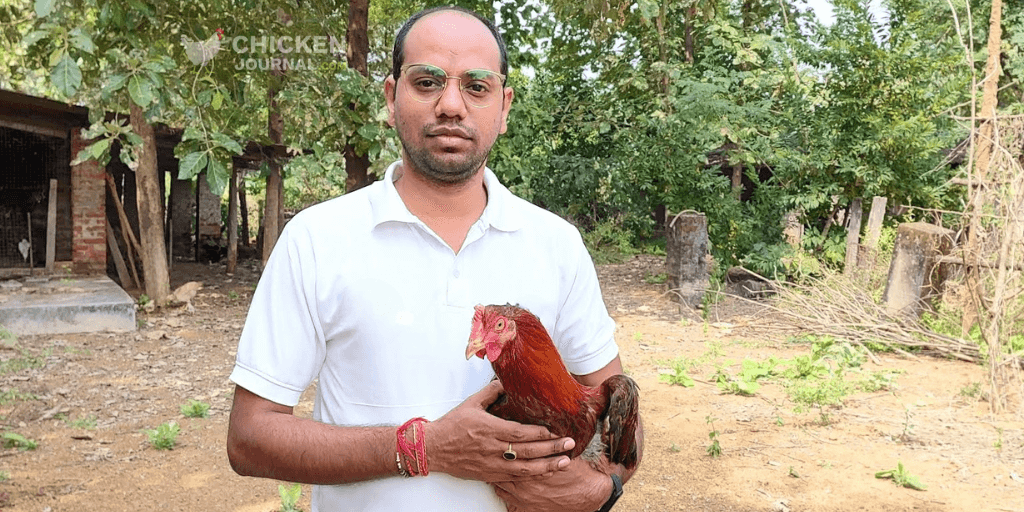

Prairie Bluebell Egger chickens are lightweight hybrid layers best known for producing blue eggs and bringing a lot of color variation to a backyard flock. Hoover’s Hatchery developed this hybrid by crossing Araucanas with White Leghorns, combining blue-shell genetics with the laying ability and active nature of a light egg-producing chicken.
If you want a standardized show breed, this is not one. Prairie Bluebell Eggers are a hatchery hybrid, so plumage, markings, and some individual traits can vary from bird to bird. That variation is part of their appeal, especially if you want a mixed-looking flock without giving up dependable egg production.
In this guide, you’ll learn what to realistically expect from Prairie Bluebell Eggers, including their size, temperament, blue eggs, broodiness, climate tolerance, care needs, and the traits that can vary because of their hybrid background.
Prairie Bluebell Egger Quick Facts
| Type | Commercial hybrid egg layer |
| Parentage | Araucana × White Leghorn, according to Hoover’s Hatchery |
| Primary purpose | Egg production |
| Mature weight | About 4-5 lb |
| Egg color | Blue |
| Egg size | Medium |
| Expected production | About 240 eggs per year under good management |
| Temperament | Active, athletic, alert |
| Broodiness | Rare |
| Comb | Pea comb |
| Climate tolerance | Listed as heat and cold hardy by the hatchery |
These figures are useful as a breed profile, but they are not guarantees for every hen. Egg numbers, body weight, behavior, and laying season can all change with age, nutrition, daylight, stress, health, and management.
History and Origin
The Prairie Bluebell Egger is a modern hybrid associated with Hoover’s Hatchery. The hatchery states that it created the line by crossing Araucanas with White Leghorns.
That cross makes sense for an egg-focused hybrid. Araucana ancestry contributes the genetics associated with blue shells, while Leghorns are well known for efficient egg production, lighter body weight, and active behavior.
It is important to call the Prairie Bluebell Egger a hybrid rather than a standardized pure breed. The American Poultry Association does not have a Prairie Bluebell Egger breed standard, and you should not expect offspring from two Prairie Bluebell Eggers to reproduce all the same traits reliably generation after generation.
What Do Prairie Bluebell Eggers Look Like?
One of the first things you’ll notice is how much their appearance can vary. Hoover’s Hatchery specifically notes considerable plumage variation, so two birds from the same order may look quite different.
You may see gray, blue, black, brown, gold, cream, or mixed patterning. Some birds have subtle lacing or wild-type markings, while others look more evenly colored. You should not buy this hybrid expecting one fixed feather pattern.
Adults are lightweight chickens, generally around 4 to 5 pounds. They are usually more streamlined and athletic than heavy dual-purpose breeds. The hatchery lists a pea comb as the typical comb type.
Because the line is hybrid and not bred to an exhibition standard, small differences in leg shade, facial feathering, body shape, and feather pattern are normal. Appearance is one of the areas where individual variation should be expected rather than treated as a fault.
Temperament and Personality
Prairie Bluebell Eggers are best described as active chickens rather than lap chickens. Hoover’s Hatchery lists them as active, athletic, and alert, which matches what you would expect from a lightweight layer with Leghorn influence.
That can be a real advantage if you give your flock room to move. These birds tend to enjoy scratching, exploring, and looking for insects, seeds, and greens. They are a natural fit for a secure free-range or large-run setup.
Active does not automatically mean unfriendly. Individual hens can become quite comfortable around you, especially when they are handled calmly from a young age. Still, some may prefer keeping a little distance instead of being picked up frequently.
If you want especially calm birds for young children, compare their temperament with some of the friendliest chicken breeds. Prairie Bluebell Eggers can work well in family flocks, but personality varies from bird to bird.
Are Prairie Bluebell Eggers Good Free-Range Chickens?
They are strong foragers, so they can do very well in a managed free-range system. Their alertness and lighter build help them move quickly and make good use of available space.
Do not confuse alertness with predator proofing. A fast chicken can still be caught by hawks, raccoons, foxes, dogs, and other predators. If you free-range, combine supervision or secure fencing with a predator-resistant coop for nighttime protection. Our guide to common chicken predators explains the attack signs worth watching for.
If full free-ranging is not practical, a roomy covered run can work well. Provide enough room for walking, scratching, dust bathing, and getting away from more dominant flockmates. See our chicken space guide when planning your coop and run.
Prairie Bluebell Egger Egg Production
The blue eggs are the main reason many backyard keepers choose this hybrid. Hoover’s Hatchery currently lists the Prairie Bluebell Egger at about 240 medium blue eggs per year.
Treat that number as a production estimate, not a promise. A hen’s actual total depends on age, season, daylight, feed quality, molt, stress, disease, and normal individual variation. Production is usually strongest during the earlier laying years and declines as hens age.
Most pullets begin laying somewhere around the usual age range for egg-type chickens. The University of Minnesota notes that layer pullets often begin laying at about 20 weeks, although your individual bird may start earlier or later. You can also watch for the signs in our guide on when chickens start laying.
Why are the eggs blue?
Eggshell color is genetic. Research on blue-shell chickens links the trait to the dominant O, or oocyan, eggshell-color locus and increased activity around the SLCO1B3 gene. Blue shell coloration is associated mainly with biliverdin pigments deposited through the shell matrix.
That is different from the brown pigment that is concentrated more heavily toward the outside of a brown eggshell. A recent review of chicken genetic diversity describes the Araucana as one of the South American-derived blue-shell breeds carrying this blue-egg trait.
Shell color does not make an egg more nutritious. Michigan State University Extension notes that egg color is determined by genetics and does not determine the nutritional content of the egg.
For more examples of blue, green, pink-tinted, and dark brown layers, see our guide to chickens that lay colored eggs.
Do Prairie Bluebell Eggers Lay Green or Brown Eggs?
The current Hoover’s Hatchery profile describes the Prairie Bluebell Egger as a blue egg layer. It does not list green, brown, or white eggs as normal production for this hybrid.
For that reason, I would not describe green or brown eggs as expected Prairie Bluebell Egger traits. Egg shade can look lighter or deeper from hen to hen, but if a bird consistently lays a clearly brown or green egg, its exact parentage or hatchery line may need to be reconsidered.
Broodiness
Broodiness is listed as rare in Prairie Bluebell Eggers. That is useful if your main goal is steady table-egg production because a broody hen normally pauses laying while she sits and raises chicks.
Rare does not mean impossible. Hormones, season, age, and individual genetics can still produce a broody hen. If one of yours does decide to sit, evaluate whether you want chicks before trying to break the broodiness.
Heat and Cold Tolerance
Hoover’s Hatchery lists Prairie Bluebell Eggers as both heat and cold hardy. Their lighter body size can be useful in warm weather, and the pea comb has less exposed surface area than a large single comb during freezing conditions.
Hardy does not mean weatherproof. In summer, your birds still need shade, continuous cool drinking water, and good airflow. During winter, keep the coop dry and ventilated while preventing strong drafts directly across the roost.
Penn State Extension emphasizes that poultry housing should protect birds from weather and predators while providing ample ventilation without direct drafts. Dampness and ammonia buildup are warning signs that a coop needs better air exchange.
Feeding Prairie Bluebell Eggers
You do not need a special feed just because these hens lay blue eggs. Feed them according to age and production stage, just as you would other laying chickens.
Chicks need a complete chick starter, growing pullets need an appropriate grower or developer feed, and laying hens should receive a nutritionally complete layer ration. The University of Minnesota recommends complete feeds for small flocks and notes that pullets can move to laying mash when they begin laying.
Fresh water should always be available. Foraging can provide enrichment and small amounts of additional food, but it should not replace a properly balanced ration. Treats and kitchen scraps are extras, not the foundation of the diet. Our feeding chickens guide covers the basics in more detail.
Housing and Daily Care
Prairie Bluebell Eggers do not require a special coop. They do need the same basics every backyard flock needs: a dry sleeping area, good ventilation, secure doors, safe roosts, clean water, suitable feed, nest boxes, and protection from predators.
Because they are active, give them as much usable run space as you reasonably can. Add perches, dry dust-bathing areas, leaf litter, or other simple enrichment so they can spend time scratching and exploring instead of becoming bored.
Check your birds regularly for changes in appetite, droppings, posture, breathing, comb color, body condition, and egg production. A sudden change is often more useful than comparing one bird with an internet description of what the hybrid is “supposed” to look like.
Health and Biosecurity
There is no well-established Prairie Bluebell Egger-specific disease that requires a unique health program. Like other chickens, they can develop parasites, respiratory disease, reproductive problems, injuries, and nutritional disorders.
Good flock management matters more than the hybrid name. Keep new birds separated before introducing them, avoid sharing contaminated equipment between flocks, control rodents and wild-bird access, and clean feeders and waterers regularly. Our backyard chicken biosecurity guide gives you a practical routine.
Biosecurity is especially important because highly pathogenic avian influenza remains a concern for U.S. poultry. Penn State Extension’s May 2026 HPAI update continued to recommend limiting contact with wild birds, protecting feed, controlling rodents, and reducing unnecessary flock visitors.
Lifespan
There is no reliable hatchery-specific lifespan figure for Prairie Bluebell Eggers, so I would avoid promising that every bird will live a fixed number of years. Lifespan varies widely with genetics, predators, reproductive health, disease exposure, nutrition, and general care.
As with other productive laying hens, you can expect egg output to fall long before the bird reaches the end of its natural life. A hen that lays fewer eggs as she gets older is not necessarily unhealthy.
Advantages and Drawbacks
Why you may like them
- Attractive blue eggs
- About 240 medium eggs per year according to the hatchery
- Lightweight body and efficient layer type
- Active, alert foraging behavior
- Wide variety of plumage colors and patterns
- Rare broodiness
- Listed as both heat and cold hardy
Possible drawbacks
- They are a hybrid, not a standardized show breed
- Appearance can vary considerably between birds
- Active birds may be less cuddly than very calm heavy breeds
- They still need strong predator protection despite being alert foragers
- Offspring should not be expected to breed true for the same combination of traits
Is the Prairie Bluebell Egger Right for Your Flock?
This hybrid makes the most sense if you want a productive blue egg layer and you enjoy active chickens with varied plumage. They are especially appealing for backyard keepers who have a secure run or managed free-range area where the birds can forage.
You may prefer another chicken if your priority is exhibition breeding, a predictable standardized appearance, or an exceptionally calm lap-bird temperament. Because Prairie Bluebell Eggers are hybrids, uniformity is not the goal.
Frequently Asked Questions About Prairie Bluebell Eggers
1. Is a Prairie Bluebell Egger a pure breed?
No. The Prairie Bluebell Egger is a commercial hybrid rather than a standardized pure breed. Hoover’s Hatchery says it was created by crossing Araucanas with White Leghorns.
2. How many eggs do Prairie Bluebell Eggers lay?
Hoover’s Hatchery currently lists about 240 medium blue eggs per year. Your hen may lay more or fewer depending on age, nutrition, daylight, molt, health, and management.
3. What color eggs do Prairie Bluebell Eggers lay?
They are bred as blue egg layers. The exact shade can vary between hens, but the current hatchery profile lists medium blue eggs rather than green or brown eggs.
4. Are Prairie Bluebell Eggers friendly?
They are generally active, athletic, and alert. Many can become comfortable around people, but individual temperament varies and some birds may be more independent than very calm heavy breeds.
5. Do Prairie Bluebell Eggers go broody?
Broodiness is listed as rare. Individual hens can still become broody, but this hybrid is primarily selected for egg production rather than frequent natural hatching.
6. Are Prairie Bluebell Eggers good in hot and cold weather?
Hoover’s Hatchery lists them as both heat and cold hardy. They still need shade and cool water in heat, plus a dry, ventilated, draft-protected coop in winter.
Final Thoughts
The Prairie Bluebell Egger is a practical choice if blue eggs are high on your wish list but you also want a lightweight, active layer. The most reliable published profile comes from the hatchery that developed the hybrid: about 240 medium blue eggs per year, a 4-5 pound mature weight, a pea comb, rare broodiness, and an active foraging temperament.
The biggest thing to remember is that this is a hybrid. Do not expect every bird to look identical, and do not treat appearance differences as defects. Give them a balanced diet, plenty of room to move, a secure coop, good ventilation, and routine health checks, and they can be a colorful and productive addition to a backyard flock.
Sources
- Hoover’s Hatchery: Prairie Bluebell Egger
- Review of genetic variation underlying chicken phenotypic diversity
- University of Minnesota Extension: Raising layer chicks and pullets
- Penn State Extension: Small Scale Poultry Housing
- Penn State Extension: HPAI Biosecurity Update, May 2026