

The best place for a chicken coop is not always the prettiest corner of the yard. A spot can look perfect on a dry spring afternoon and turn into a muddy mess after two days of rain. Another area may get beautiful winter sun but become brutally hot in July.
Before you build, look at the whole job the location needs to do. Your coop should stay reasonably dry, be easy to reach in bad weather, have enough airflow and seasonal shade, leave room for a secure run, and meet your local setback rules. You also want manure and runoff moving away from your house, neighbors, wells, and surface water.
If you get the location right, everyday chicken care gets easier. If you get it wrong, you may spend years fighting mud, heat, frozen hoses, predator pressure, or a path you hate walking twice a day.
Start With Drainage, Not the View
Drainage is the first thing worth checking because almost every other problem gets harder when the coop sits on wet ground.
Penn State Extension recommends high, well-drained ground for small poultry housing. That sounds simple, but many backyards have small dips that are easy to miss until a storm shows you where the water really goes.

One of the easiest checks is to walk the yard after a heavy rain. Look for standing water, soft mud, runoff channels, roof discharge, and places where water from higher ground naturally collects. If one of your favorite coop sites stays soggy for hours, it is probably not your best choice.
A gentle slope can help, as long as runoff moves away from the coop rather than through it. On flatter ground, you may need to raise the coop slightly, improve the base, add gutters, or create a drainage path before bringing chickens in.
Clay-heavy yards deserve extra attention because they can hold water and become sticky around feeders, waterers, and gates. Sandy ground usually drains faster, but it may still wash out under roof runoff. The soil type matters less than what the site actually does during wet weather.
Do not rely on plants alone to solve a drainage problem. Vegetation can help slow runoff, but a badly placed coop will still be badly placed after you plant shrubs around it.
Choose Sun and Shade for Your Climate
Sunlight can be useful because it helps surfaces dry after rain and gives the birds a warmer area during cool weather. It is not a substitute for cleaning, parasite control, or biosecurity.
The amount of sun you want depends on where you live. In a cold or mixed climate, some winter sun can be helpful. In a hot climate, afternoon shade can matter much more than squeezing every possible hour of sunlight onto the run.
A site with morning sun and afternoon shade works well in many backyards. Deciduous trees can also be useful because they provide summer shade and allow more light through after leaves drop.
That does not mean you should bury the coop under dense trees and shrubs. Keep the immediate fence line visible so you can spot digging, rodent activity, fallen branches, and areas where predators could hide.
If natural shade is limited, you can add a shade cloth, roofed section of the run, or another durable cover. The goal is to make sure the flock has a place to get out of direct summer sun without turning the whole run into a dark, damp corner.
For plants that can work safely around poultry areas, see the guide to chicken-safe plants and trees.
Think About Wind Before You Face the Coop

You want airflow around the coop, but you do not want the roost area taking the full force of your strongest winter winds.
Stand in the yard on a windy day and notice where the gusts come from. A fence, hedge, outbuilding, or row of shrubs can act as a useful windbreak, but do not press the coop so tightly against a barrier that air movement disappears.
The site and the coop design work together here. A breezy location can still have poor ventilation if the coop itself is sealed up, while a sheltered spot can work well if the building has properly placed vents above bird level.
For the building details, use the dedicated chicken coop ventilation guide. This article only needs you to make sure the location does not create an obvious airflow problem before construction starts.
Do Not Put the Coop So Far Away That Chores Become a Burden
There is no universal rule saying a chicken coop should sit 25 feet, 30 feet, or any other fixed distance from your house. Local zoning may set a minimum setback, but convenience matters too.
Imagine the walk on a cold, rainy morning with a bucket of feed in one hand and a waterer in the other. Now imagine doing it every day for years.
A coop close enough to check easily often gets better daily care. You notice a loose latch sooner. You hear an unusual commotion at night. You are more likely to collect eggs before they pile up. You are less tempted to skip a water check because the path is muddy.
At the same time, do not push the coop against your back door just for convenience. Leave enough separation to manage manure, flies, rodents, dust, and noise without bringing those problems into your living space.
The right distance is the one that meets local rules and still makes twice-daily care realistic.
Check the Path, Hose, Feed Storage, and Wheelbarrow Route
Small details become big annoyances after the coop is built.
Before you choose the final spot, walk the route you will use for feed, bedding, eggs, manure, and water. Make sure a wheelbarrow can fit through the gates. Think about where snow gets piled in winter and where puddles form in spring.
If you plan to use a hose, measure the distance instead of assuming it will reach. If you genuinely need electricity for lighting, a heated waterer, ventilation equipment, or an automatic door, plan that safely rather than running a permanent extension cord across the yard.
You may not need electricity at all. The updated chicken coop power-outage guide explains which coop systems truly depend on power and which do not.
Keep Manure and Runoff Away From Wells and Surface Water
A coop is also a manure site, so think about what happens after rain.
You do not want runoff carrying manure toward a private well, stream, pond, drainage ditch, patio, or neighboring property. Oregon State Extension has used a 100-foot separation from wells as a practical groundwater-protection recommendation in some backyard poultry guidance, but local requirements vary.
If your home uses a private well or septic system, check your county health department or local Extension guidance before building. The same applies if your property borders a creek, wetland, drainage channel, or pond.
The safest general rule is simple: keep manure and dirty runoff away from drinking-water sources and places where stormwater naturally flows.
A Pond Is Not Always a Good Coop Neighbor
A pond can look like a peaceful backdrop for a coop, but it may also attract wild ducks, geese, and other birds.
USDA continues to treat wild birds as an important source of highly pathogenic avian influenza exposure. If waterfowl regularly gather in one part of your property, placing the coop somewhere drier and farther from that traffic can reduce unnecessary contact.
You should also protect poultry feed and water from wild birds wherever the coop sits. For the broader prevention routine, see the chicken biosecurity guide.
Leave Enough Room for the Run and Future Flock Size
Do not choose the site based only on the footprint of the coop.
You also need room for the run, doors that swing open, cleaning access, fencing, shade, feeder and waterer placement, and possibly expansion later. A coop squeezed perfectly between a shed and a fence may become frustrating when you discover there is nowhere to stand while cleaning it.
Space recommendations vary with bird size, outdoor access, climate, and housing style, so this location guide does not need one rigid square-foot rule. Instead, make sure the site can support the flock size you actually plan to keep.
If you are still working out the dimensions, use the guide to how much space chickens need before you mark the foundation.
Choose a Spot You Can Predator-Proof Properly
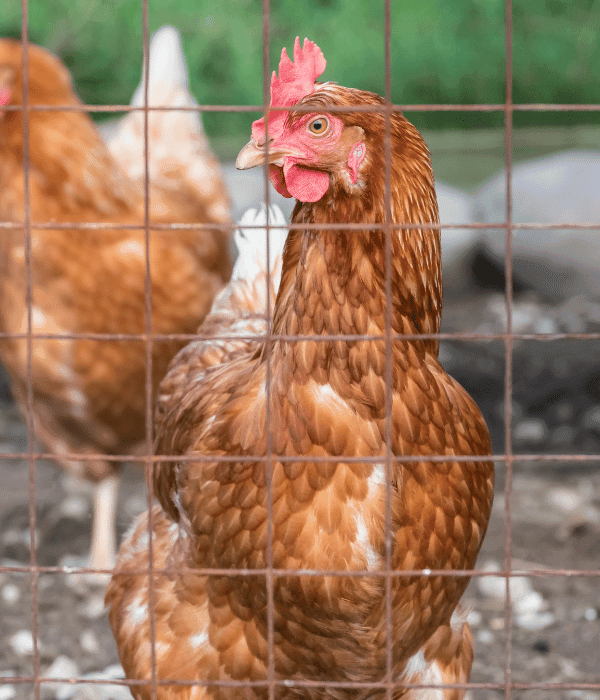
Location alone will not predator-proof a chicken coop, but a poor location can make the job harder.
Try to keep the perimeter easy to inspect. Dense brush pressed against the run can hide digging or make it difficult to see where a raccoon, fox, or other predator has been working.
Open ground is easier to inspect, but do not remove every bit of shade and overhead cover just for visibility. Chickens still benefit from places to get out of hot sun and take cover when a hawk passes overhead.
The stronger protection comes from construction: secure latches, hardware cloth where appropriate, dig protection, a covered run when needed, and locking the birds inside at night.
The predator-proof coop guide covers those details. When choosing the location, your job is to make sure the site gives you enough room to build those protections properly.
Check Local Rules Before You Build Anything Permanent
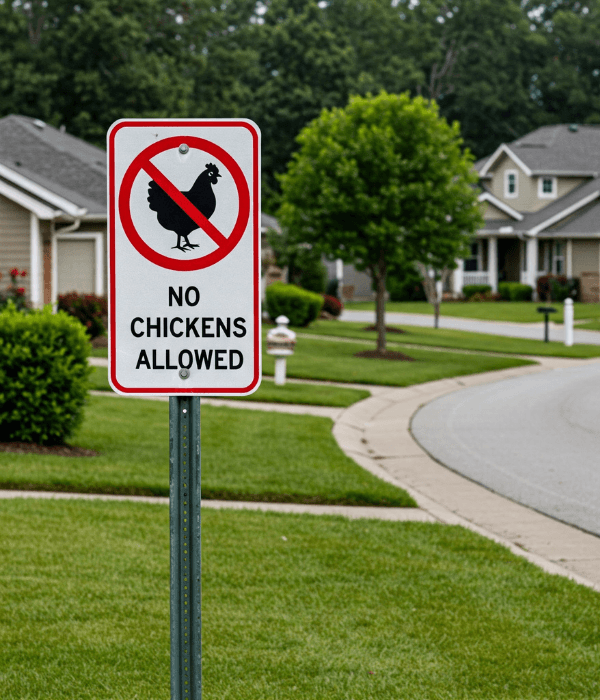
There is no single U.S. setback rule for backyard chicken coops.
Your city, county, township, zoning district, homeowners association, subdivision covenant, or health code may set different requirements. Some rules focus on distance from property lines. Others measure from neighboring homes, wells, streets, or other structures.
Before you pour concrete or build a permanent run, look specifically for:
- whether backyard chickens are allowed
- maximum flock size
- rooster restrictions
- permit or registration requirements
- setbacks from property lines or dwellings
- rules for manure and sanitation
- coop or run construction requirements
- HOA or deed restrictions
Do not copy a setback number from another city and assume it applies to you. The dedicated backyard chicken legal guide explains how to check your local rules.
Think About the Neighbors Before the Hens Arrive
A legal coop can still become a neighborhood problem if the run sits directly beside someone’s patio, bedroom window, or property line.
Look at the yard from your neighbor’s side as well as your own. A few extra feet, a solid fence, better manure handling, or moving the coop away from a shared outdoor seating area can prevent a lot of friction later.
Odor is mostly a management issue. A clean, dry coop should not smell strongly all the time. If odor becomes constant, the answer is usually moisture control, litter management, ventilation, or stocking density rather than simply spraying a deodorizer.
If roosters are legal where you live, remember that crowing carries farther than ordinary hen noise. That may affect which side of the property makes sense even when the zoning map says you can keep one.
Walk the Yard Before You Commit
You can save yourself a lot of trouble by testing two or three possible locations before you build.
Visit each spot in the morning and again late in the afternoon. Check the shade. Stand there on a windy day. Look again after the rain. Walk the route while carrying a bucket. Stretch the hose to the site. Picture where a wheelbarrow will go when the coop needs cleaning.
Then ask a few simple questions:
- Does water collect here?
- Will the birds have summer shade?
- Can air move around the coop?
- Is the strongest winter wind hitting this side?
- Can you reach the coop easily in rain, snow, or darkness?
- Is there enough room for the run and fencing?
- Will runoff move away from wells and surface water?
- Does this location increase contact with wild waterfowl?
- Can you see and inspect the fence perimeter?
- Does the site meet local setbacks?
- Will the location create an unnecessary problem for your neighbors?
If one location passes most of those checks without major construction work, it is probably a better choice than the spot that simply looks nicest from the kitchen window.
Frequently Asked Questions
Should a chicken coop be in sun or shade?
Usually a mix works best. Morning sun can help dry the area, while afternoon shade is valuable in hot weather. In colder climates, winter sun may be useful. Choose the balance that fits your local climate rather than following one fixed compass direction.
How far should a chicken coop be from the house?
There is no universal ideal distance. First follow your local setback rules. After that, place the coop close enough for practical daily care but far enough that manure, dust, rodents, flies, and noise do not become a household nuisance.
Is it okay to put a chicken coop under a tree?
It can be. A healthy shade tree may make summer conditions much better. Just avoid unstable limbs, dense brush against the fence, heavy roof drip, and a location where roots or falling branches will damage the coop.
Can you put a chicken coop next to a pond?
You can in some situations, but it is not always a good choice. Ponds attract wild birds and waterfowl, which can increase disease exposure. A drier site away from regular wild-waterfowl traffic is preferable when your property gives you that option.
Should a chicken coop be on level ground?
The coop itself needs a stable, level base, but the surrounding site can have a gentle slope that carries rainwater away. Avoid low ground where runoff collects around the foundation or run.
What is the biggest mistake when choosing a coop location?
Choosing the site only by appearance. A location that looks attractive may still have poor drainage, harsh afternoon sun, difficult winter access, bad runoff, or zoning problems. Check the site in real weather before you build.
Final Thoughts
A good chicken-coop location makes boring daily jobs easier. That is more important than having the coop centered perfectly in the yard.
Start with dry ground. Then look at summer shade, winter wind, access, runoff, predators, wild birds, local rules, and your neighbors. Walk the route you will actually use with feed and water in your hands.
If a spot still makes sense after a storm, on a hot afternoon, and on a cold windy morning, you are probably getting close to the right place.
Sources
- Penn State Extension: Small-Scale Poultry Housing
- Oregon State University Extension: Living on the Land, Backyard Chicken Coop Design
- Oregon State University Extension: Chicken Coop Distance From a Well
- USDA APHIS: Poultry Biosecurity and HPAI
- Mississippi State University Extension: Protect Backyard Chickens From Extreme Heat
