
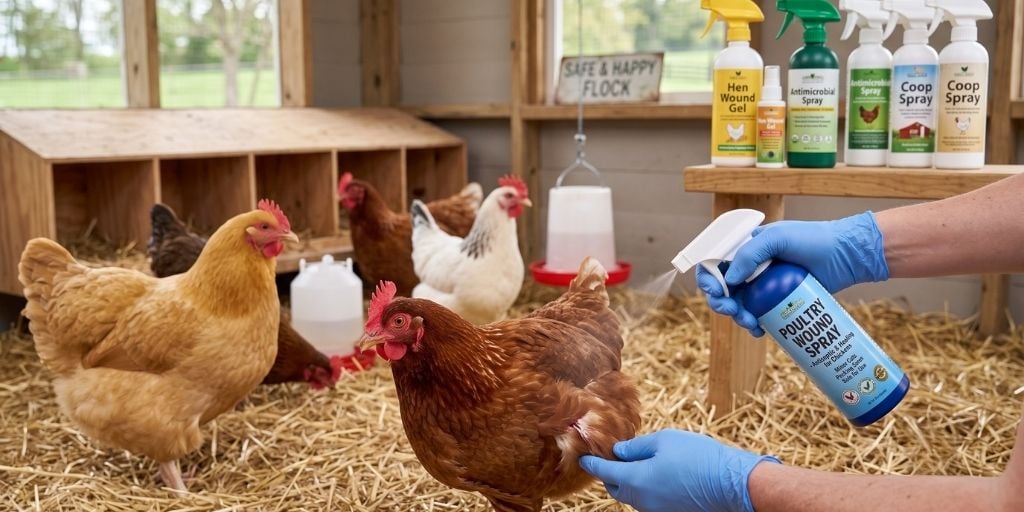
A hen can get a little nick on a sharp wire, scrape her leg on a roost or a pecking sore after a quarrel with her flock. When that happens, you want to clean that area without making things worse.
A wound spray for poultry can be useful on a small surface wound. It can’t fix a deep bite or an infected foot or a damaged eye or a wound that needs stitches. You need a vet for those problems.
Below I have compared nine product listings. These include spray-on hydrogels and liquid wound cleansers. I have made it clear that a few are different sizes or formats from same brands. You don’t have to buy more than one for the same job.
Before using any product on a laying hen: read its current label and check whether it is suitable for poultry and food-producing birds. Do not assume a product is approved for eggs or meat just because a listing says it is safe for pets.
Quick Comparison of Chicken Wound Sprays
| Product | Format | Useful For | Amazon |
|---|---|---|---|
| 1. Vetericyn Plus Poultry Care | Poultry-labeled liquid spray | Routine minor pecking scrapes | Check |
| 2. Banixx for Chixx | Poultry-labeled liquid spray | Minor surface injuries | Check |
| 3. Curicyn Original Formula, 8 oz. | Multi-animal liquid spray | A compact wound-care bottle | Check |
| 4. MicrocynAH Wound & Skin Spray, 3 oz. | Small animal-care spray | Small first-aid kit | Check |
| 5. Vetericyn Plus All Animal, 8 oz. | All-animal liquid spray | One household animal-care bottle | Check |
| 6. Vetericyn Plus Hydrogel, 8 oz. | Spray-on hydrogel | Moisture-retaining wound care | Check |
| 7. MicrocynAH Sprayable Hydrogel, 8 oz. | Spray-on hydrogel | Where a gel stays in place better | Check |
| 8. MicrocynAH Wound & Skin Spray, 16 oz. | Larger animal-care spray | Frequent minor cleaning needs | Check |
| 9. Leucillin Antiseptic Spray, 250 mL | Animal skin-care spray | Another hypochlorous-acid option | Check |
The first two products are specifically marketed for poultry. The other listings use wider animal-care labels or formats, so confirm suitability for your bird with the manufacturer or your veterinarian. Prices, packaging, and sellers can change.
9 Wound Sprays and Spray-On Gels to Compare
1. Vetericyn Plus Poultry Care: A Poultry-Labeled Wound Spray

As an Amazon Associate I earn from qualifying purchases. This article contains affiliate links. If you buy through these links, I may earn a commission at no extra cost to you.
This is a useful starting point if you want one bottle in your chicken first-aid kit. Vetericyn Plus Poultry Care is made for birds and uses a hypochlorous-acid formula without antibiotics or steroids.
The liquid spray can help flush light debris from small pecking sores or superficial cuts. You can see what you are cleaning because it does not cover the skin with a dark dye. Follow the instructions on the current bottle, including how often to apply it.
It is not a substitute for veterinary care when a wound is deep, swollen, foul-smelling, or caused by an animal bite.
Pros
- Poultry-specific labeling.
- Liquid nozzle can help rinse minor wounds.
- No antibiotic or steroid in the formula.
Cons
- A small bottle may run out quickly in a larger flock.
- It does not treat serious injury or an underlying infection on its own.
Check Vetericyn Poultry Care on Amazon.
2. Banixx for Chixx: A Poultry Skin-Care Spray
As an Amazon Associate I earn from qualifying purchases. This article contains affiliate links. If you buy through these links, I may earn a commission at no extra cost to you.
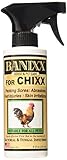
Banixx for Chixx is another product made with poultry owners in mind. Its liquid formula is intended for minor skin problems such as pecking sores and scrapes.
It is easy to apply without rubbing an already tender patch of skin. As with any topical product, clear away loose debris first and use it according to the bottle. Keep it out of the bird’s eyes, mouth, and nostrils unless the label specifically directs otherwise.
If a hen keeps getting pecked, a spray alone will not solve the problem. Separate her when needed and address the behavior in the flock.
Pros
- Labeled for poultry use.
- Simple spray application.
- No steroid or antibiotic in the stated formula.
Cons
- Does not fix repeated flock bullying.
- A worsening wound still needs a veterinarian.
3. Curicyn Original Formula: A Small Multi-Animal Spray

As an Amazon Associate I earn from qualifying purchases. This article contains affiliate links. If you buy through these links, I may earn a commission at no extra cost to you.
Curicyn Original Formula is marketed for several animals, including chickens. The eight-ounce bottle is a manageable size if you want a general wound cleanser in your farm first-aid supplies.
It is designed for topical cleaning and does not contain an antibiotic. You can spray a minor surface scrape without scrubbing the area. Follow the current directions and ask about food-animal use if you raise birds for eggs or meat.
The brand makes larger bottles too, but the smaller one is easier to store and carry when you are checking a single injured hen.
Pros
- Manufacturer specifically includes chickens.
- Handy eight-ounce spray size.
- Clear liquid lets you continue checking the skin.
Cons
- Not specifically packaged only for poultry.
- Does not replace treatment for a deep or infected injury.
Check Curicyn Original Formula.
4. MicrocynAH Wound & Skin Spray, 3 oz.: A Small Kit Bottle

As an Amazon Associate I earn from qualifying purchases. This article contains affiliate links. If you buy through these links, I may earn a commission at no extra cost to you.
A three-ounce bottle is handy when you keep a compact first-aid kit near the coop. MicrocynAH is a hypochlorous-acid wound-care line intended for animals, including birds.
This is the liquid version, so it is suited to gentle surface cleaning rather than leaving a thick coating behind. It does not contain an antibiotic, steroid, or alcohol according to the manufacturer.
The small size is the main reason to choose this listing. If you expect to use a lot, compare the larger bottle farther down instead. Confirm the directions and food-producing-bird suitability before use.
Pros
- Small, easy-to-store spray.
- Clear liquid for gentle surface cleaning.
- No alcohol or antibiotic in the stated formula.
Cons
- Only three ounces.
- Less economical than a larger bottle if used often.
See MicrocynAH 3 oz. on Amazon.
5. Vetericyn Plus All Animal, 8 oz.: A General Wound Spray

As an Amazon Associate I earn from qualifying purchases. This article contains affiliate links. If you buy through these links, I may earn a commission at no extra cost to you.
If you keep more than chickens, you may prefer one general animal wound spray. This eight-ounce Vetericyn Plus listing uses the same type of hypochlorous-acid care approach as the brand’s poultry product, but it comes with a broader animal-care label.
It can be useful for cleaning a minor scrape after you have secured the bird and checked the surrounding skin. Do not automatically treat it as an identical substitute for the poultry-labeled bottle; check the exact current label and food-animal directions.
There is no reason to buy both products just for variety. Pick the bottle that best matches the animals you keep and the directions you can follow.
Pros
- General animal-care format.
- Practical eight-ounce bottle.
- Liquid spray is easy to direct onto a surface scrape.
Cons
- Poultry-specific labeling is clearer on Product 1.
- Overlaps with the poultry spray rather than adding a different treatment.
Check Vetericyn Plus All Animal.
6. Vetericyn Plus Hydrogel, 8 oz.: A Spray That Stays Put

As an Amazon Associate I earn from qualifying purchases. This article contains affiliate links. If you buy through these links, I may earn a commission at no extra cost to you.
A liquid is helpful when you want to rinse away dirt. A spray-on hydrogel has a different job: it stays on the affected area longer and helps maintain a moist wound surface.
Vetericyn Plus Hydrogel may be worth comparing for a minor external scrape after you have cleaned it. The product is not an adhesive bandage, and it should not be used to seal a dirty or deep wound.
Its animal-care label is broader than the poultry-only spray. Check suitability for your bird, especially if she lays eggs or may be used for meat.
Pros
- Sprays on but has a thicker gel texture.
- May stay in place better than plain liquid.
- No antibiotic or steroid in the formula.
Cons
- Not a replacement for cleaning first.
- Needs food-animal label confirmation and veterinary advice for complex wounds.
7. MicrocynAH Sprayable Hydrogel, 8 oz.: Another Gel Option

As an Amazon Associate I earn from qualifying purchases. This article contains affiliate links. If you buy through these links, I may earn a commission at no extra cost to you.
This MicrocynAH product is also a spray-on hydrogel. It is different from the brand’s liquid wound cleanser because the gel is meant to cling to the surface after application.
It is an option if you prefer the MicrocynAH line and need a thicker product for a superficial skin injury. Gently remove visible dirt before using it, and follow the manufacturer’s instructions rather than layering several wound products together.
You do not need both this and the Vetericyn hydrogel. They fill much the same place in a simple first-aid kit.
Pros
- Sprayable gel format.
- Manufacturer describes use across animal species.
- An alternative to a plain liquid wound spray.
Cons
- Not designed to flush dirt like a liquid cleanser.
- Similar purpose to the Vetericyn hydrogel above.
8. MicrocynAH Wound & Skin Spray, 16 oz.: A Larger Liquid Bottle

As an Amazon Associate I earn from qualifying purchases. This article contains affiliate links. If you buy through these links, I may earn a commission at no extra cost to you.
This is the larger liquid version of the MicrocynAH wound spray already listed at number four. Its main advantage is bottle size, not a different active-care approach.
It makes more sense for someone who manages several animals and regularly restocks first-aid supplies. For a small flock that rarely needs a wound cleanser, the small bottle may be easier to keep within its shelf life.
Always check the expiry date and store the original bottle as instructed. Do not pour it into an unmarked spare container.
Pros
- More liquid in one bottle.
- Same familiar spray method.
- Useful if you care for several animals.
Cons
- May be more than a small flock needs.
- Same product type as number four, just a larger size.
9. Leucillin Antiseptic Spray: Another Animal Skin-Care Option
As an Amazon Associate I earn from qualifying purchases. This article contains affiliate links. If you buy through these links, I may earn a commission at no extra cost to you.
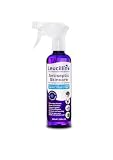
Leucillin is a hypochlorous-acid animal skin-care spray. It is commonly sold for several pets and farm animals and comes in a 250 mL bottle.
The formula is aimed at gentle external skin cleansing. It can be another brand to compare if the more familiar poultry-specific options are unavailable, but check the exact seller and manufacturer labeling first. Availability may vary by marketplace.
For a laying hen, do not assume every imported or general-pet version has the same poultry and food-animal directions. Ask your veterinarian or manufacturer before choosing it for that use.
Pros
- Clear, alcohol-free animal skin-care spray.
- Convenient 250 mL bottle.
- An alternative hypochlorous-acid brand.
Cons
- Food-producing-bird directions must be checked.
- Listing availability and packaging may vary.
When Should You Call a Veterinarian Instead?
Do not use a wound spray as your only response to a serious injury. A predator bite can leave deep damage beneath a small opening, and a swollen foot may need a proper diagnosis rather than repeated spraying. If an attack caused the injury, also check how the animal entered using our predator protection guide.
- Bleeding does not stop with gentle, steady pressure.
- The wound is deep, gaping, punctured, or close to an eye or vent.
- A dog, cat, raccoon, or another animal has bitten or grabbed the bird.
- You notice marked swelling, pus, a bad smell, dark tissue, or worsening pain.
- Your chicken is weak, breathing abnormally, not eating, or unable to stand.
- The injury is a burn, prolapse, or suspected infected bumblefoot.
For a foot problem, read our bumblefoot guide and arrange veterinary help for a swollen, painful, or worsening foot. A spray cannot remove an abscess or cure the cause.
How to Clean a Minor Chicken Wound
First, move the injured chicken away from birds that are pecking her. A small wound can get worse quickly when flockmates keep pulling at exposed skin.
- Wash your hands and put on clean gloves.
- If the area is bleeding, apply gentle pressure with clean gauze. Get veterinary help if it does not stop promptly.
- For a minor surface wound, gently rinse visible dirt with sterile saline or clean water. Do not scrub deep tissue.
- Use a poultry-appropriate product exactly as its current label directs. Avoid spraying into the eyes, mouth, or nostrils unless that specific product says it can be used there.
- Keep the bird in a clean, dry, quiet recovery area with fresh water and feed.
- Check the wound and the bird’s behavior at least daily. Seek veterinary care if either worsens.
Skip repeated hydrogen peroxide or alcohol on open wounds. They can irritate tissue. Do not apply human pain-relief sprays, essential oils, or an antibiotic product on your own to a bird that produces food.
Why You Should Not Rely on Blue Wound Dye
The original article included Dr. Naylor Blu-Kote as if it were an ordinary spray for laying hens. I removed it from this buying list. The product contains gentian violet, and federal rules identify gentian violet as not generally recognized as safe and effective for veterinary drug use in food animals.
A dye may cover the appearance of red skin, but hiding the color does not treat a deep wound or stop the cause of pecking. Separate injured birds and address crowding, boredom, nutrition, or bullying. Our guide to chicken pecking problems explains the management side.
What About Silver Sprays and Egg Withdrawal?
The previous list also included PetSilver. Its published label is filed as an unapproved homeopathic product and does not establish proven effectiveness. I have not included it among the recommended wound-care choices.
Do not guess about egg or meat withdrawal periods for any topical medication. Read the actual label, and if it does not clearly cover your type of poultry, ask a veterinarian. The same goes for antibiotics and medicated sprays meant for dogs, cats, or horses.
What to Keep With Your Wound Spray
A bottle alone is not much of a first-aid kit. Keep sterile saline, clean gauze, gloves, a towel, and a small separate recovery space ready. Store products according to their label and check expiry dates.
Our chicken first-aid kit checklist covers the other basic supplies. After recovery, clean the coop and check roosts, wire edges, and nest boxes for the sharp or damaged spot that may have caused the injury.
Which Wound Spray Should You Buy?
For a straightforward poultry-labeled liquid, compare Vetericyn Plus Poultry Care and Banixx for Chixx. If you want a different manufacturer whose label specifically includes chickens, Curicyn Original Formula is another option.
If you need a spray-on gel after gentle cleaning, compare the two hydrogel listings instead. Do not buy multiple nearly identical wound products or use several at once without advice.
FAQs About Wound Sprays for Chickens
What should I use to clean a small chicken scratch?
Gently rinse visible dirt with sterile saline or clean water, then use a poultry-appropriate wound product according to its current label. Watch the bird and the injury for changes.
Can a wound spray treat an infected chicken foot?
No. A painful, swollen, or infected foot needs a diagnosis. A spray alone will not treat an abscess or solve the cause of bumblefoot.
Should I separate a chicken with a pecking wound?
Usually yes, if flockmates keep pecking the injured area. Give the bird a clean, calm place with food and water while you address the cause of the pecking.
Is hydrogen peroxide good for an open chicken wound?
Avoid repeated hydrogen peroxide or alcohol on open tissue. Gentle rinsing and an appropriate wound product are preferable for minor surface injuries.
Can I use dog wound spray on laying hens?
Do not assume it is suitable. Check whether the specific product label covers poultry or food-producing birds, and ask a veterinarian about uncertain uses or withdrawal periods.
Can I use Blu-Kote on a hen whose eggs I eat?
Do not treat it as a routine option for food-producing birds. It contains gentian violet, which has important federal food-animal restrictions. Ask a veterinarian about appropriate alternatives.
When does a chicken wound need a vet?
Get help for bites, punctures, deep wounds, eye or vent injuries, uncontrolled bleeding, bad swelling, discharge, odor, weakness, or a wound that is getting worse.
Sources and Product Labels
- Penn State Extension: Wounds in Poultry
- University of Maine Extension: Pecking and Cannibalism
- FDA: T.A.L.K. Before You Treat Food-Producing Animals
- 21 CFR 500.30: Gentian Violet for Animal Drug Use
- Vetericyn: Poultry Care Label and Directions
- Curicyn: Original Formula and Species Information
- MicrocynAH: Wound and Skin Care
