

A tarp around a chicken run looks like a simple purchase until the weather turns bad. A thin cover may look fine on a calm afternoon, then spend the first windy night snapping against the frame. A heavy waterproof tarp can keep rain out beautifully, but if you wrap too much of the run with it in summer, airflow can suffer.
That is why I would not choose one tarp for every job. For a permanent run roof, thickness, reinforced edges, and secure grommets matter. For winter side protection, clear vinyl can block wind-driven rain while keeping the run bright. In hot weather, mesh shade is often more useful than another waterproof sheet because chickens still need moving air.
This guide compares 10 useful tarp styles for backyard chicken coops and runs, then explains where each type makes sense, how thick to go, and how to install one without creating a ventilation or water-pooling problem.
Quick Comparison: Best Tarps for Chicken Coops and Runs
| Product | Type | Thickness | Best Use | Amazon |
|---|---|---|---|---|
| WHITEDUCK Super Heavy Duty Poly Tarp | Polyethylene | 16 mil | Year-round run roofs | Check |
| Xpose Safety Super Heavy Duty Poly Tarp | Polyethylene | 16 mil | Windy, wet locations | Check |
| Kotap Reversible Green/Silver Tarp | Polyethylene | 8 mil | Seasonal coverage | Check |
| Tarpco Safety Heavy Duty Tarp | Polyethylene | 14 mil | Heavy rain | Check |
| Xpose Safety Extra Heavy Duty Tarp | Polyethylene | 12 mil | Balanced everyday use | Check |
| DRY TOP White Heavy Duty Tarp | Polyethylene | About 10 mil | Bright roof/rain cover | Check |
| Xpose Safety Clear Vinyl Tarp | Clear vinyl | 20 mil | Winter side panels | Check |
| CCS Chicago Canvas Heavy Duty Canvas Tarp | Cotton canvas | 16 oz | Breathable shade/partial weather protection | Check |
| Xpose Safety Silver/Black Poly Tarp | Polyethylene | 10 mil | Everyday value | Check |
| Xpose Safety Mesh Shade Tarp | Polypropylene mesh | Mesh | Summer shade and airflow | Check |
Amazon availability changes, so choose the size that fits your actual frame and leave enough material for overlap, slope, and secure fastening.
10 Best Tarps for a Chicken Coop and Run
1. WHITEDUCK Super Heavy Duty 16-Mil Poly Tarp — Best Overall

As an Amazon Associate I earn from qualifying purchases. This article contains affiliate links. If you buy through these links, I may earn a commission at no extra cost to you.
If I were covering a run roof that would stay outdoors through more than one season, this is the type of tarp I would start with. WHITEDUCK uses tightly woven polyethylene laminated on both sides, with a 16-mil construction, reinforced edges and corners, rope-reinforced hems, and brass eyelets spaced about every 18 inches.
That heavier build matters on a chicken run because the tarp is stretched over a frame where wind keeps pulling at the edges. It is designed for waterproofing and UV, mold, mildew, and rot resistance. Just remember that even a heavy tarp needs support underneath. A large unsupported section can collect rainwater or snow and put a surprising amount of weight on the run frame.
- Features: 16-mil polyethylene, reinforced hems and corners, brass eyelets, weather-resistant finish.
- Pros: Substantial material, close tie-down spacing, suited to long-term outdoor coverage.
- Cons: Heavier to handle than light utility tarps.
- Best for: Permanent run roofs and exposed backyard setups.
Check WHITEDUCK tarp on Amazon
2. Xpose Safety 16-Mil Super Heavy Duty Poly Tarp—Best for Windy and Wet Conditions

As an Amazon Associate I earn from qualifying purchases. This article contains affiliate links. If you buy through these links, I may earn a commission at no extra cost to you.
This Xpose Safety line uses 16-mil polyethylene with reinforced corners, brass grommets, UV treatment, and mildew resistance. I like this weight for a run that regularly takes wind-driven rain because it is less likely to behave like a thin flag when the weather gets rough.
Installation still matters more than the marketing label. Do not ask four corner grommets to carry the entire load. Use many fastening points, support larger spans, and check the tarp after major storms. If your property is especially exposed, our guide to keeping chickens safe during high winds and storms is worth reading before you close in a run.
- Features: 16-mil polyethylene, brass grommets, reinforced corners, UV treatment.
- Pros: Heavy build, many size choices, useful for roof and side weather protection.
- Cons: A solid tarp reduces airflow when too much side area is covered.
- Best for: Windy yards and wet climates.
Check Xpose 16-mil tarp on Amazon
3. Kotap Heavy-Duty Reversible Green/Silver Poly Tarp — Best Mid-Weight Choice

As an Amazon Associate I earn from qualifying purchases. This article contains affiliate links. If you buy through these links, I may earn a commission at no extra cost to you.
You do not always need a 16-mil tarp. Kotap’s reversible tarp uses 8-mil woven and coated polyethylene with a 12 x 12 weave, rope in the hems, reinforced corners, and aluminum grommets every 18 inches. The silver side is designed to reflect more sunlight, which is useful when a tarp spends long hours in direct sun.
I would use this where the run is somewhat sheltered or the tarp goes up only for part of the year. It is easier to handle than the heaviest options, but I would not make it my first choice for a permanently exposed roof in severe wind.
- Features: 8-mil polyethylene, reversible green/silver surfaces, reinforced hems and corners.
- Pros: Manageable weight, reflective silver side, good seasonal flexibility.
- Cons: Lighter than 14- to 16-mil tarps.
- Best for: Sheltered runs and seasonal rain protection.
4. Tarpco Safety 14-Mil Heavy Duty Poly Tarp — Best for Heavy Rain

As an Amazon Associate I earn from qualifying purchases. This article contains affiliate links. If you buy through these links, I may earn a commission at no extra cost to you.
If rain is your main problem, a solid waterproof tarp makes more sense than mesh. This 14-mil Tarpco option sits in a useful middle ground between everyday tarps and very heavy 16- to 20-mil materials. That is enough structure for a roof section without making every installation unnecessarily bulky.
For a chicken-run roof, slope matters as much as thickness. A nearly flat tarp can form a deep pocket during a storm. Several gallons of trapped rainwater become heavy very quickly, so build in enough pitch for water to leave the tarp instead of stretching it.
- Features: 14-mil polyethylene, reinforced construction, waterproof outdoor cover.
- Pros: Good rain barrier without going to maximum thickness.
- Cons: Water can still pool if the roof has poor slope.
- Best for: Wet climates and run roofs.
5. Xpose Safety 12-Mil Extra Heavy Duty Tarp — Best Balanced Thickness

As an Amazon Associate I earn from qualifying purchases. This article contains affiliate links. If you buy through these links, I may earn a commission at no extra cost to you.
Twelve mil is a practical thickness when you want something more substantial than a basic utility tarp without the weight of a 16-mil sheet. Xpose lists heavy polyethylene, reinforced corners, aluminum grommets spaced about 18 inches apart, and UV treatment on this range.
For many ordinary backyard runs, that is enough tarp. It works well over part of a run roof or on the weather-facing side. What I would not do is wrap all four sides of the coop with it. A waterproof barrier is good at stopping wind and rain, but it is also good at stopping airflow.
- Features: 12-mil polyethylene, UV treatment, reinforced corners, closely spaced grommets.
- Pros: Useful strength-to-weight balance.
- Cons: Opaque and easy to overuse on side walls.
- Best for: General-purpose coop and run weather protection.
Check Xpose 12-mil tarp on Amazon
6. DRY TOP Heavy Duty White Poly Tarp — Best Light-Reflective Cover
Dark tarps can make the covered section of a run feel gloomy. A white tarp is useful when you want rain protection without turning the space underneath into a dark tunnel. DRY TOP’s heavy-duty white tarp line uses laminated polyethylene with rope-reinforced hems and rust-resistant grommets.
The lighter surface is especially appealing over a roof section that receives strong sun. It still does not replace proper summer airflow, though. If heat is the main problem rather than rain, read our guide to keeping chickens cool in summer and consider mesh shade instead of sealing the run with solid plastic.
- Features: White polyethylene, reinforced hems, outdoor weather protection.
- Pros: Brighter beneath the covered area, useful for roof sections.
- Cons: Still blocks airflow and shows dirt quickly.
- Best for: Sunny runs that also need rain protection.
7. Xpose Safety 20-Mil Clear Vinyl Tarp — Best Clear Winter Run Cover

As an Amazon Associate I earn from qualifying purchases. This article contains affiliate links. If you buy through these links, I may earn a commission at no extra cost to you.
This one serves a different purpose from opaque poly tarps. Xpose lists its clear vinyl line in 20-mil and heavier versions with brass grommets and resistance to water, UV exposure, mildew, and cold. The advantage around a chicken run is simple: it can block wind-driven precipitation without taking away most of the daylight.
Because clear vinyl is heavy and impermeable, the frame needs to be strong enough for it and permanent vents must stay open. Clear does not mean breathable. For cold-weather planning, pair weather protection with the ventilation advice in our extreme cold weather checklist for chickens.
- Features: 20-mil clear vinyl, brass grommets, waterproof and cold-resistant material.
- Pros: Blocks weather while preserving light and visibility.
- Cons: Heavy and non-breathable.
- Best for: Winter run side panels.
Check clear vinyl tarp on Amazon
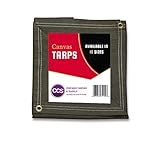
8. CCS Chicago Canvas Heavy Duty Canvas Tarp — Best Breathable Canvas Option
As an Amazon Associate I earn from qualifying purchases. This article contains affiliate links. If you buy through these links, I may earn a commission at no extra cost to you.
Canvas behaves differently from laminated polyethylene. Chicago Canvas describes its 16-ounce cotton canvas as water-resistant and mildew-resistant rather than fully waterproof. The big advantage is breathability, which can help reduce the condensation problems you can get under a sealed plastic cover.
I would use canvas where shade or partial weather protection matters more than keeping every drop of rain out. I would not choose it as the only roof over a run that must stay completely dry through days of heavy rain.
- Features: 16-ounce cotton canvas, water-resistant treatment, breathable fabric, grommets around the perimeter.
- Pros: Better breathability than solid plastic tarps.
- Cons: Water-resistant is not the same as waterproof; canvas should be dried before storage.
- Best for: Shade and partially protected runs.
Check Chicago Canvas tarp on Amazon
9. Xpose Safety 10-Mil Silver/Black Poly Tarp — Best Everyday Value

As an Amazon Associate I earn from qualifying purchases. This article contains affiliate links. If you buy through these links, I may earn a commission at no extra cost to you.
Not every coop needs commercial-weight material. A 10-mil tarp is useful for smaller runs, temporary side panels, or covers that come down after bad-weather season. It gives you more substance than a thin blue utility tarp without making a modest installation unnecessarily heavy.
Most early tarp failures happen around overstressed attachment points, not in the untouched center of the sheet. Spread the load around the perimeter instead of relying on a few corners, and recheck the tarp after the first windy day.
- Features: 10-mil polyethylene, reinforced corners, UV-treated material.
- Pros: Manageable weight, good for seasonal setups.
- Cons: Less substantial than 14- or 16-mil tarps.
- Best for: Small coops, seasonal covers, and everyday backyard use.
Check Xpose 10-mil tarp on Amazon
10. Xpose Safety Heavy-Duty Mesh Shade Tarp — Best for Summer Shade and Airflow

As an Amazon Associate I earn from qualifying purchases. This article contains affiliate links. If you buy through these links, I may earn a commission at no extra cost to you.
A summer run has almost the opposite requirement of a winter windbreak. You want shade, but you do not want to stop the breeze. Xpose lists its black polypropylene mesh with double-stitched hems, brass grommets, and approximately 60% shade.
This is not waterproof, and that is exactly why it belongs in the list. Its job is reducing direct sun while keeping much more airflow than a solid plastic sheet. During very hot weather, shade should be combined with fresh water, ventilation, and enough space for birds to move away from the hottest part of the run.
- Features: Polypropylene mesh, about 60% shade, brass grommets, double-stitched hems.
- Pros: Preserves airflow while reducing direct sun.
- Cons: Not waterproof and not a winter windbreak.
- Best for: Summer shade over runs and outdoor chicken areas.
Check mesh shade tarp on Amazon
What Type of Tarp Should You Use on a Chicken Run?
For a run roof: Choose a waterproof poly or vinyl tarp with reinforced edges and enough fastening points. A 12- to 16-mil poly tarp makes sense for longer-term use. Give the roof enough slope for rain to drain quickly. If you are planning something more permanent, compare your options in our guide to chicken coop roof types and materials.
For winter side panels: Clear vinyl is useful because it reduces wind and rain without removing most of the daylight. Cover the sides receiving the worst weather rather than automatically enclosing every wall.
For summer: Mesh shade is often the better choice when direct sun is the main problem. A solid tarp over the roof and all four sides can make a run hotter and reduce air movement.
For temporary protection: An 8- to 10-mil poly tarp may be perfectly adequate for a seasonal side panel, a temporary roof repair, or a small chicken tractor.
How Thick Should a Chicken Coop Tarp Be?
Thickness is usually measured in mils, with one mil equal to one-thousandth of an inch. A larger number generally means thicker material, but durability also depends on the weave, edge reinforcement, UV treatment, grommet quality, and how the tarp is installed.
- 5–8 mil: Light-duty or temporary coverage.
- 8–10 mil: Seasonal backyard use.
- 12–14 mil: Heavier everyday weather protection.
- 16 mil and above: Exposed or longer-term installations.
- 20-mil clear vinyl: Heavy winter side panels and weather barriers.
Do not automatically buy the thickest tarp available. A very heavy sheet hanging from a lightweight PVC tractor can put more stress on the frame than you expect. Match the tarp to the structure underneath it.
A Tarp Is Weather Protection, Not Predator Protection
A tarp can block rain, wind, snow, or sun. It cannot stop a raccoon, fox, dog, or other determined predator. Keep secure fencing or hardware cloth underneath any tarp panel and use a strong frame and latches. Our comparison of chicken wire and hardware cloth explains the difference between a weather layer and a real predator barrier.

How to Attach a Tarp Without Destroying the Grommets
Wind usually damages a tarp at the connection points first. Instead of fastening only the four corners, distribute tension around the perimeter. Use several grommets, keep loose sections from flapping constantly, and consider tie-downs that allow a little controlled movement rather than pulling the sheet rigidly in every direction.
At the same time, do not stretch the tarp so tightly that every grommet is already under maximum tension before the first gust arrives. Check the edges after storms. One loose corner can quickly become a ripped hem.
Give a Tarp Roof Enough Slope
A flat tarp roof can turn into a water bag. Rain collects in one low spot, the tarp stretches, the pocket gets deeper, and even more water settles into it. Build a slope or peak so water runs off quickly, and make sure that runoff does not create a permanently muddy area at the coop foundation.
Never Tarp Over Essential Coop Ventilation
Blocking a direct cold draft at bird level is not the same thing as sealing ventilation. Chickens produce moisture through breathing and manure, and stale air plus ammonia still need a route out of the coop. University Extension guidance consistently emphasizes dry housing and ventilation during cold weather.
You can use a tarp to stop wind-driven rain or cover an exposed section while leaving high ventilation openings functioning. If you smell ammonia, see condensation on windows, or find that litter remains damp, do not add more plastic around the coop. Improve airflow and moisture management instead. See our dedicated guide to chicken coop ventilation for the basics.
How to Choose the Right Tarp Size
Measure the actual frame before ordering, then add enough material for roof overhang, overlap, fastening, and corners. Also check whether a manufacturer lists cut size or finished size. Some tarps finish slightly smaller after hems and seams are added, so a tarp that matches your frame exactly on paper may be frustratingly short in real use.
Final Verdict
There is no single tarp I would use for every chicken coop and run. For a sturdy year-round roof, the WHITEDUCK Super Heavy Duty 16-Mil Poly Tarp is the first one I would look at. Its heavier polyethylene, reinforced construction, and close tie-down spacing suit a permanent outdoor setup.
If your property is particularly exposed to wind and rain, the Xpose Safety 16-Mil Super Heavy Duty Tarp is another useful heavy-duty choice. For winter side panels, I prefer the Xpose Safety 20-Mil Clear Vinyl Tarp because it blocks weather without making the run as dark.
In summer, I would change priorities completely. The Xpose Safety Mesh Shade Tarp gives shade while preserving far more airflow than solid waterproof plastic.
Whatever you buy, treat the tarp as one part of the setup. It can control rain, wind, and sun, but it cannot replace a secure predator barrier, proper roof support, drainage, or ventilation.
Frequently Asked Questions
Can I cover my entire chicken run with a tarp?
You can cover the roof and selected weather-facing sides, but completely enclosing a run with solid tarp can reduce airflow. In summer it may trap heat, and in winter it may contribute to moisture problems. Leave appropriate ventilation and open space.
What thickness tarp is best for a chicken run?
For longer-term outdoor use, 12–16 mil polyethylene is a practical range. Lighter 8–10 mil tarps are useful for seasonal setups, while heavier clear vinyl makes sense for winter side panels.
Is a clear tarp better for chickens in winter?
Clear vinyl can block wind-driven rain and snow while allowing daylight into the run. It is still an impermeable material, so it should not cover or replace essential ventilation.
Can I use a tarp instead of a permanent roof?
Yes, especially on a well-framed run, but the tarp needs support and slope. Avoid large unsupported spans where rain or snow can collect. A permanent solid roof may make more sense for a long-term enclosure.
Are mesh tarps waterproof?
No. Mesh tarps are mainly for shade and airflow. They may soften direct sun and some wind, but they should not be treated as a waterproof roof.
Will a tarp predator-proof a chicken run?
No. A tarp is a weather barrier, not a predator barrier. Keep hardware cloth or other appropriate fencing underneath it and use secure framing and latches.
Should I cover chicken coop vents with a tarp in winter?
No. You can block direct drafts and wind-driven precipitation while still keeping elevated ventilation working. Moisture and ammonia need a way to escape even in cold weather.
Sources and Further Reading
- Penn State Extension — Small Scale Poultry Housing
- University of Minnesota Extension — Caring for Chickens in Cold Weather
- Xpose Safety — Tarp Specifications
- WHITEDUCK Outdoors — Super Heavy Duty Poly Tarp Specifications
- Kotap America — Heavy-Duty Reversible Green/Silver Poly Tarp
- Chicago Canvas & Supply — 16 oz Canvas Tarpaulins
