

Chicken wire and hardware cloth may look similar at first glance, but they do very different jobs around a coop. Lightweight poultry netting is mainly for keeping chickens contained, while welded hardware cloth gives you a much stronger barrier against reaching and digging predators.
That difference matters around doors, vents, windows, low run walls, and any place a raccoon, rat, snake, dog, or other predator may test the enclosure.
This guide compares 10 useful fencing products for chicken coops and runs. The list starts with the strongest, best-rated hardware cloth options and moves down to lighter containment netting for jobs where maximum predator resistance is not required.
For a broader setup guide, also see the chicken fencing ideas and electric chicken fence guide.
Quick Comparison: Best Chicken Wire and Hardware Cloth
| Product | Mesh / Gauge | Best Use | Security Level | Amazon |
|---|---|---|---|---|
| Amagabeli Hardware Cloth | 1/2″, 19 gauge | Coop walls, runs, vents | High | Check |
| YARDGARD Chicken Wire | 1″ hex mesh | Containment, upper run areas | Low–moderate | Check |
| YARDGARD Hardware Cloth | 1/2″, 19 gauge | Coop and run protection | High | Check |
| Fencer Wire Black Hardware Cloth | 1/2″, 19 gauge | Visible exterior fencing | High | Check |
| Fencer Wire Galvanized Hardware Cloth | 1/2″, 19 gauge | Runs, vents, aprons | High | Check |
| Jackson Wire Hardware Cloth | 1/8″ mesh | Small vents and tiny openings | Specialized | Check |
| Vensovo Chicken Wire | Hex poultry mesh | Light containment | Low | Check |
| YARDGARD 36″ × 25′ Hardware Cloth | 1/2″, 19 gauge | Smaller coop projects | High | Check |
| Tenax Poultry Fence | Plastic poultry mesh | Temporary containment | Low | Check |
| Fencer Wire Vinyl-Coated Welded Wire | 16 gauge, larger openings | Large perimeter fencing | Moderate | Check |
No mesh is automatically predator-proof just because it is metal. Opening size, gauge, fasteners, framing, buried edges, doors, and latches all matter.
10 Best Chicken Wire and Hardware Cloth Options
1. Amagabeli 1/2-Inch 19-Gauge Hardware Cloth — Best Overall for Coop and Run Protection

As an Amazon Associate I earn from qualifying purchases. This article contains affiliate links. If you buy through these links, I may earn a commission at no extra cost to you.
This is the kind of wire most backyard keepers actually mean when they say they want a stronger coop fence. The 1/2-inch welded square openings are small enough to reduce reach-through problems while still giving the run good airflow.
Amagabeli uses 19-gauge galvanized wire in this version. It works well on low run walls, coop windows, vent openings, and buried or outward-turned perimeter sections.
The roll is stiff enough to hold shape, but you can still cut and bend it around framed openings. Wear gloves because freshly cut ends are sharp.
- Features: 1/2-inch square mesh; 19-gauge galvanized welded wire.
- Pros: Strong all-around choice; small openings; useful for walls, vents, and aprons.
- Cons: Heavier and slower to install than chicken wire.
- Best for: Your main coop and run protection where predators may reach the birds.
Check Amagabeli Hardware Cloth on Amazon
2. YARDGARD 1-Inch Galvanized Chicken Wire — Best High-Rated Traditional Poultry Netting

As an Amazon Associate I earn from qualifying purchases. This article contains affiliate links. If you buy through these links, I may earn a commission at no extra cost to you.
Traditional chicken wire is useful when the goal is simple containment. It is light, easy to stretch around a frame, and much quicker to work with than welded hardware cloth.
The tradeoff is strength. Raccoons and other ground predators can reach through larger openings, and thin twisted wire is easier to deform than welded mesh.
Use this on upper sections, garden barriers, or areas already protected by a stronger outer fence. Do not make it your only barrier around sleeping chickens at night.
- Features: Traditional galvanized hex poultry netting with 1-inch openings.
- Pros: Lightweight, easy to shape, useful for containment.
- Cons: Weaker predator resistance than welded hardware cloth.
- Best for: Upper run sections, garden barriers, and daytime containment.
Check YARDGARD Chicken Wire on Amazon
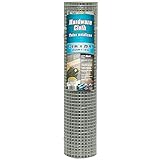
3. YARDGARD 1/2-Inch 19-Gauge Hardware Cloth — Best Established Welded-Wire Alternative
As an Amazon Associate I earn from qualifying purchases. This article contains affiliate links. If you buy through these links, I may earn a commission at no extra cost to you.
If you prefer a well-known fencing brand, this YARDGARD roll gives you the same basic 1/2-inch, 19-gauge format many keepers use around coops.
It is a sensible choice for doors, windows, lower run walls, and places where birds sleep close to the fence. The smaller openings make it harder for a raccoon to reach through compared with standard chicken wire.
Take your time around corners. Hardware cloth holds bends well, which is useful once it is fitted but less forgiving during installation.
- Features: 1/2-inch square mesh; 19-gauge galvanized steel.
- Pros: Stronger than poultry netting; established brand; good general coop coverage.
- Cons: More effort to cut and fasten.
- Best for: Permanent coop and run sections where you want welded mesh.
Check YARDGARD Hardware Cloth on Amazon
4. Fencer Wire Black 1/2-Inch Hardware Cloth — Best for a Less Reflective Finish

As an Amazon Associate I earn from qualifying purchases. This article contains affiliate links. If you buy through these links, I may earn a commission at no extra cost to you.
Bare galvanized mesh can catch the light and stand out in the yard. A darker finish is easier on the eyes when your run sits close to a patio, deck, or house.
The important part is still the 1/2-inch welded mesh and sturdy wire underneath. Use it where you would use regular hardware cloth, not as decorative netting.
Black-coated fencing also makes it easier to see through the run from a distance. That is a small detail, but it matters if you spend a lot of time watching the flock.
- Features: 1/2-inch welded mesh; dark coated finish; 19-gauge format.
- Pros: Strong mesh with a lower-glare appearance.
- Cons: Coating can be damaged where the wire is cut.
- Best for: Visible backyard runs where you want strong mesh without a bright galvanized look.
Check Fencer Wire Black Hardware Cloth on Amazon
5. Fencer Wire 1/2-Inch Galvanized Hardware Cloth — Best Flexible Size Choice
As an Amazon Associate I earn from qualifying purchases. This article contains affiliate links. If you buy through these links, I may earn a commission at no extra cost to you.
This is another good 19-gauge option when you want welded hardware cloth in a size that matches your project. Fencer Wire sells the same mesh style in several roll dimensions.
That matters if you only need to cover vents or a short apron and do not want a huge roll left over. For a full run, wider rolls mean fewer seams to fasten.
Use screws with washers or another strong fastening method on framed sections. Thin staples alone can become the weak point even when the mesh itself is strong.
- Features: 1/2-inch galvanized welded mesh; 19 gauge; multiple roll sizes.
- Pros: Good all-purpose strength; useful size choices.
- Cons: Cut edges are sharp and need careful handling.
- Best for: Custom coop projects where you want the roll size to match the job.
Check Fencer Wire Galvanized Hardware Cloth on Amazon
6. Jackson Wire 1/8-Inch Hardware Cloth — Best for Small Vent and Gap Protection

As an Amazon Associate I earn from qualifying purchases. This article contains affiliate links. If you buy through these links, I may earn a commission at no extra cost to you.
A 1/8-inch mesh is not what you normally use to cover an entire chicken run. It is more useful for small openings where mice, tiny snakes, insects, or very young chicks are the concern.
Think vents, brooder openings, small gaps, or repair patches. The tiny mesh also reduces airflow compared with larger hardware cloth, so do not cover major ventilation areas without checking how much open area remains.
This is a specialized product rather than an all-purpose fence. Use 1/2-inch hardware cloth for most full-size coop walls and reserve this for smaller problem spots.
- Features: 1/8-inch welded mesh in a compact roll.
- Pros: Covers tiny openings; useful for vents and repairs.
- Cons: Too fine and restrictive for large run walls.
- Best for: Small gaps, vent guards, brooders, and targeted rodent control.
Check Jackson Wire Hardware Cloth on Amazon
7. Vensovo Galvanized Chicken Wire — Best Lightweight DIY Poultry Netting

As an Amazon Associate I earn from qualifying purchases. This article contains affiliate links. If you buy through these links, I may earn a commission at no extra cost to you.
This Vensovo roll is easy to bend around small garden or poultry projects. It is much lighter than hardware cloth, so one person can shape and attach it quickly.
That convenience comes with the same limitation as other traditional chicken wire. It is a containment mesh, not the strongest choice for stopping determined ground predators.
Use it for temporary partitions, garden protection, craft-style poultry barriers, or upper sections of a secure run. Keep the lower predator-accessible areas in welded mesh.
- Features: Galvanized hex poultry wire in a lightweight roll.
- Pros: Easy to cut and shape; useful for small DIY jobs.
- Cons: Limited predator resistance.
- Best for: Light containment and noncritical poultry projects.
Check Vensovo Chicken Wire on Amazon
8. YARDGARD 36-Inch × 25-Foot Hardware Cloth — Best Smaller Project Roll

As an Amazon Associate I earn from qualifying purchases. This article contains affiliate links. If you buy through these links, I may earn a commission at no extra cost to you.
You do not always need a 50- or 100-foot roll. This shorter YARDGARD option makes more sense for a small coop, door panel, window set, or run repair.
The 1/2-inch, 19-gauge welded mesh gives you the same basic predator-resistant format without leaving a huge amount of unused wire in the shed.
Measure twice before ordering. A 36-inch width can be perfect for a low panel but may create extra seams on a taller wall.
- Features: 1/2-inch 19-gauge galvanized hardware cloth; 36-inch width.
- Pros: Convenient size for smaller projects; strong welded mesh.
- Cons: Narrow width can mean more seams on tall runs.
- Best for: Small coops, repairs, windows, and door panels.
Check YARDGARD 25-Foot Hardware Cloth on Amazon
9. Tenax Poultry Fence — Best Plastic Temporary Containment Fence

As an Amazon Associate I earn from qualifying purchases. This article contains affiliate links. If you buy through these links, I may earn a commission at no extra cost to you.
Tenax is useful when you want a light boundary that can go up and come down quickly. It does not rust, and it is much easier to move than metal fencing.
Do not confuse that convenience with security. Plastic mesh is not a reliable barrier for raccoons, dogs, coyotes, or chewing predators.
This works best inside an already secure yard or for supervised daytime containment. At night, chickens still need a stronger coop and run.
- Features: Lightweight plastic poultry fencing.
- Pros: Easy to move; rust-free; simple temporary setup.
- Cons: Not suitable as the main predator barrier.
- Best for: Temporary daytime boundaries inside a safer outer area.
Check Tenax Poultry Fence on Amazon
10. Fencer Wire 16-Gauge Vinyl-Coated Welded Wire — Best Heavy Perimeter Fence

As an Amazon Associate I earn from qualifying purchases. This article contains affiliate links. If you buy through these links, I may earn a commission at no extra cost to you.
This is the heaviest wire in the lineup, but the openings are larger than standard 1/2-inch hardware cloth. That makes it useful as a strong outer fence rather than the only mesh around birds.
The thicker 16-gauge wire handles pressure better than lightweight poultry netting. Pair it with smaller hardware cloth along the lower section if raccoon reach, chicks, snakes, or small rodents are a concern.
This layered approach works well on larger runs. You get a stiff perimeter frame without covering every square foot in expensive fine mesh.
- Features: Heavier 16-gauge welded wire with vinyl coating and larger openings.
- Pros: Strong perimeter support; durable; useful for larger runs.
- Cons: Openings are too large for small-predator protection by themselves.
- Best for: Large run perimeters paired with smaller hardware cloth near the ground.
Check Fencer Wire 16-Gauge Welded Wire on Amazon
Chicken Wire vs. Hardware Cloth: Which One Is Safer?
For predator resistance, hardware cloth is the safer choice around the parts of the coop predators can reach. Welded square mesh is harder to pull apart and smaller openings reduce the chance of a raccoon reaching through.
Chicken wire is still useful. It is simply better at keeping chickens in than keeping determined predators out.
The University of Minnesota makes the same distinction in its mobile poultry hut guidance: hardware cloth is used on the lower half, while chicken wire is limited to upper sections where ground predators cannot easily reach the birds.
What Mesh Size Is Best for a Chicken Coop?
1/2-Inch Hardware Cloth
This is the most useful all-around size for coop windows, doors, lower run walls, and predator aprons. It gives you good airflow while reducing reach-through gaps.
1/4-Inch Hardware Cloth
Use finer mesh when very small rodents, tiny chicks, or narrow ventilation openings are the problem. The smaller openings also reduce airflow, so balance security with ventilation.
1-Inch and Larger Mesh
Larger openings are useful on upper walls, perimeter fences, and low-risk areas. They are not the best choice where a raccoon can reach directly through the fence toward a roosting chicken.
What Does Wire Gauge Mean?
With wire, a lower gauge number generally means thicker wire. A 16-gauge welded fence is heavier than common 19-gauge hardware cloth, while 23-gauge mesh is lighter.
Opening size and gauge both matter. Thick wire with huge openings can still let small predators reach through, while very fine thin mesh may not resist heavy pressure as well.
Galvanized Before Welding vs. After Welding
Galvanizing protects steel from corrosion. When a mesh is galvanized after welding, the zinc coating can also cover the welded joints.
That is useful outdoors because weld points are common places for rust to begin. Even so, cut edges and scratched coatings can still corrode over time.
How to Stop Predators From Digging Under the Run
The fence above ground is only half the job. Foxes, dogs, coyotes, skunks, and other animals may dig directly at the base of the run.
Penn State recommends burying fencing about 12 inches and turning it outward near the bottom. Mississippi State also recommends burying and turning wire outward 10 to 12 inches to make digging more difficult.
You can also build an outward hardware-cloth apron along the soil surface and secure it well before covering it. The exact setup depends on your soil, drainage, and local predator pressure.
If raccoons are common in your area, read the guide on protecting chickens from raccoons.
Can Hardware Cloth Help Keep Snakes Out?
Smaller mesh can reduce the openings snakes can use, especially around doors, vents, and low gaps. But no ordinary run is guaranteed to exclude every small snake.
Focus on sealing gaps, keeping rodents under control, and using smaller mesh near the ground. The guide on snakes and chickens explains why rodent control around the coop matters too.
How Should You Fasten Hardware Cloth?
The mesh is only as strong as the way it is attached. A predator can pull loose wire away from a wooden frame even when the wire itself is strong.
For permanent panels, screws with washers or sturdy fencing fasteners give you more holding area than light office-style staples. Place fasteners close enough that the edge cannot be pulled away from the frame.
Fold or cover sharp cut edges so chickens cannot scrape combs, feet, or wings against them. Penn State specifically warns against loose or ragged wire inside poultry housing.
Where Plastic Poultry Netting Makes Sense
Plastic fencing has a place around chickens, but security is not that place. It is useful for garden boundaries, temporary daytime pens, and directing chickens away from flower beds.
Use it where another fence or your supervision already provides protection. Do not rely on plastic mesh as the overnight barrier around a coop.
Best Wire Setup for a Portable Chicken Tractor
Weight matters on a tractor. Covering the entire frame in heavy welded wire can make a mobile coop difficult to move.
A practical compromise is hardware cloth on the lower predator-accessible section, with lighter poultry wire higher up. The University of Minnesota uses this same approach in its mobile poultry hut design.
For more mobile-coop ideas, see the newly updated portable chicken coops and tractor plans.
Final Verdict
For most backyard coops, Amagabeli 1/2-Inch 19-Gauge Hardware Cloth is the strongest all-around choice in this list. It gives you the mesh size and wire strength that work well on walls, vents, doors, and run edges.
If you only need lightweight containment, YARDGARD Chicken Wire is easier to handle. Just keep it away from the lower predator-accessible sections of the coop.
For a large run, combining heavier welded perimeter fencing with 1/2-inch hardware cloth near the ground can give you strength without covering every wall in fine mesh.
FAQs About Chicken Wire and Hardware Cloth
Is chicken wire predator-proof?
No. Traditional chicken wire is mainly a containment material. It can keep chickens inside, but its larger openings and lightweight twisted wire are less resistant to reaching and pulling predators than welded hardware cloth.
What size hardware cloth is best for a chicken coop?
Half-inch welded hardware cloth is a practical all-around choice for doors, vents, lower run walls, and predator-accessible openings. Finer mesh can be useful for tiny gaps or rodent control.
Is 19-gauge hardware cloth strong enough for a chicken run?
Nineteen-gauge half-inch hardware cloth is commonly used for backyard coop and run protection. Installation still matters, including strong framing, secure fasteners, latches, and protection against digging predators.
Should chicken run fencing be buried?
Burying or turning fencing outward at the base helps discourage digging predators. Extension guidance commonly recommends burying fencing several inches to about a foot depending on the design.
Can raccoons reach through chicken wire?
Yes. Larger poultry-netting openings can allow raccoons to reach through and grab birds. Hardware cloth with smaller openings is a better choice for lower walls and areas close to roosting chickens.
Can I use plastic poultry netting around chickens?
Yes, but mainly for temporary or daytime containment in a safer area. Plastic netting should not be your main overnight predator barrier.
What is better for a chicken tractor, hardware cloth or chicken wire?
A combination often works well. Hardware cloth can protect the lower predator-accessible area, while lighter chicken wire can reduce weight on upper sections of a movable tractor.
Sources and Further Reading
- Penn State Extension — Small Scale Poultry Housing
- University of Minnesota Extension — DIY Mobile Poultry Hut
- Mississippi State University Extension — Protect Backyard Birds
- Oregon State University Extension — Backyard Chicken Coop Design
- Amagabeli — Hardware Cloth Specifications
- Fencer Wire — 19-Gauge 1/2-Inch Hardware Cloth

i love this