

If you like the size and calm temperament of a Brahma but want the classic white-and-black variety, the Light Brahma is the one most people recognize first. It is not a separate breed. Light is one of the three APA-recognized Brahma varieties, alongside Dark and Buff.
Light Brahmas are huge, slow-maturing chickens with feathered legs, a pea comb, brown eggs, and a generally easygoing personality. They are especially well suited to cooler climates, but their size and heavy feathering mean summer heat and muddy ground deserve extra attention.
This page focuses on the Light variety. For the broader breed history, all recognized colors, and a full Brahma overview, see our Brahma chicken guide.
Light Brahma Quick Facts
| Breed | Brahma |
| Variety | Light |
| Origin | United States, developed from large Asian-type chickens imported in the 1800s |
| APA recognition | Light and Dark Brahmas were included in the first APA Standard in 1874 |
| APA class | Asiatic |
| Adult rooster weight | About 12 lb |
| Adult hen weight | About 10 lb |
| Egg color | Brown |
| Egg production | Moderate, often about 150–200 eggs in a productive year |
| Temperament | Generally calm and docile |
| Broodiness | Varies by line; some hens brood readily |
| Cold tolerance | Very good |
| Heat tolerance | Below average in prolonged heat |
| Legs | Yellow with feathered shanks and toes |
| Comb | Pea comb |
What Makes a Light Brahma Different?
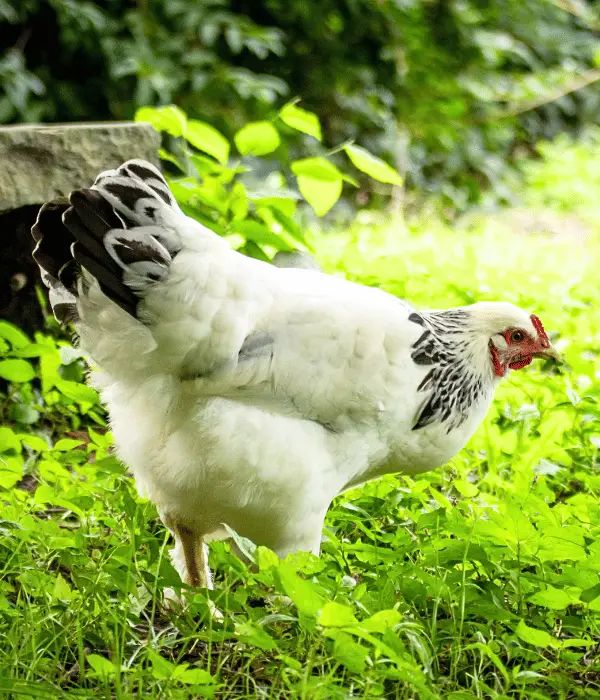
The Light variety is defined mainly by its color pattern. The body is predominantly white, with contrasting black in the neck, tail, and parts of the wings. Good birds have a clean, balanced contrast rather than a muddy or uneven mix of gray and white.
The rest of the bird should still look unmistakably Brahma: broad and deep-bodied, heavily feathered through the shanks and outer toes, with a pea comb and a substantial frame.
If someone offers a so-called “Giant Brahma” as though it is a separate standardized variety, be cautious. Brahmas are already giant chickens. In the current APA standard, the recognized varieties are Light, Dark, and Buff.
History of the Light Brahma
The Brahma developed in the United States during the 1800s from very large chickens imported through the port of Shanghai, with additional influence from Chittagong-type birds. The exact ancestry is not fully documented, so it is better to treat old claims about one precise breed cross with caution.
The Light Brahma is the original variety most closely associated with the early American breed. Light and Dark Brahmas were both included in the first American Poultry Association Standard of Perfection in 1874. Buff was added later, in 1924.
Brahmas became famous as large table birds before modern meat hybrids took over that role. Backyard keepers now value them more for their calm temperament, cold hardiness, striking appearance, and steady brown eggs.
Light Brahma Size and Weight
Light Brahmas are genuinely large chickens, not simply fluffy birds that look big.
Standard Brahma weights are about 12 pounds for an adult rooster and 10 pounds for an adult hen. A cockerel is about 10 pounds and a pullet about 8 pounds.
That size affects almost every part of management. They need more usable floor space than small laying breeds, sturdy roosts, easy access to feeders and waterers, and dry footing around those feathered legs.
They can look taller than many other chickens because of their upright stance and heavy feathering, but extreme height claims should be treated as upper-end examples rather than normal expectations.
Light Brahma Eggs: Color, Size, and Production
Light Brahma hens lay brown eggs, generally medium to large once the hen is fully mature.
For a backyard flock, roughly 150 to 200 eggs in a productive year is a more realistic expectation than treating Brahmas like high-output commercial layers.
Some lines will do better, while large exhibition lines may lay less consistently. Age, daylight, molt, broodiness, nutrition, summer heat, and general health can move production up or down quite a bit.
Brahmas also have a long-standing reputation as useful winter layers. That does not mean every Light Brahma will keep laying steadily through short days, but many continue better in cool weather than their size might suggest.
If egg volume is your first priority, compare them with the best egg-laying chicken breeds. Light Brahmas make more sense when you want size, temperament, cold hardiness, and moderate egg production together.
When Do Light Brahma Pullets Start Laying?
Light Brahmas are slow-maturing birds, so it is normal for pullets to start later than commercial laying hybrids.
There is no single age when every Light Brahma should lay her first egg. Genetics, season, body development, nutrition, and daylight all matter. A large pullet growing through fall may take noticeably longer than one maturing during spring.
Watch for the usual signs instead: a reddening comb, interest in nest boxes, squatting behavior, and widening pelvic bones. Our guide to when chickens start laying explains those changes in more detail.
Light Brahma Temperament

Temperament is one of the main reasons people keep Brahmas. Light Brahmas are generally calm, docile, and easier to approach than many lighter, more reactive breeds.
That does not mean every bird will be friendly or every rooster will be gentle. Individual behavior still matters, especially once males mature.
Their size can also work in their favor in a mixed flock because they are less likely to be pushed around by smaller birds. Still, a quiet Brahma can be bullied by a very assertive flock mate, so watch access to feed and roosting space rather than relying on body size alone.
Light Brahma Hen vs. Rooster

Adult roosters are larger, more upright, and develop more obvious male feathering. Look for pointed hackle and saddle feathers, longer curved tail feathers, and a larger, redder pea comb and wattles.
Hens are smaller and rounder, with shorter tail feathering and a softer outline. Mature hens also have the clearest possible clue: they lay eggs.
Young Light Brahmas can take patience to sex by appearance because the breed matures slowly. Avoid relying on one early feature such as comb size or chick color as a guaranteed answer.
What Do Light Brahma Chicks Look Like?

Light Brahma chicks usually hatch with pale cream, yellowish, or gray-white down mixed with darker markings. Exact chick color varies between breeding lines, so do not expect every chick to look identical.
Feathering on the shanks and outer toes is often visible early. As the chicks grow, the classic adult contrast becomes clearer: a mostly white body with darker neck, tail, and wing markings.
Because Brahmas grow into very large birds, steady growth and balanced nutrition matter more than pushing chicks to gain weight quickly.
Do Light Brahma Hens Go Broody?
Some do. Broodiness varies by individual and breeding line, so it is better described as a tendency than a guarantee.
A committed Brahma hen can make a useful mother, but her size means newly hatched chicks deserve observation. Make sure chicks can move freely around the nest and are not being trapped under heavy bedding or the hen’s body.
If you do not want chicks, broodiness also means a pause in normal laying. Our guide on how to break a broody hen covers safe management.
Cold Weather and Light Brahmas
Light Brahmas are exceptionally well suited to cold weather for a backyard breed. Their large bodies, dense feathering, and small pea comb all reduce some of the problems that lighter single-combed breeds face in winter.
Cold hardy does not mean care-free. Keep the coop dry, ventilated above roost level, and protected from strong direct drafts. Water must stay available, and those feathered feet need dry footing so mud and ice do not build up around the toes.
Healthy adults usually do not need an exposed heat lamp just because temperatures fall below freezing. Safe housing comes first. For more detail, see how to keep chickens warm in winter.
Hot Weather Care
Summer is the season that deserves more attention with Light Brahmas.
A 10- to 12-pound chicken covered in dense plumage has a harder time shedding heat than a lighter breed. Give Brahmas deep shade, strong airflow, plenty of room, and unrestricted cool drinking water during hot weather.
Heavy panting, wings held away from the body, lethargy, poor balance, or collapse are warning signs that heat stress is becoming serious. Our summer chicken care guide covers practical cooling steps.
Feathered Feet and Mud
The feathered legs are beautiful, but they are also the part of Light Brahma care that changes most with weather.
Wet soil and sticky mud can cake around the feathers on the shanks and toes. In cold weather that mess can freeze, and in any season it makes it harder to notice small injuries, scaly leg mites, or irritation.
You do not need to keep Brahmas on perfectly dry ground every minute, but good drainage makes life easier. Divert roof runoff, fix persistent puddles, and use dry footing in heavily traveled areas around doors, feeders, and waterers.
If you enjoy feather-legged breeds, our guide to chickens with feathered feet compares other options.
Housing Light Brahmas
Light Brahmas need ordinary chicken housing, just scaled sensibly for a very large bird.
Give them enough floor space that they can move around feeders and flock mates without constant crowding. Four square feet per standard bird is a useful starting point indoors, and more room is better if they spend long periods confined.
Use broad, sturdy roosts that are not excessively high. Brahmas can roost normally, but repeated hard landings are unnecessary for a bird this heavy. Nest boxes should also be roomy enough for a large hen to turn around comfortably.
Good ventilation and dry bedding are especially important because dense plumage and feathered feet hold moisture longer than bare-legged birds. See how much space chickens need for general planning guidance.
Feeding Light Brahmas
Light Brahmas do not need a special high-protein diet because they are large, and roosters do not automatically need extra protein because they are males.
Feed according to age and production stage. Chicks need a complete starter ration, growing pullets need an appropriate grower feed, and actively laying hens need a balanced layer diet or equivalent feeding program.
Offer supplemental calcium such as oyster shell separately for laying hens when appropriate. Grit serves a different purpose and is needed when birds eat foods that require grinding in the gizzard.
Because Brahmas are large and food-motivated, treats can add unnecessary calories quickly. Keep scratch grain and kitchen extras limited enough that balanced feed remains the main part of the diet. The feeding chickens guide covers ration changes in more detail.
Health and Routine Care
Light Brahmas can develop the same common problems as other backyard chickens, including mites, lice, internal parasites, respiratory disease, reproductive disorders, and injuries.
The two areas worth checking a little more closely are feet and body condition. Feathered shanks can hide irritation or mites, while a very fluffy bird can look heavier than it actually is. Use your hands during routine checks rather than judging condition only by appearance.
Good biosecurity, balanced feed, clean water, dry housing, and early attention to a sick bird matter more than any breed-specific supplement or treatment.
How Long Do Light Brahmas Live?
There is no reliable Light-Brahma-specific lifespan that every bird will reach.
Some well-kept backyard chickens live for many years, while others die earlier from reproductive disease, predators, infection, injury, or inherited problems. Genetics, nutrition, housing, climate, and general flock health all matter.
It is more useful to focus on good daily care than to promise that a Light Brahma should live exactly five, eight, or ten years.
Light Brahma Pros and Cons
| Pros | Cons |
|---|---|
| Calm, docile temperament | Needs more space than smaller breeds |
| Excellent cold tolerance | Dense plumage makes prolonged heat harder |
| Distinctive white-and-black appearance | Feathered feet need dry footing |
| Moderate brown-egg production | Slow maturity compared with commercial layers |
| Useful large dual-purpose body | High roosts can mean harder landings |
| Some hens make useful broodies | Not ideal if maximum egg output is the goal |
Are Light Brahmas Good for Beginners?
Yes, if your setup suits a very large chicken.
Their calm temperament makes them easier for many new keepers than flightier breeds. The main things to plan for are enough space, sturdy low roosts, dry ground around feathered feet, and extra attention during hot weather.
If those needs fit your yard, Light Brahmas are one of the more relaxed giant breeds to keep.
Frequently Asked Questions
Is a Light Brahma a separate breed?
No. Light is one of the recognized color varieties of the Brahma breed. The APA recognizes Light, Dark, and Buff Brahmas in both large fowl and bantam form.
How big do Light Brahmas get?
Standard Brahma weights are about 12 pounds for an adult rooster and 10 pounds for an adult hen. A cockerel is about 10 pounds and a pullet about 8 pounds.
What color eggs do Light Brahmas lay?
Light Brahma hens lay brown eggs, generally medium to large once the hen is fully mature.
How many eggs do Light Brahmas lay?
A practical backyard expectation is roughly 150 to 200 eggs in a productive year. Genetics, age, daylight, molt, broodiness, nutrition, heat, and health can move production higher or lower.
When do Light Brahmas start laying?
Light Brahmas mature more slowly than commercial laying hybrids, and there is no single age when every pullet should start. Breeding line, season, daylight, nutrition, and body development all affect first-lay timing.
Are Light Brahmas cold hardy?
Yes. Their large bodies, dense feathering, and pea comb make them very well suited to cold weather. They still need dry, well-ventilated housing, unfrozen water, and protection from strong direct drafts.
Are Light Brahmas broody?
Some are. Broodiness varies by line and individual hen. A committed Brahma can make a useful mother, but chicks should be observed because the hen is very large.
Final Thoughts
The Light Brahma is a good fit when you want the classic Brahma look in its original white-and-black variety. You get a calm giant bird, brown eggs, strong cold tolerance, and one of the most recognizable feather-legged chickens in a backyard flock.
The tradeoffs are straightforward. They need room, dry footing, sensible roost height, and more help staying comfortable during prolonged heat than many lighter breeds.
If your setup can handle those needs, Light Brahmas are impressive without being difficult.
