
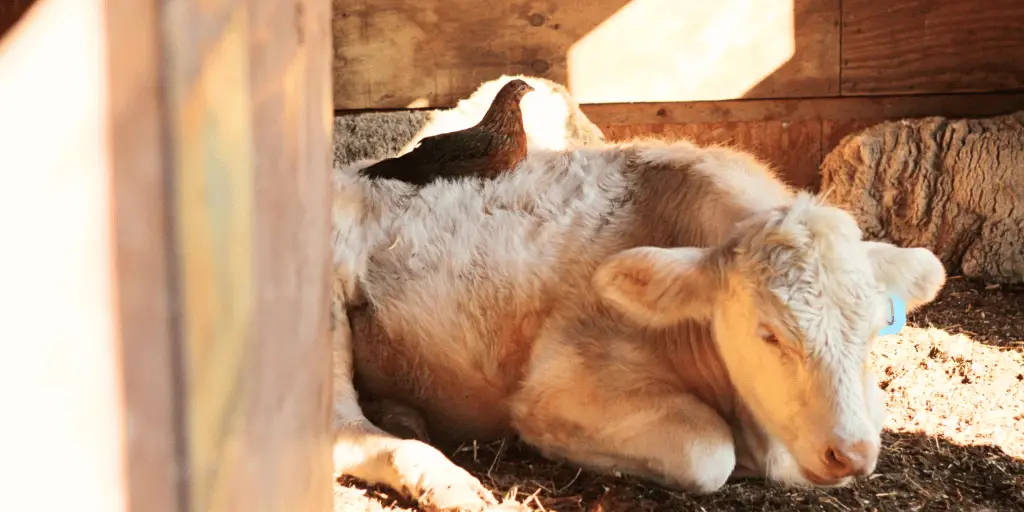
Yes, you can raise cows and chickens on the same farm, and they can even use the same pasture in a well-managed rotational system.
The important part is not treating them as one herd. Cattle and chickens still need species-specific feed, clean water, appropriate shelter, fencing, and health management.
Chickens may follow cattle through a grazed paddock, scratch apart some cow pats, and eat fly larvae and other invertebrates. That can be useful. But chickens do not replace cattle parasite control, they should not live out of the cattle feeder, and they should not sleep loose under cattle.
There is also a newer biosecurity issue that every U.S. mixed farm should know about. H5N1 highly pathogenic avian influenza has been confirmed in dairy cattle since 2024, and USDA guidance in 2026 still treats it as an emerging cattle disease.
If you keep dairy cattle and poultry on the same property, separation around milk, equipment, feed, water, and manure matters more than it did a few years ago.
The Best Setup: Same Farm, Separate Essentials
A practical mixed system usually looks like this:
- Cattle graze a paddock.
- You move the cattle before the pasture is overgrazed.
- Chickens use the same area afterward or alongside cattle where it is safe.
- The chickens keep access to their own complete feed and water.
- Each species returns to its own secure shelter.
- The pasture gets enough rest before the next grazing cycle.
You do not need a fixed rule such as “move the chickens exactly 24 hours after the cows.” Timing depends on pasture growth, rainfall, stocking density, manure distribution, fencing, shade, and how many birds you keep.
University of Minnesota Extension notes that multi-species grazing works best when you match the animals and grazing method to your pasture, labor, and management goals. Different species can graze together or in sequence.
What Chickens Really Do Around Cow Manure
Chickens are naturally curious around fresh and aging cow pats. They scratch through loose material and peck at insects, larvae, seeds, and bits of undigested feed.
Poultry Extension specifically notes that chickens can peck through cow manure looking for larvae and that a cattle-chicken rotational system can help reduce fly problems.
That is useful, but keep the claim realistic. Your chickens will not sterilize the pasture, eliminate cattle worms, or remove every tick.
Think of manure scratching as one small part of pasture management. It may help break up pats and expose larvae, while the chickens add their own manure to the paddock. You still need appropriate cattle parasite monitoring and veterinary advice when treatment is needed.
Rotational Grazing Without Fake Timing Rules
The basic sequence is simple: cattle graze first, chickens follow, then the pasture rests.
What changes from farm to farm is how quickly you move each group.
Watch the pasture rather than the clock. Move cattle before they graze plants too short or turn the paddock into mud. Move chickens often enough that manure does not build up around a mobile coop and the birds still have clean ground, shade, and access to feed and water.
Sequential grazing can also make management easier because each species keeps its own feed, mineral program, and health routine. University of Minnesota Extension points out that keeping livestock species separate in sequence can reduce some disease-transfer opportunities and makes specialized nutrition and health management easier.
If you use a mobile coop, see the guide to portable chicken coops and tractors.
Housing Cows and Chickens Safely
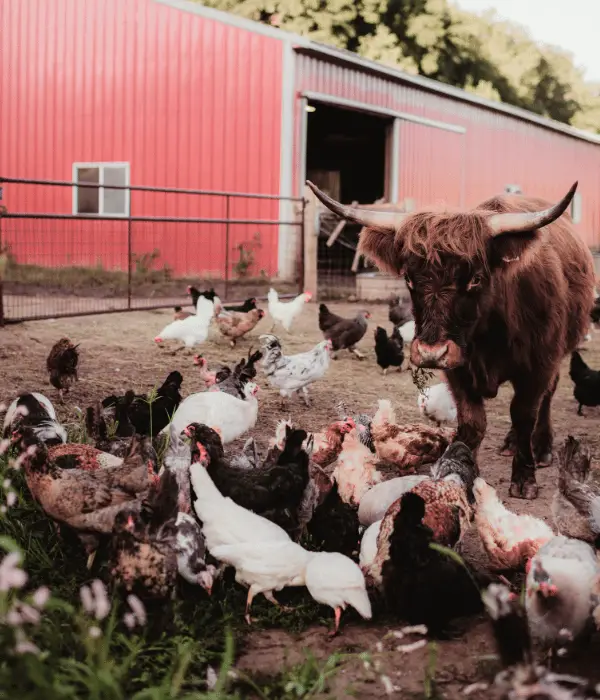
Chickens can move around cattle during the day, but they should have a protected place the cattle cannot enter when they roost.
A cow can seriously injure or kill a chicken by stepping on it, lying down on it, or pinning it against a wall. Poultry Extension notes that chickens learn to stay away from cattle to avoid trampling, but you should not rely on that instinct as your only safety measure.
Your chicken area should include secure nighttime protection, roosts, nest boxes, dry litter, and good ventilation.
That does not mean chickens and cattle can never be inside the same large barn building. A large barn can contain separate animal areas. The key is preventing loose chickens from sleeping among cattle where trampling, feed contamination, and manure exposure are difficult to control.
Keep Chicken Feed and Cattle Feed Separate
This is one of the most important management rules on a mixed farm.
Your chickens need a complete poultry ration that matches their age and production stage. Pasture insects, dropped grain, and greens are extras. They do not replace balanced feed.
Do not deliberately let chickens live out of the cattle feeder. Cattle rations, mineral mixes, supplements, and medicated products are formulated for cattle, not poultry.
Likewise, do not let cattle freely eat chicken feed or poultry supplements. Species-specific feeds are balanced differently, and some ingredients or mineral levels may be inappropriate for the other animal.
For the chicken side of the system, use a complete chicken feed as the foundation. If you need help understanding protein percentages and amino acids, see the guide to protein in chicken feed.
Give Chickens and Cattle Separate Water Access
Shared pasture does not require a shared water trough.
Chickens can contaminate cattle water with droppings, and large livestock troughs are often awkward or unsafe for poultry. A chicken waterer is easier to keep at the correct height and easier to clean.
Separate water also makes it easier to monitor intake. If a poultry waterer suddenly stays full, you know to check the flock. If both groups drink from the same large tank, changes are much harder to notice.
Keep manure, bedding, feed spills, and runoff away from both water systems.
H5N1 Biosecurity Matters on Dairy-and-Poultry Farms
Older advice often said cattle were not susceptible to avian influenza. That is no longer accurate.
USDA confirmed H5N1 highly pathogenic avian influenza in dairy cattle in March 2024. In 2026, APHIS still operates national milk surveillance and testing programs for H5N1 in U.S. dairy herds.
APHIS guidance says spread in cattle has been observed among lactating dairy cows, including movement between dairy premises. USDA has also documented epidemiologic links from affected dairy premises to poultry premises.
Raw milk deserves particular attention because H5N1 can be shed in milk at high concentrations from affected cows.
If you keep dairy cattle and chickens on the same property:
- Do not let poultry enter milking areas.
- Keep chickens away from raw milk, spilled milk, milking equipment, and milk waste.
- Do not use the same dirty boots or tools between poultry and dairy areas without cleaning and appropriate disinfection.
- Keep wild birds away from feed and water as much as practical.
- Separate sick animals promptly.
- Follow current USDA, state animal health, and veterinary guidance if H5N1 is detected nearby.
For poultry-specific prevention steps, see the chicken biosecurity guide.
Other Disease and Hygiene Concerns
Cattle and chickens do not share every disease or parasite, but that does not make a mixed farm automatically lower risk.
Campylobacter, for example, can occur in the intestinal tracts of poultry and cattle and can cycle through feces and contaminated environments. Salmonella and other manure-associated organisms also make basic hygiene important.
Good habits include keeping feed dry, controlling rodents, cleaning waterers, avoiding manure runoff into feeding areas, removing carcasses promptly, and using separate or cleaned tools between species when disease risk is high.
Footbaths are not magic. They only help when the disinfectant is appropriate, organic matter is removed first, and the solution is maintained correctly. Clean footwear is often more important than simply stepping through a dirty footbath.
Do Not Use Dust Baths or Chickens as a Parasite-Control Program
Chickens may eat fly larvae in cattle manure, but they should not replace your cattle parasite plan.
Do not assume that running chickens behind cows means you can stop monitoring worms, flies, or ticks. Use fecal testing, fly-control measures, pasture management, and veterinary guidance appropriate for your cattle operation.
The same rule applies to the chickens. A dust bath supports normal feather maintenance, but it is not dependable treatment for a confirmed mite or lice infestation.
Predator Protection Still Belongs to You
Cattle nearby may discourage some animals from entering an open field, but cows are not reliable chicken guardians.
Hawks, foxes, coyotes, raccoons, weasels, and roaming dogs can still take chickens from a cattle pasture.
Use secure nighttime housing, suitable perimeter fencing, electric poultry netting where appropriate, and overhead or natural cover. A properly trained livestock guardian dog may help on some farms, but the dog must be safe around poultry before you depend on it.
See the chicken predator guide and chicken fencing ideas for more detail.
Poultry Litter Is Fertilizer, Not Something to Spread Carelessly
There is an important difference between a flock depositing small amounts of manure while moving across pasture and spreading stored poultry litter by the ton.
Poultry litter can be a valuable fertilizer, but its nutrient content varies. Oklahoma State Extension recommends soil testing and litter analysis so application rates match crop or pasture nutrient needs.
Repeated over-application can build soil phosphorus and increase runoff or water-quality risk.
If you plan to spread stored litter, follow your state rules and build a nutrient-management plan around soil tests, litter analysis, setback requirements, and actual forage needs.
Should You Feed Poultry Litter to Cattle?
Do not casually feed chicken manure or poultry litter to your cattle.
Processed animal waste has historically been used as a feed ingredient in some places, but FDA does not treat that as a blanket endorsement. Regulation is largely handled at the state level, and contamination with drug residues, pathogens, chemicals, or other hazards remains a concern.
Merck also notes that poultry litter fed to cattle has been a source of botulinum toxin in some cases.
For a backyard or small mixed farm, there is little reason to turn poultry litter into a DIY cattle feed ingredient. Use properly formulated cattle feed and manage poultry litter as manure.
What Mixed Livestock Farms Can Teach You
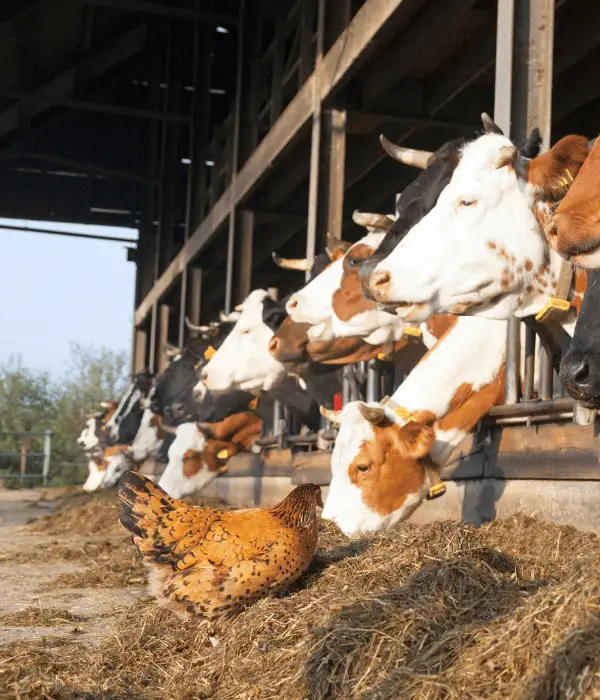
Mixed livestock systems are not just a theory, but the details vary widely from farm to farm.
Burroughs Family Farms in California uses integrated livestock within a regenerative system and documents poultry grazing in its orchard operations. Cattle Run Farm in Virginia is another verified example of farm diversification, with cattle, chickens, hogs, produce, and other enterprises on the same operation.
The lesson is not that you need to copy someone else’s exact rotation. The useful idea is to let each enterprise keep its own nutrition and welfare requirements while using pasture, manure, labor, and infrastructure more efficiently where the system genuinely fits.
A Practical Small-Farm Setup
If you are starting from scratch, keep the system simple.
- Give cattle secure perimeter fencing and a grazing plan.
- Give chickens a predator-resistant fixed or mobile coop.
- Keep poultry feed where cattle cannot reach it.
- Keep cattle feed, minerals, milk waste, and medications away from chickens.
- Provide separate clean water for poultry.
- Let chickens use cattle pasture only where trampling and predator risk are manageable.
- Move both groups often enough to avoid mud, bare soil, and concentrated manure.
- Watch current H5N1 guidance if dairy cattle are part of your farm.
- Track pasture condition, animal health, egg production, and predator losses.
Start with a manageable number of birds instead of building an elaborate regenerative system before you know how much labor the daily moves, fencing, water, and predator protection will require.
Frequently Asked Questions
Can cows and chickens live in the same pasture?
Yes. Chickens can forage in pasture used by cattle, either at the same time or in sequence. You still need to prevent trampling, provide separate feed and water, protect the birds from predators, and give chickens their own secure sleeping area.
Do chickens eat parasites from cow manure?
They may eat fly larvae and other invertebrates while scratching through cow pats. That can help with manure breakdown and fly pressure, but it does not replace a cattle parasite-control program or eliminate worms and ticks from the pasture.
Can chickens eat cattle feed?
Do not use cattle feed as chicken feed. A few spilled grains may be pecked up, but cattle rations and supplements are formulated for cattle. Keep your chickens on a complete poultry ration and restrict access to cattle minerals, medications, and specialty feeds.
Can cows and chickens sleep in the same barn?
They can be housed within the same large farm building only when the poultry area is physically protected and managed separately. Do not let chickens roost loose among cattle where they can be stepped on, crushed, or exposed to contaminated feed and manure.
Can dairy cows get bird flu?
Yes. H5N1 has been confirmed in U.S. dairy cattle since 2024, and USDA surveillance continues in 2026. Keep poultry away from milking areas, raw milk, spilled milk, dairy equipment, and sick cattle, and follow current USDA and state guidance if H5N1 is detected in your area.
Do chickens make cattle pasture healthier?
They can contribute to nutrient cycling, manure disturbance, and insect foraging, but the result depends on stocking density, rotation, soil fertility, weather, and pasture rest. Chickens are not a substitute for a grazing plan, soil testing, or manure management.
Final Thoughts
Cows and chickens can fit well on the same farm when you manage the overlap instead of pretending the two species have the same needs.
Let cattle do the bulk grazing. Let chickens forage, scratch through some manure, and use the pasture in a way that suits poultry. Keep complete chicken feed available, keep cattle supplements separate, and give each species clean water and a safe place to sleep.
Most of the benefits come from good rotation and sensible management, not from chickens magically eliminating cattle parasites or turning every cow pat into perfect soil.
If dairy cattle are part of your farm, add H5N1 biosecurity to that routine. Keeping poultry away from raw milk, milking areas, shared dirty equipment, and sick animals is now an important part of mixed-farm management in the United States.
Sources
- USDA APHIS: 2026 HPAI H5N1 Requirements and Recommendations for Livestock
- USDA APHIS: National Milk Testing Strategy
- Poultry Extension: Interaction of Small and Backyard Chicken Flocks With Other Species
- University of Minnesota Extension: Multi-Species Grazing
- USDA FSIS: Campylobacter
- Oklahoma State University Extension: Using Poultry Litter as Fertilizer
- FDA: Recycled Animal Waste
- Merck Veterinary Manual: Botulism in Animals
- Burroughs Family Farms: Regenerative Practices
- Virginia Cooperative Extension: Cattle Run Farm Case Study
