Rats and mice usually show up around a chicken coop for one reason: food. Spilled feed, scratch grain, water, and warm hiding spots make a coop or barn an easy place for rodents to settle in.
A trap can help, but trapping should not be your first or only step. You will get better results when you also clean up spilled feed, store chicken feed in a tight metal container, block entry holes, and remove clutter around the coop.
The biggest safety rule is simple: never leave an active trap where your chickens, chicks, pets, or children can reach it. Even a trap sold as “pet safe” should sit behind a solid barrier, inside a protected trap box, or in a locked feed room.
This updated list keeps nine products sold through Amazon.com U.S. I removed glue boards and rodent poison from the recommendations because both can create extra problems around a backyard flock.
Quick Comparison of the Best Rat and Mouse Traps
| Trap | Type | Best For | Amazon |
|---|---|---|---|
| 1. Tomcat Press ‘N Set Mouse Trap | Easy-set snap trap | Feed room or protected trap box | Check |
| 2. Kat Sense Large Rat Snap Traps, 6-Pack | Large reusable snap traps | Rats in protected barn areas | Check |
| 3. Kat Sense Covered Rat Trap | Covered tunnel snap trap | Safer protected placement near coop | Check |
| 4. Victor M123SSR Quick-Kill Mouse Traps, 6-Pack | Reusable mouse snap traps | Mice in dry feed-storage areas | Check |
| 5. Blinc Humane Mouse Traps, 2-Pack | Live-catch mouse traps | No-kill indoor trapping | Check |
| 6. Kensizer Humane Rat Trap | Wire live-catch cage | Rats and larger mice | Check |
| 7. d-CON Reusable Covered Mouse Trap | Covered mouse snap trap | Small mice indoors | Check |
| 8. OWLTRA OW-1 Electric Rat Trap | Enclosed electronic trap | Dry indoor barn or feed room | Check |
| 9. RinneTraps Flip N Slide Bucket Lid Trap | Multi-catch bucket trap | Mouse activity in a protected area | Check |
9 Best Rat and Mouse Traps for Chicken Coops and Barns
1. Tomcat Press ‘N Set Mouse Trap — Best Overall for Mice

As an Amazon Associate I earn from qualifying purchases. This article contains affiliate links. If you buy through these links, I may earn a commission at no extra cost to you.
If mice are getting into your feed room, the Tomcat Press ‘N Set is one of the easiest snap traps to handle. You press the back of the trap to set it instead of working with the small metal bar found on an old-style wooden trap.
It also has a long review history, which matters in a category full of cheap traps that disappear after a few months. The trap is made for mice, not large rats.
What works well: It is easy to set, easy to place along a wall, and you do not need poison.
Important around chickens: This is still an exposed snap trap. Put it inside a secure trap box, behind a solid barrier, or in a locked feed room where no bird can step on it.
Best for: You if mice are active around stored feed or a dry barn area. Check it on Amazon.
2. Kat Sense Large Rat Snap Traps, 6-Pack — Best for Larger Rats

As an Amazon Associate I earn from qualifying purchases. This article contains affiliate links. If you buy through these links, I may earn a commission at no extra cost to you.
Mice and rats are not the same problem. If you are seeing larger droppings, heavy gnaw marks, or actual rats around the barn, a full-size rat trap gives you more power than a small mouse trap.
The Kat Sense set gives you six reusable traps, so you can cover several rodent travel routes at once.
Why you may like it: Strong spring action, a large bait area, and enough traps for more than one wall or feed-storage corner.
Safety warning: Never place these open traps in the run or on the coop floor. A chicken foot can trigger one. Use them only where your flock cannot enter.
Best for: Rats in a locked barn, storage room, or protected trap station. See it on Amazon.
3. Kat Sense Covered Rat Trap — Best Covered Rat Trap
As an Amazon Associate I earn from qualifying purchases. This article contains affiliate links. If you buy through these links, I may earn a commission at no extra cost to you.
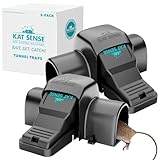
A covered trap makes more sense around a poultry setup than an exposed snap trap. The Kat Sense design puts the trigger inside a tunnel, which reduces accidental contact from the sides.
That extra cover is useful, but do not treat it as chicken-proof. Curious hens peck into openings, and chicks can fit into spaces you would not expect.
Strong point: The tunnel design hides more of the working trap than a standard open snap trap.
What you still need to do: Put the whole trap behind a barrier or in a spot the flock cannot reach.
Best for: You if you want a reusable rat trap with more built-in protection around the trigger area. Check Amazon.
4. Victor M123SSR Quick-Kill Mouse Traps, 6-Pack — Best Easy-Set Multi-Pack

The Victor M123SSR is made for mice and comes as a six-pack. The bait area sits under the strike zone, and the trap sets with a simple click.
A multi-pack helps when you see signs in more than one place. Mice usually travel along walls, behind feed bins, and around dark edges rather than crossing the middle of an open room.
What works: Six reusable traps, simple setup, and no chemical bait.
What does not: It is too small for a serious rat problem, and you still need protected placement around poultry.
Best for: Several mouse travel routes in a dry feed room or barn. View it on Amazon.
5. Blinc Humane Mouse Traps, 2-Pack — Best Live-Catch Mouse Trap
As an Amazon Associate I earn from qualifying purchases. This article contains affiliate links. If you buy through these links, I may earn a commission at no extra cost to you.
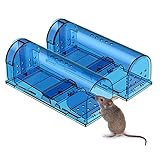
If you prefer not to use a kill trap, the Blinc design catches a mouse inside a plastic chamber. You can see whether the trap has worked without touching the animal.
Live traps need more attention than snap traps. You should check them often so a captured mouse is not left without water or shelter for a long time.
Good point: No spring bar, glue, or poison is exposed to the rodent.
Keep in mind: Catch-and-release rules can vary by location, and releasing a rodent somewhere else may not solve the larger problem if food and entry holes remain at your coop.
Best for: Small mouse problems in an indoor area you can check frequently. Check it on Amazon.
6. Kensizer Humane Rat Trap — Best Live-Catch Cage
The Kensizer is a small wire cage trap rather than a snap trap. A rodent enters for the bait and triggers the door behind it.
This style gives you more room than a small plastic mouse trap, so it can handle larger rodents. You still need to check it frequently and follow local rules for captured wildlife.
Why choose it: You can catch a rodent without an exposed killing mechanism or poison.
Downside: A smart rat may become cautious around a cage, and a trapped animal can bite through the wire if you handle it carelessly.
Best for: You if you specifically want a live-catch cage for rats or larger mice. See it on Amazon.
7. d-CON Reusable Covered Mouse Trap — Best Covered Mouse Snap Trap

As an Amazon Associate I earn from qualifying purchases. This article contains affiliate links. If you buy through these links, I may earn a commission at no extra cost to you.
The d-CON trap keeps the snap mechanism inside a plastic cover. That makes disposal less messy and keeps more of the mechanism away from your hands.
It is designed for mice, so do not expect it to handle large rats. Use it in a dry place because this is not the trap you want sitting in wet bedding or rain.
What you may like: Covered design and easy reset.
What to watch: “Covered” does not mean safe to leave beside chickens. Keep it outside the flock’s reach.
Best for: Mice in a dry storage room, garage, or enclosed barn area. Check Amazon.
8. OWLTRA OW-1 Electric Rat Trap — Best Enclosed Electronic Trap

As an Amazon Associate I earn from qualifying purchases. This article contains affiliate links. If you buy through these links, I may earn a commission at no extra cost to you.
The OWLTRA OW-1 is an enclosed electronic trap made for rats and larger rodents. The rodent has to move fully into the chamber before the system activates.
This design keeps the working parts inside the housing, but the OW-1 is an indoor trap. Keep it dry and use it in a feed room, garage, shed, or protected barn area rather than an exposed run.
What stands out: Enclosed design, indicator light, and no loose poison around the coop.
What you need: Batteries, a dry location, and a placement spot completely outside your birds’ reach.
Best for: A dry indoor rodent route where you do not want an open snap trap. View it on Amazon.
9. RinneTraps Flip N Slide Bucket Lid Trap — Best Multi-Catch Design

As an Amazon Associate I earn from qualifying purchases. This article contains affiliate links. If you buy through these links, I may earn a commission at no extra cost to you.
The RinneTraps lid fits on a standard bucket and resets after a mouse drops through the opening. That lets the trap catch more than one mouse without you resetting a spring after every catch.
For a chicken setup, the bucket has to be in a protected area. Do not put an open bucket where a hen can jump onto it, and do not use water in a bucket anywhere your animals could reach.
What works well: Multi-catch design and a simple reusable lid.
Why it ranks lower: The setup takes more space than a small trap, and the product’s current rating is lower than the top choices.
Best for: Mouse activity in a closed feed room or another area completely separated from your flock. Check it on Amazon.
Before You Set a Trap, Remove What Attracts Rodents
You can catch one mouse tonight and still have five more next week if feed stays available every night.
Clean up spilled grain, keep bags off the floor, and store feed in a tight metal container. Utah State University Extension also recommends removing feeders and waterers at night when rodents are a problem because chickens do not need to eat or drink while they are roosting.
Keeping the coop clean helps too. Our chicken coop cleaning guide can help you reduce spilled feed, damp litter, and hiding places.
Seal the Coop Before Rodents Move Back In
Mice can squeeze through very small gaps, and rats will gnaw weak wood or plastic to make an opening bigger.
Check around doors, corners, vents, floors, and the base of the run. Small-mesh hardware cloth is much better than standard chicken wire for keeping rodents and other predators out.
If you are improving your coop barrier, also read our chicken wire and hardware cloth guide. For the bigger predator picture, see common chicken predators and coop protection.
Where Should You Put Mouse and Rat Traps?
Rodents like edges. Look for droppings, greasy rub marks, gnawing, burrows, or spilled feed along a wall. That tells you much more than putting a trap in the middle of the coop.
The trap should sit where rodents travel but chickens cannot. A locked feed room, behind a solid partition, inside a purpose-built trap box, or on the other side of hardware cloth can work.
A chicken coop camera can also help you confirm whether you are dealing with mice, rats, raccoons, or another nighttime visitor before you start moving traps around.
Why I Would Avoid Glue Traps Around a Chicken Coop
Glue boards are easy to buy, but they are a poor match for a dusty poultry area. Bedding, feathers, feed dust, insects, and dirt can stick to the surface. A curious chick or other small animal can also get caught.
For a backyard flock, a protected snap trap, covered trap, live-catch trap, or enclosed electronic trap is easier to control.
What About Rat Poison?
Rodent poison creates another risk around chickens, pets, wildlife, and children. A poisoned rodent can also leave the bait station and die somewhere you cannot reach.
If you have a serious rat infestation and trapping plus exclusion is not enough, contact a licensed pest-control professional. If a rodenticide is ever used, follow the product label exactly and use a tamper-resistant station that your birds cannot access.
How to Choose the Right Trap
- Use a mouse-size trap for mice and a larger rat trap for rats.
- Choose covered or enclosed designs when you can, but still keep them away from the flock.
- Use live-catch traps only when you can check them often.
- Keep electronic traps dry unless the manufacturer specifically rates them for outdoor weather.
- Avoid poison and glue traps in areas your chickens can reach.
- Buy several traps if you see rodent signs in more than one location.
Which Rat or Mouse Trap Should You Buy?
If you are dealing with mice in a protected feed room, the Tomcat Press ‘N Set is easy to use and has a strong review history.
For rats, the Kat Sense large snap traps give you more power, while the Kat Sense covered trap hides more of the mechanism.
If you prefer live capture, choose the Kensizer cage for larger rodents or the Blinc trap for mice.
Whichever trap you use, the long-term fix is the same: take away the food source and block the entry point.
FAQs About Rat and Mouse Traps Around Chicken Coops
What is the safest type of mouse trap around chickens?
A covered or enclosed trap placed completely outside the chickens’ reach is safer than an exposed trap. No active rodent trap should sit where a hen, chick, pet, or child can touch it.
Where should you put rat traps around a chicken coop?
Place traps along rodent travel routes such as walls, behind feed storage, or near known entry points, but only in areas your chickens cannot enter.
Should you use rat poison in a chicken coop?
Avoid placing rodent poison where chickens, pets, wildlife, or children could reach it. For a serious infestation that needs rodenticide, consider a licensed pest-control professional and follow all label directions.
Do chickens attract rats and mice?
Chicken feed, spilled grain, water, shelter, and clutter can attract rodents. The chickens themselves are usually not the main attraction, although rats can attack eggs, chicks, and sometimes larger birds.
Are glue traps good for chicken coops?
They are not a good choice in an area with feathers, litter, dust, and non-target animals. A chick, small bird, or other animal can also become stuck.
What bait works in a rat or mouse trap?
A small amount of peanut butter is commonly used in snap and live traps. Chicken feed can also attract rodents, but use only a small amount so the rodent has to work at the trigger area.
How do you keep rats from coming back after trapping them?
Store feed in rodent-resistant containers, clean spills, remove hiding places, seal gaps, repair gnawed areas, and use small-mesh hardware cloth around vulnerable parts of the coop and run.