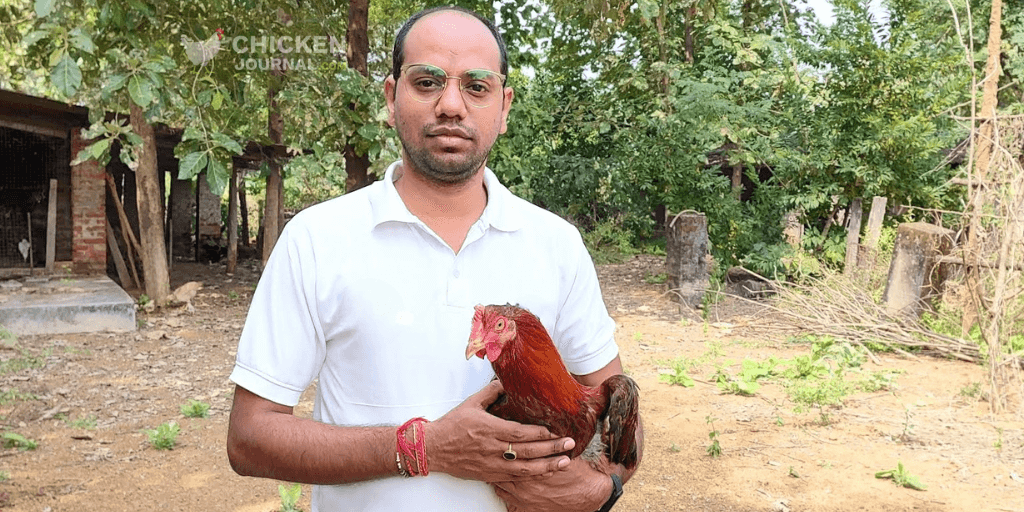
Swedish Hedemora chickens are not a standardized show breed. They are a Swedish landrace, shaped by generations of farm life around Hedemora in Dalarna County, where practical survival mattered more than matching one exact color or body pattern.
That is a big part of their appeal. One Hedemora may be black, another red, another mottled, and another may carry darker skin and legs. Some have smooth plumage, while others show a much woollier feather texture.
What ties them together is not a show-ring look. It is the landrace itself: moderate size, dense feathering, good cold tolerance, useful egg production, broodiness in a fair number of hens, and enough natural variation that two birds from the same flock may look surprisingly different.
Swedish Hedemora Chicken Quick Facts
| Origin | Hedemora area, Dalarna County, Sweden |
| Type | Traditional Swedish landrace |
| Modern rediscovery | 1982 |
| Hen weight | About 1.5 to 2 kg (3.3 to 4.4 lb) |
| Rooster weight | About 2 to 2.5 kg (4.4 to 5.5 lb) |
| Egg color | Off-white to cream or light beige/brown |
| Egg production | About 150 eggs per year for a non-broody hen |
| Egg size | Usually around 50 to 55 g |
| Broodiness | Fairly common; roughly 30 to 40% reported in Swedish landrace material |
| Cold tolerance | Very good |
| Appearance | Highly variable in color, skin pigmentation, leg feathering, and feather texture |
| APA recognition | Not an APA standardized breed |
Where the Hedemora Chicken Comes From
The Hedemora comes from central Sweden, around the town of Hedemora in Dalarna County. You will sometimes see the breed described as “sub-Arctic,” but that is not accurate. Hedemora lies well south of the Arctic Circle.
The important point is simpler: these chickens developed in a cold Swedish climate and were kept as practical farm birds for generations.
Historical accounts describe Hedemora chickens as part of ordinary rural life, and one old custom involved giving chickens as wedding gifts to help a new household get started.
Like many local farm animals, the landrace declined as commercial poultry strains became more common. In 1982, a surviving flock was recognized in the Hedemora area and became an important foundation for conservation work that followed.
Swedish conservation programs focused on keeping the landrace broad and functional rather than turning it into a uniform exhibition breed. That is why natural variation is still such an important part of Hedemora identity today.

Is the Hedemora Still Endangered?
The breed’s rescue story is dramatic, but it is easy to carry that story too far and describe every modern Hedemora as being on the edge of extinction.
NordGen’s Nordic conservation reporting listed more than 3,000 Hedemora chickens in 2021 and described the population trend as stable. Under the assessment cited there, the landrace was classified as Not at risk.
That does not make conservation unimportant. A landrace can still lose valuable traits if breeders select too narrowly for one color, one feather type, or one fashionable look.
For Hedemoras, preserving variation is part of preserving the breed.
Hedemora Size and Weight
Hedemoras are not especially large chickens, though dense plumage can make them look heavier than they really are.
Research from Sweden gives hens at roughly 1.5 to 2 kilograms, or about 3.3 to 4.4 pounds. Roosters are usually around 2 to 2.5 kilograms, or about 4.4 to 5.5 pounds.
That puts them in a useful middle ground. They are bigger than true bantams but lighter than heavy dual-purpose breeds such as Orpingtons or Buckeyes.
| Sex | Typical weight |
|---|---|
| Hen | 1.5 to 2 kg (3.3 to 4.4 lb) |
| Rooster | 2 to 2.5 kg (4.4 to 5.5 lb) |
Why Hedemoras Can Look So Different
If you are used to standardized breeds, a Hedemora flock can look almost confusing at first.
Colors can include black, white, blue-gray, red, brown, buff, wheaten, and mixed patterns. Skin and leg color vary too. Some birds are light-skinned, while others carry much darker pigmentation.
Legs may be clean or lightly feathered. Four toes are normal, though occasional five-toed birds have been reported.
The plumage itself also varies. Most Hedemoras have dense, ordinary feathering with plenty of underdown. Some individuals show a woollier, softer texture that gives the bird a much fluffier appearance.
This variation is not a sign that the flock is poorly bred. In a landrace, uniformity is not the goal in the same way it is with a tightly standardized exhibition breed.
Dark Skin and Fibromelanosis
Some Hedemora chickens carry very dark pigmentation in the skin and other tissues. This is associated with fibromelanosis, a trait also seen in several other dark-skinned chicken populations.
Genetic research has linked the condition to changes involving the EDN3 region. How dark an individual Hedemora appears can vary quite a bit, so you should not expect every bird to have the same black skin, legs, or internal pigmentation.
It is an appearance trait, not a reason to assume the bird is unhealthy.
Temperament: Calm, Alert, and Still Very Much a Landrace
Hedemoras are often described as calm and social, and many are easy enough to manage around a backyard or small farm.
At the same time, they have not been bred for generations simply to sit quietly in a pen. These are active birds. Give them room and they will scratch, forage, explore, and stay busy.
I would not promise that every Hedemora is docile with children or that every rooster will be gentle. Individual temperament still matters, especially with mature males.
For a keeper who likes chickens that behave like chickens rather than ornamental lawn decorations, that alertness is part of the appeal.
How Many Eggs Do Hedemora Hens Lay?

A practical expectation is around 150 eggs per year from a hen that is not spending part of the season broody.
The eggs are usually off-white, cream, or light beige to brown. Swedish breed material commonly puts egg weight at around 50 to 55 grams.
That is respectable production for a traditional landrace, but this is not a high-output commercial layer.
Cold tolerance also does not mean a hen ignores winter daylight. Short days, molt, age, nutrition, and broodiness can all reduce laying. Some hens may continue better than less cold-adapted birds, but “consistent winter laying” should not be treated as guaranteed.
If maximum egg numbers are your main goal, compare Hedemoras with the breeds in our best egg-laying chicken guide.
Broodiness and Mothering
Broodiness is much more common in Hedemoras than in many modern laying strains.
Swedish landrace material reports roughly 30 to 40 percent of hens going broody. A committed Hedemora hen can make a useful natural mother, though no individual bird should be guaranteed to sit or raise chicks well.
If you prefer natural flock replacement, this is one of the breed’s more useful traits. If you want uninterrupted egg production, broodiness can become a drawback during spring and summer.
For general breeding management, see our guide to breeding chickens.
Cold Weather Is Where Hedemoras Stand Out
The Hedemora’s dense feathering is the trait most strongly associated with its cold-climate history.
Many birds carry abundant underdown, and some look almost padded around the thighs and body. That insulation is useful in winter, but it should not be turned into claims that every body feature evolved for one exact thermal purpose.
They still need the same basics as other cold-hardy chickens: a dry coop, protection from direct drafts at roost level, unfrozen water, and enough ventilation for moisture to escape.
A sealed, damp coop can create frostbite and respiratory trouble even in a breed with excellent cold tolerance.
Our cold-hardy chicken guide covers winter management and other breeds suited to low temperatures.
Summer Heat Needs More Attention
Dense plumage is useful in winter, but it can make summer management more important.
I would not use a fixed temperature such as 100°F as a hard line beyond which Hedemoras cannot be kept. Heat stress depends on humidity, shade, airflow, water access, body condition, acclimation, and the individual bird.
In hot weather, provide deep shade, moving air, several water points, and enough space that birds are not crowded. Watch for persistent panting, weakness, wings held away from the body, or a bird that stops moving normally with the flock.
Housing Hedemora Chickens

You do not need a special Swedish-style coop to keep Hedemoras.
What matters is dryness, ventilation, predator protection, and enough room for an active flock. They are good candidates for a larger run or controlled free-range setup where they can forage.
Keep bedding dry and roosts secure. Birds with feathering on the legs deserve a little extra attention in muddy conditions because wet feathers can hide irritated skin or minor injuries.
For ventilation planning, see our chicken coop ventilation guide.
Feeding Hedemora Chickens
Hedemoras do not need herbs, winter teas, or a special landrace diet.
Feed chicks a complete starter ration, growing birds an age-appropriate grower feed, and laying hens a balanced layer ration. A complete feed should provide most of the nutrition.
Foraging can add insects, greens, seeds, and activity, but it should supplement rather than replace the complete ration.
Keep treats modest and provide clean water at all times. Laying hens can have access to a separate calcium source if needed.
Health: Hardy Does Not Mean Disease-Resistant
The Hedemora’s landrace history does not make it immune to ordinary chicken diseases.
They can still develop respiratory infections, coccidiosis, mites, lice, intestinal parasites, reproductive problems, injuries, and foot issues just like other backyard chickens.
Feather-legged individuals may need closer inspection because feathers can hide changes in the skin and scales. That does not mean Hedemoras are uniquely prone to scaly-leg mites.
Avoid treating every rough scale or feather problem with a homemade medication plan. If you suspect mites or another health problem, identify the cause first and use poultry-veterinary guidance for treatment and egg-withdrawal questions.
For external parasites, see our mites and lice guide.
Breeding Hedemoras Without Losing the Landrace
This is where Hedemora ownership becomes different from keeping an ordinary production breed.
If breeders repeatedly select only one color, one feather type, or the darkest possible skin, the flock may become visually consistent while losing some of the diversity that makes the landrace valuable.
Conservation breeding should pay attention to health, fertility, temperament, mothering ability, body size, and overall function while maintaining a broad gene pool.
Keep records, avoid unnecessary inbreeding, and source unrelated birds when practical. If you buy Hedemoras in North America, ask the breeder where the line came from and what traits they have been selecting.
Are Swedish Hedemora Chickens Good for Beginners?
They can be, especially for someone in a cool or cold climate who has room for an active flock.
The daily care is not complicated. Feed them properly, keep the coop dry and ventilated, protect them from predators, and give them room to move.
The harder part is finding genuine stock and understanding that a landrace should not be judged by the same visual uniformity as a standardized breed.
If you want every bird in the flock to match perfectly, Hedemoras may frustrate you. If you enjoy variation and want to help maintain a traditional chicken population, that same unpredictability is one of their best features.
Pros and Cons of Swedish Hedemora Chickens
Where they shine
- Very good cold-weather tolerance
- Active foraging behavior
- Moderate egg production
- Broodiness and natural mothering are fairly common
- Wide natural variation in color and feather type
- Important Swedish agricultural heritage
- Useful choice for conservation-minded keepers
Where they may not fit
- Can need extra attention during hot weather
- Not a high-output commercial layer
- Broodiness can interrupt egg production
- True stock may be difficult to find outside Scandinavia
- Appearance varies widely, which will not suit keepers wanting a uniform flock
- Conservation breeding requires more record keeping and thought
Frequently Asked Questions About Swedish Hedemora Chickens
1. Where do Swedish Hedemora chickens come from?
They come from the Hedemora area of Dalarna County in central Sweden. They are a traditional Swedish landrace rather than a standardized exhibition breed.
2. How many eggs do Hedemora hens lay?
A non-broody Hedemora hen may lay around 150 eggs per year. Eggs are usually off-white, cream, or light beige to brown and commonly weigh around 50 to 55 grams.
3. Are Hedemora chickens cold hardy?
Yes. Dense plumage and abundant underdown make them very well suited to cold climates. They still need a dry, well-ventilated coop and protection from direct drafts at roost level.
4. Do Hedemora hens go broody?
Quite a few do. Swedish landrace material reports broodiness in roughly 30 to 40 percent of hens, and many broody hens can make capable mothers.
5. Why do Hedemora chickens come in so many colors?
Because Hedemora is a landrace, breeders have traditionally preserved a broad population rather than selecting every bird toward one show-ring color. Plumage, skin, leg color, and feathering can vary considerably.
6. Are Hedemora chickens recognized by the APA?
No. Hedemora is a Swedish landrace and is not standardized as an American Poultry Association breed. Its natural variation is an important part of its conservation value.
Final Thoughts
The Swedish Hedemora makes the most sense when you value adaptation, natural variation, and heritage more than perfect uniformity.
You get a moderately sized chicken that handles cold weather well, lays a useful number of eggs, forages actively, and still retains broodiness in many hens.
What makes the landrace special is that no single color, feather texture, or skin shade defines it. Preserving that variety is part of keeping the Hedemora true to its history.