
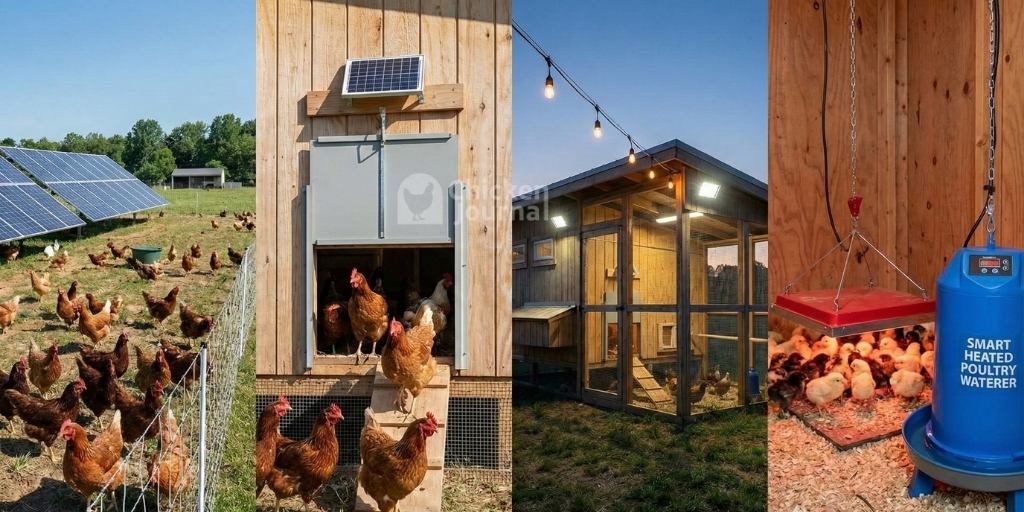
You do not need a complicated smart coop to make chicken keeping easier. A door that closes on time, a feeder that keeps feed covered at night, and a camera that shows you the run can take a few small jobs off your daily list.
The important part is choosing equipment that solves a real problem. Some products work on a timer or sensor. Others are simply powered accessories. They are not all Wi-Fi devices, and none of them replaces checking your flock in person.
Here are nine practical upgrades to compare. I have kept the product reviews short, with clear Pros and Cons for each one. Start with what your coop actually needs instead of buying every gadget at once.
Quick safety note: Keep electrical connections dry and away from birds, water, and bedding. Always provide manual access to your coop and a backup plan for power or equipment failures.
Quick Comparison of Smart Chicken Coop Upgrades
| Product | Type | Useful For | Amazon |
|---|---|---|---|
| 1. RUN-CHICKEN F80 Feeder | Automatic covered feeder | Keeping feed covered at night | Check |
| 2. NyPots Solar Automatic Door | Timer and light-sensor door | Opening and closing the pop door | Check |
| 3. Premier 1 Heated Poultry Waterer | Thermostat-controlled waterer | Helping prevent frozen water | Check |
| 4. Tapo C120 Camera | 2K wired Wi-Fi camera | Checking the door or run | Check |
| 5. Govee Wi-Fi Thermometer/Hygrometer | Temperature and humidity sensor | Spotting indoor temperature and moisture changes | Check |
| 6. iLIVING 12-Inch Shutter Fan | Thermostat-controlled exhaust fan | Airflow in a larger coop | Check |
| 7. PETNF 140W Radiant Heater | Manual localized heat panel | Special cases needing added warmth | Check |
| 8. Premier 1 PoultryNet | Portable electric netting | Creating a managed outdoor boundary | Check |
| 9. Kasa HS103 Smart Plug, 4-Pack | Indoor Wi-Fi on/off plugs | Scheduling suitable light-duty equipment | Check |
Not every product below connects to an app. I have described what each one actually does. Check the current listing for the exact model, included accessories, and delivery options.
9 Smart Chicken Coop Products Worth Considering
1. RUN-CHICKEN F80: Automatic Covered Feeder

As an Amazon Associate I earn from qualifying purchases. This article contains affiliate links. If you buy through these links, I may earn a commission at no extra cost to you.
The F80 is useful if mice or wild birds keep finding the chicken feed after dark. It holds about 19.8 pounds of feed and has a battery-powered lid that opens and closes using its light sensor or settings.
The main job here is keeping the feed covered when chickens are not eating. It is not a machine that measures a perfect portion for each bird. You still need to check the feed level, clean the feeding area, and make sure every hen can reach food.
It can make the daily routine simpler when you have a regular laying flock. Read our automatic chicken feeder guide if you want to compare other feeding styles.
Pros
- Cover closes around the flock’s daily routine.
- Large feed capacity cuts down frequent refilling.
- Battery operation does not require a coop outlet.
Cons
- You still need to check feed and batteries.
- One feeding opening may not suit a flock with bullying problems.
2. NyPots Solar Door: Opens and Closes the Pop Door

As an Amazon Associate I earn from qualifying purchases. This article contains affiliate links. If you buy through these links, I may earn a commission at no extra cost to you.
An automatic door is a useful upgrade if you cannot always be outside at sunrise and sunset. The NyPots uses a timer or light sensor and includes solar-assisted battery charging. You can also operate it manually or with its remote.
Set the closing time to suit your actual flock. A hen may still be outside when the sun drops, so test the schedule for several evenings before trusting it. Check the opening for obstructions and confirm the safety feature works.
This is a timed door, not a guarantee that every predator stays out. Your run, frame, latches, and coop still need to be secure. See our automatic coop door comparison for more options.
Pros
- Timer and light-sensor settings.
- Solar charging helps where power is limited.
- Manual and remote operation give you a backup.
Cons
- You must test its closing schedule with your flock.
- Battery, sensor, and track need regular checks.
3. Premier 1 Heated Waterer: Keeps Winter Water Available

As an Amazon Associate I earn from qualifying purchases. This article contains affiliate links. If you buy through these links, I may earn a commission at no extra cost to you.
In freezing weather, unfrozen drinking water matters more than a warm-looking coop. This Premier 1 three-gallon waterer has a built-in 100-watt heater and thermostat. It warms the waterer enough to help prevent freezing, not to give chickens hot water.
The recessed nipples help keep the drinking area cleaner. If your hens have never used nipples, show them how to drink before relying on this as their only water source. Check it daily even when the unit is plugged in.
Keep the cord and connections protected from water, pecking, and bedding. Our heated poultry waterer guide explains the different winter setups.
Pros
- Built-in thermostat helps prevent freezing.
- Three-gallon capacity and covered water supply.
- Detachable cord for seasonal use.
Cons
- Requires safe, reliable electrical power.
- Birds may need training to use the nipples.
4. Tapo C120: Check Your Coop From Your Phone

As an Amazon Associate I earn from qualifying purchases. This article contains affiliate links. If you buy through these links, I may earn a commission at no extra cost to you.
A camera helps when you want to see whether the pop door is shut or find out what walked past the run overnight. The Tapo C120 records 2K video and can save footage to a compatible microSD card.
Mount it with a clear view of the door and a little ground in front. It needs a power connection and Wi-Fi. Keep its cable where birds cannot peck it, and protect the adapter even though the camera body is weather-rated.
For night checks, use infrared vision instead of a bright white spotlight facing the roost. A camera cannot stop a predator, but it can show where your coop security needs work. See our full chicken coop camera guide.
Pros
- Clear 2K video and phone viewing.
- Local microSD recording without a basic cloud plan.
- Useful infrared night-view option.
Cons
- Needs power and usable Wi-Fi at the coop.
- Memory card and safe outdoor power routing are extra considerations.
5. Govee Wi-Fi Sensor: Track Temperature and Humidity

As an Amazon Associate I earn from qualifying purchases. This article contains affiliate links. If you buy through these links, I may earn a commission at no extra cost to you.
You do not have to guess how damp the coop feels. A temperature and humidity sensor can show changes throughout the day and send alerts when readings cross your chosen limits.
Put this indoor sensor in a dry, protected spot, away from direct sunlight and the waterer. The numbers are a helpful clue, not a poultry health diagnosis. A high humidity reading should prompt you to check wet bedding and airflow.
Important: This device measures temperature and relative humidity. It does not measure ammonia, and it will not tell you whether a coop is fully ventilated. Your nose, cleaning routine, and proper vents still matter. Read our coop ventilation guide for the basics.
Pros
- Easy way to spot temperature and humidity changes.
- App alerts and trend history.
- Small enough for a protected coop location.
Cons
- Not an ammonia or air-quality monitor.
- Needs suitable Wi-Fi and a dry installation spot.
6. iLIVING 12-Inch Shutter Fan: Thermostat-Controlled Ventilation

As an Amazon Associate I earn from qualifying purchases. This article contains affiliate links. If you buy through these links, I may earn a commission at no extra cost to you.
If you have a large walk-in coop or an outbuilding, this iLIVING exhaust fan lets you choose a temperature and adjust the fan speed. It moves warm air outside through a wall opening, while its shutter closes when the fan stops.
The included Thermospeed controller can start and stop the fan based on temperature. That makes it automated, but not a Wi-Fi device or an ammonia monitor.
This is a powerful 12-inch fan, so check your building size and make sure replacement air can enter before installing it. Avoid strong drafts across the roost. Protect the opening with appropriate mesh and use a qualified electrician when needed.
Pros
- Thermostat and speed controller included.
- Automatic shutter closes when the fan is off.
- Useful in a properly sized larger coop or outbuilding.
Cons
- Too large and powerful for many small coops.
- Needs wall installation and safe electricity; no app control.
7. PETNF 140W Radiant Panel: Optional Localized Heat

As an Amazon Associate I earn from qualifying purchases. This article contains affiliate links. If you buy through these links, I may earn a commission at no extra cost to you.
Most healthy adult chickens do not need a heater in a properly prepared coop just because winter arrives. If you have a specific reason to provide extra warmth, such as particular vulnerable birds, the PETNF panel offers localized radiant heat rather than a bright heat lamp.
This 140-watt model uses an adjustable manual control and built-in thermal protection. It warms the area close to the panel, not the entire coop. It is also not a Wi-Fi heater, so do not confuse its thermostat with remote smart control.
Only use it after considering the birds, the weather, ventilation, and the manufacturer’s mounting instructions. Keep it clear of litter and anything flammable, with protected wiring. A qualified electrician should handle permanent coop power.
Pros
- Localized warmth without a bright lamp.
- Adjustable panel control and thermal protection.
- Lower wattage than a typical household space heater.
Cons
- Not necessary for most healthy adult flocks.
- Needs careful mounting and safe power; it does not heat a whole building.
8. Premier 1 PoultryNet: A Moveable Outdoor Boundary

As an Amazon Associate I earn from qualifying purchases. This article contains affiliate links. If you buy through these links, I may earn a commission at no extra cost to you.
This is not an app-controlled gadget. It is portable electric poultry netting for keeping a managed flock area and discouraging some ground predators. The 48-inch-high net lets you change where chickens graze without building a permanent fence every time.
The net requires a properly matched energizer, which is sold separately. Set it up exactly as directed, maintain the voltage, and keep vegetation from shorting the lines. It is not an overhead barrier against hawks, and it does not replace a locked night coop.
Only use livestock-approved equipment and follow the manufacturer’s safety instructions. Our electric chicken fencing guide covers the main buying considerations.
Pros
- Moveable boundary for changing run areas.
- Can help discourage some ground predators when properly energized.
- Good for managed outdoor ranging.
Cons
- Compatible energizer is not included.
- Needs fence testing and cannot stop aerial predators.
9. Kasa HS103: Simple Scheduling for Suitable Indoor Equipment

As an Amazon Associate I earn from qualifying purchases. This article contains affiliate links. If you buy through these links, I may earn a commission at no extra cost to you.
A smart plug can turn suitable low-demand equipment on or off from your phone or a set schedule. This Kasa pack is useful if you already have a protected indoor outlet and want simple control of an approved lamp or similar device.
The HS103 is an indoor-use plug. Do not leave it exposed inside a damp coop or outdoors. Check the connected device’s electrical rating, follow both manuals, and test what happens after a power outage.
I would not use a generic smart plug to run essential water, the automatic pop door, a heater, or a fence energizer. Those need their own safe controls and should not depend on a phone schedule working correctly.
Pros
- App scheduling and remote on/off control.
- Handy for suitable low-demand indoor equipment.
- Four-pack gives you spare plugs for other dry areas.
Cons
- Indoor use only; not for wet coop locations.
- Not a substitute for safety controls on essential or heating equipment.
Which Upgrade Should You Buy First?
Start with your biggest daily problem, not the most impressive product. If you regularly miss closing time, look at an automatic door. If feed gets wasted overnight, a covered feeder may be more useful. If you suspect nighttime visitors, begin with a camera aimed at the entrance.
In cold weather, keeping water available is usually a more pressing job than heating the whole coop. If you are trying to understand a damp coop, measure humidity and fix the ventilation rather than adding more devices.
A well-built coop, fresh water, feed, clean bedding, and a daily flock check still come before automation.
Check These Before Installing Smart Equipment
- Power: Use properly installed wiring, protected plugs, and equipment rated for its location. Keep cords away from birds and water.
- Wi-Fi: Test the signal at the mounting point. A solar panel cannot fix a lost connection.
- Manual backup: Make sure you can open the door and provide feed and water when something fails.
- Weather: Check whether each product is outdoor-rated. A waterproof camera does not make its power adapter waterproof.
- Routine: Check batteries, moving tracks, water, feed, and recordings during your usual coop visit.
FAQs About Smart Chicken Coop Technology
Do I need Wi-Fi for an automatic chicken door?
Not always. Many doors use a local timer or light sensor. Check the product model to see whether it has app control or operates without internet.
Can an automatic feeder replace daily flock checks?
No. You still need to check feed levels, fresh water, bird behavior, and whether every chicken can reach the feeding area.
Does a thermostat fan replace coop ventilation?
No. An exhaust fan may help in a properly sized building, but the coop still needs suitable inlet and outlet vents at all times. Choose the fan size and position to avoid drafts on roosting birds.
Should I heat my chicken coop every winter?
Not automatically. Many healthy adult chickens do well in a dry, properly ventilated coop without added heat. Extra warmth depends on your climate and the birds’ needs, and electrical fire safety matters.
Will a temperature sensor detect ammonia?
No. A temperature and humidity sensor cannot measure ammonia. Keep litter dry and maintain proper ventilation.
Can I use an ordinary indoor smart plug outside?
No. Follow the plug’s environment rating and never expose an indoor plug to wet or damp coop conditions.
Does smart equipment make the coop predator-proof?
No. A timed door, camera, and electric netting can support management, but secure walls, hardware cloth, latches, a safe night shelter, and regular checks still matter.
