
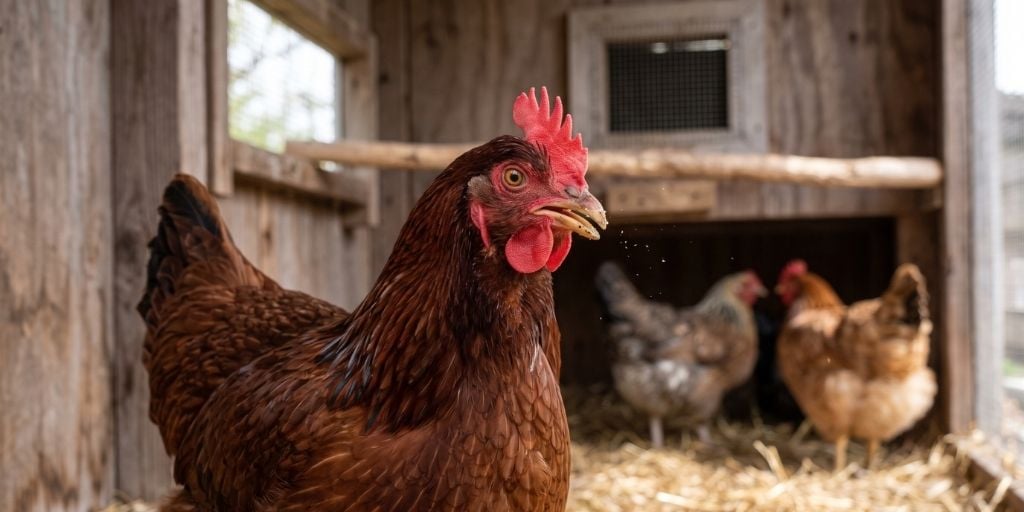
Hearing a chicken sneeze while you’re filling the feeder isn’t unusual. Chickens spend much of their day scratching through bedding, pecking at dusty feed, and exploring places where fine particles can irritate their nostrils.
But if the same hen sneezes every morning—especially if she’s coughing, sitting apart from the flock, or breathing noisily—it’s worth investigating.
Dust, ammonia, poor ventilation, wildfire smoke, respiratory infections, and occasionally more serious illnesses can all contribute to sneezing and coughing. A single sneeze from an otherwise healthy chicken may be nothing to worry about. Repeated sneezing, coughing, eye or nasal discharge, puffy eyes, or difficulty breathing should never be ignored.
It’s not always easy to tell what’s wrong because several diseases cause similar symptoms. The sound of a sneeze or cough alone won’t identify the cause.
Here’s what to look for, what you can safely check at home, when testing may be needed, and how to protect the rest of your backyard flock.
Is It Normal for Chickens to Sneeze?
An occasional sneeze can happen, particularly around dust.
Picture dropping a fresh handful of crumble feed into the feeder and watching a hen go right up to it, shake her head, and sneeze a couple times in a row. A few seconds later, she’s back to eating. The dust may have irritated her nose.
Now picture that hen sneezing repeatedly while resting. By afternoon, you notice moisture around her nostrils and an unusual sound when she breathes.
Even if she still seems active, those changes deserve a closer look.
The difference is usually the context: how often the sneezing happens and what other symptoms come with it.
Signs that may be a temporary irritation
- An isolated sneeze after scratching in dusty material.
- Eating and drinking normally.
- Being bright and alert.
- Breathing normally.
- No discharge or puffiness around the eyes or nostrils.
- No similar illness in the flock.
These signs are reassuring, although they cannot completely rule out an early infection.
Signs that mean it’s time to investigate
- Frequent or repeated sneezing.
- Coughing or unusual throat sounds.
- Watery, foamy, or thick discharge from the nose.
- Bubbles or mucus building up around the eyes.
- Wheezing, rattling, or clicking sounds when breathing.
- Lethargy or reduced eating.
- Decreased egg production.
- More than one chicken showing symptoms.
A chicken may still seem active early in a respiratory infection. Don’t wait until she’s barely moving to investigate frequent or persistent sneezing.
Chicken Sneezing vs. Coughing vs. Wheezing: What’s the Difference?
Backyard chicken owners often call several different sounds a cough. Noting what you actually hear can help your veterinarian narrow down the possibilities.
| Sound | What you may notice | What it might mean |
|---|---|---|
| Sneezing | A sudden, sharp burst of air | Nasal irritation or infection |
| Coughing | A forceful cough-like sound, sometimes with neck movement | Airway irritation, mucus, or respiratory illness |
| Wheezing | A whistling or squeaky sound | Narrowed or obstructed airways |
| Rattling | Wet or crackling breathing sounds | Mucus or respiratory inflammation |
| Gasping | Open-beak breathing with visible effort | Respiratory distress or another serious problem |
These sounds sometimes happen together. A chicken with infectious bronchitis, for example, may sneeze, cough, and make rattling sounds while breathing. Open-beak breathing doesn’t always mean infection—chickens also pant when they’re hot. But neck stretching, obvious breathing effort, weakness, unusual sounds, or open-beak breathing that continues in comfortable conditions calls for urgent veterinary attention.
What Causes Sneezing and Coughing in Chickens?
 Share on Pinterest
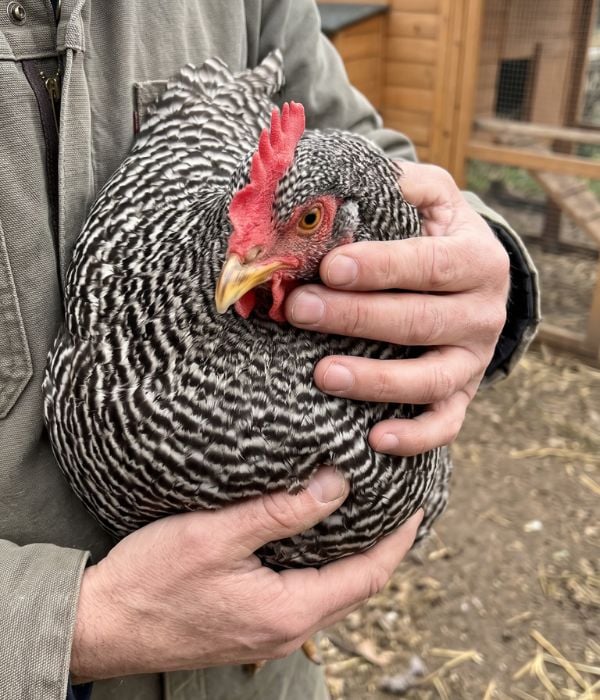
There’s no single cause. Some begin in the coop, while others are due to infectious organisms.
1. Dusty bedding and chicken feed
Dust is one of the first things to check, especially if the chicken otherwise seems healthy.
Fine dust can come from feed crumbs, dry litter, nesting material, and the dirt she’s scratching. You may notice sneezing after adding a new type of bedding, or after cleaning the coop.
That’s a useful clue, but it doesn’t prove dust is the cause. See if the feed has an excessive amount of fine powder. See if the litter is dusty (especially under bright light) and if she’s making dust clouds when scratching. Consider switching to cleaner, lower-dust bedding.
Avoid dusty bedding in the coop, and don’t sweep it aggressively while chickens are in the enclosure.
Reduced dust may be all that’s needed, but if symptoms persist it’s time to investigate other causes.
2. Ammonia and poor coop ventilation
A coop can look clean but still have poor ventilation.
Ammonia fumes are especially prevalent in damp litter resulting from waterer leaks or other sources of moisture. Ammonia irritates the eyes and respiratory tract, possibly worsening other symptoms.
Signs of poor ventilation and excess ammonia include:
- A pungent ammonia smell when opening the coop.
- Wet areas around waterers.
- Wet or caked litter.
- Moisture on walls or windows.
- Stale, stuffy air.
Don’t rely on smell alone to judge air quality; irritating levels may be present before an odor becomes obvious.
Many chicken owners close up the coop almost completely during winter to keep the chickens warm. Unfortunately, that can cause excess moisture and trapped ammonia. Instead, maintain ventilation while keeping strong drafts off the roosting birds.
If you find wet litter, fix the water leak or moisture source instead of covering it up with more bedding.
3. Mycoplasma gallisepticum (MG)
Mycoplasma gallisepticum is an important cause of respiratory disease in backyard flocks. Infected birds may cough, sneeze, breathe noisily, develop nasal discharge, or have foamy or inflamed eyes.
The affected bird may show few symptoms, or may appear severely ill. Birds with concurrent infections, poor environmental conditions, or other stressors may appear more ill.
One of the frustrating aspects of MG is that infected birds may continue to carry the organism, possibly infecting new birds despite appearing healthier after treatment. This is particularly important if you suspect MG in a new bird you’ve added to your flock.
Your veterinarian may recommend PCR testing to confirm MG in an ill bird. Clinical signs alone can’t confirm it.
4. Infectious bronchitis
Infectious bronchitis is a highly contagious, viral respiratory disease of chickens. Affected birds may sneeze, cough, breathe noisily, develop nasal discharge, eat less, or struggle to breathe.
One of the most telling signs in laying hens is a sudden change in egg production or quality. You may see fewer eggs, watery or thin-shelled eggs, or oddly shaped eggs in addition to respiratory symptoms.
However, egg-related changes are not diagnostic of infectious bronchitis, since other diseases or management issues can also affect egg production. Younger birds may experience more severe illness. Since infectious bronchitis is a viral infection, antibiotics are ineffective against it. Your veterinarian may recommend medication if a secondary bacterial infection is suspected.
5. Infectious coryza
Infectious coryza is a bacterial respiratory infection caused by Avibacterium paragallinarum. It’s highly contagious and often causes sneezing, nasal discharge, reduced activity, and facial or eye swelling in infected chickens.
Some birds may experience significant eye swelling beneath one eye. Thick discharge may develop as the infection progresses. In laying hens, egg production may be significantly reduced.
While these symptoms may suggest infectious coryza, several other diseases can cause similar signs. A definitive diagnosis typically requires veterinary testing, such as PCR or bacterial culture. Infected birds that appear to recover may still be contagious, so biosecurity is crucial in managing this disease.
6. Avian influenza (bird flu)
Avian influenza (bird flu) is a reportable and potentially devastating disease.
Sneezing alone doesn’t mean a chicken has bird flu, but highly pathogenic strains can cause respiratory symptoms alongside much more serious signs.
According to USDA APHIS, warning signs for avian influenza include gasping for air, sneezing and nasal discharge, sudden death, decreased appetite and energy, puffy eyes, purple comb or wattles, neurological signs, and a sudden drop in egg production. A sudden drop in egg production can be a subtle sign, but it’s worth noting if it’s accompanied by respiratory signs.
If several chickens become sick together or you suspect bird flu, contact your State veterinarian or USDA immediately. In the US you can call USDA APHIS at 1-866-536-7593. Do not move, sell, or expose potentially infected birds to other poultry while the situation is being investigated.
People should avoid unprotected contact with potentially infected birds and follow CDC guidance for backyard flock owners if bird flu is suspected.
7. Infectious laryngotracheitis (ILT)
Infectious laryngotracheitis is a contagious, viral respiratory disease of chickens. While mild cases may cause only sneezing, more severe cases can lead to gasping, coughing, difficulty breathing, and bloody mucus.
A chicken extending her neck and struggling to breathe needs an immediate veterinary visit, regardless of the suspected cause. Blood in mucus is a particularly concerning sign.
Do not assume a chicken with gasping, coughing, and breathing difficulties has ILT, since several other diseases also cause similar symptoms. Any sudden respiratory distress should be taken seriously.
8. Aspergillosis and mold exposure
Mold can be another respiratory hazard for chickens.
Aspergillosis is a fungal infection caused by Aspergillus molds, primarily affecting young chicks but capable of infecting older chickens. Symptoms of aspergillosis can include difficulty breathing, decreased appetite, weight loss, and poor growth.
Unlike many other respiratory diseases, aspergillosis isn’t contagious from bird to bird. Exposure to mold spores in the environment is the primary risk factor. Removing the source of mold is critical, but established infections can be challenging to treat. Never assume that standard antibiotics will cure a fungal infection.
9. Gapeworms and airway obstruction
Gapeworms are parasitic worms that can infect the trachea of chickens, causing gasping fits, coughing, head shaking, and difficulty breathing. Gapeworms should be considered in birds with appropriate outdoor exposure, but not every bird with airway issues has them.
Respiratory infection and other airway problems are also important differential diagnoses. A bird may also choke and need immediate veterinary care if she aspirates material into her airway.
How to Tell Whether Chicken Respiratory Symptoms Are Serious
| What you notice | What to do |
|---|---|
| One or two sneezes after dusty feed; chicken otherwise normal | Check for irritants and monitor closely |
| Repeated sneezing without other obvious signs | Separate the bird when safe and ask a poultry veterinarian for advice |
| Coughing with eye or nasal discharge | Arrange prompt veterinary evaluation |
| Facial swelling, foamy eyes, or worsening weakness | Seek same-day veterinary advice |
| Open-beak breathing with effort, severe weakness, or collapse | Seek emergency veterinary care |
| Several birds suddenly ill or unexplained deaths | Contact your State veterinarian or USDA immediately |
These are practical triage guidelines, not a substitute for a veterinary examination. Diseases of concern may justify contacting your veterinarian or State animal-health officials sooner.
How to Check and Care for a Sneezing Chicken Safely
The goal of the first examination is to recognize breathing trouble, limit the spread of disease, and provide useful information without hurting the chicken.
Step 1: Observe the chicken before handling
Watch the chicken quietly from a distance.
Is she walking normally? Is she interested in food? Is she breathing normally while at rest?
Does she sneeze only when she’s eating, or also when she’s doing nothing? Consider recording a brief video of the sounds and breathing movements if it’s safe to do so. It may be helpful to the veterinarian.
Step 2: Look for emergency warnings
Watch for severe breathing effort, collapse, purple discoloration, neurological problems, or worsening weakness.
If you see these signs, seek emergency veterinary help.
If there are multiple sick birds or unexplained deaths, contact animal-health authorities before unnecessarily handling or moving birds.
Step 3: Separate the sick chicken when appropriate
For a single sick bird, set up a separate enclosure away from other chickens when it’s safe to do so.
Use separate feeders and waterers.
Choose a sheltered, ventilated location that is secure from predators and extreme weather. Don’t put sick poultry in your kitchen, living room, or other spaces within your home. If bird flu is suspected, minimize contact and follow instructions from your veterinarian or State animal-health officials. Wear the recommended protective equipment if contact is necessary.
Step 4: Examine the eyes, nostrils, and face
Without squeezing the bird’s chest, look for:
- Wet or crusted nostrils.
- Bubbles or discharge around the eyes.
- Swelling around one or both eyes.
- Facial asymmetry.
- Unusual breathing sounds.
Avoid pressing on puffy tissue or trying to remove material from the deepest part of the nostrils.
A photograph of the face may also be useful when contacting a veterinarian.
Step 5: Check appetite and water intake
Offer clean, fresh water and an appropriate complete chicken feed.
Watch whether the chicken can readily drink.
Dehydration can worsen illness, but forcing water into a struggling chicken’s beak can lead to aspiration. Don’t syringe-feed or force fluids into a chicken with breathing difficulties unless a qualified veterinarian specifically instructs you to do so.
Step 6: Inspect the coop environment
Look for damp bedding, dusty feed, inadequate ventilation, mold, and ammonia.
Address obvious problems without exposing the sick bird or flock to clouds of dust.
When serious infectious disease is suspected, consult animal-health officials before performing major cleaning or moving contaminated material.
Step 7: Check the other chickens
Watch the rest of the flock for similar symptoms.
Check egg production, eating, and activity levels. Pay close attention to birds that are hiding in corners or falling behind when the flock moves. A single sick bird needs attention, but similar symptoms across the flock may indicate a spreading problem.
Step 8: Contact a veterinarian and keep records
Note when the symptoms started and if they’re improving or worsening.
Tell the veterinarian about any new birds, flock interactions, shows, wild-bird exposure, or changes in housing. Continue monitoring until the cause is understood and the veterinarian has advised when isolation can end.
How Veterinarians Diagnose Respiratory Disease in Chickens
Many respiratory diseases in chickens present with similar symptoms.
For example, a chicken with MG may sneeze and have foamy eyes, while infectious bronchitis or coryza may cause similar symptoms. Each needs a different diagnostic and management approach.
A veterinarian may recommend:
PCR testing: Samples taken from appropriate sites may be tested for mycoplasma, infectious bronchitis virus, and other potential organisms.
Culture: This can help identify certain bacteria and determine the appropriate treatment.
Blood testing: Serology may help evaluate exposure to certain infections; vaccination and flock history affect how results are interpreted.
Necropsy: If a bird dies, a veterinary diagnostic laboratory may examine it to determine the cause and help protect the rest of the flock.
Your State veterinary diagnostic laboratory or Cooperative Extension service may help identify appropriate testing options.
A useful question to ask is: “Should we test before treating, especially since other birds may have been exposed?”
That conversation can help avoid guesswork and unnecessary treatment.
Treatment for Chicken Sneezing and Coughing
Treatment depends on what’s causing the symptoms. There isn’t one medication that will safely treat every chicken respiratory disease.
If the Cause Is an Environmental Irritant
Improving airflow, reducing dust, replacing wet bedding, and repairing water leaks may help. If irritation is the main problem, the sneezing may settle once the environment improves.
Still, don’t assume that improvement rules out an infection. If symptoms continue or other birds become sick, contact a veterinarian.
If a Bacterial Infection Is Suspected
A veterinarian may prescribe an appropriate antimicrobial when one is warranted. The decision depends on the organism involved, the bird’s condition, and applicable U.S. regulations.
Some infections, including mycoplasma gallisepticum (MG), can persist even after a chicken looks better.
Because many backyard hens produce eggs or meat, medication restrictions and withdrawal requirements also matter. Never assume that a medicine intended for people or household pets is safe for laying hens.
If the Infection Is Viral
Antibiotics will not treat the virus itself.
Supportive care and careful flock management are usually central to treatment. A veterinarian may still need to address dehydration, breathing difficulties, or secondary bacterial infections.
Vaccination may help prevent certain poultry diseases, but it won’t cure a bird that’s already sick.
If Parasites or Fungi Are Involved
Correctly identifying the cause is important. A dewormer won’t help with MG or infectious bronchitis, and antibiotics won’t treat gapeworms or a fungal respiratory infection.
Treating the wrong problem wastes valuable time, particularly when a chicken is already struggling to breathe.
What About Garlic, Vinegar, and Other Home Remedies?
It’s understandable to want to give a sneezing chicken something that might make her feel better.
But there’s no reliable scientific evidence that garlic water, essential oils, vinegar, or herbal mixtures can cure serious poultry respiratory infections. Essential oils and other irritating products may even make breathing more difficult.
Human cough medicines and leftover antibiotics are not safe substitutes for veterinary care.
Fresh food and water, clean air, and treatment suited to the actual cause are better choices than experimenting with remedies.
How to Prevent Sneezing and Respiratory Problems in Chickens
 Share on Pinterest
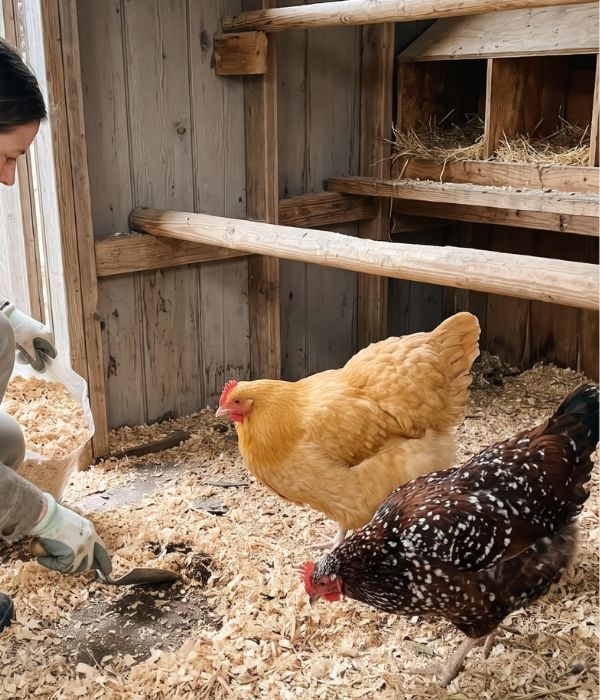
Prevention starts with a suitable environment and consistent flock management.
Keep the Coop Well Ventilated
A chicken coop needs enough airflow to clear moisture and stale air without exposing birds on the roost to strong drafts. Ventilation matters in winter just as much as it does in summer.
Closing every opening to keep a coop warm can trap damp air and ammonia, so check the environment regularly.
Keep Bedding Clean and Dry
Fix water leaks promptly, replace wet or moldy litter, and choose bedding that doesn’t produce excessive dust.
If the coop regularly becomes damp, find the source of the moisture rather than covering the problem with another layer of bedding.
Quarantine New Chickens
New birds can introduce infections even when they seem perfectly healthy.
Keep new additions apart from the existing flock, use separate supplies, and ask your veterinarian or Cooperative Extension specialist about appropriate quarantine and testing practices.
Quarantine reduces risk, but it cannot guarantee that a carrier infection will be detected.
Limit Contact With Wild Birds
Wild birds may spread poultry pathogens or contaminate feed and water.
Keep feed and water protected where possible, reduce wild-bird access to chicken areas, and clean contaminated equipment appropriately.
Use Separate Boots and Equipment
Try not to carry mud, manure, or other material between different flocks on boots, tools, or clothing.
Clean off visible organic material before disinfecting equipment, and follow the disinfectant’s label directions.
Watch the Flock Every Day
A chicken that’s stopped eating, a pullet with wet nostrils, or several birds making unusual breathing sounds deserve attention.
Small changes are easier to act on when you know what is normal for your flock. For more prevention tips, read our Chicken Biosecurity Guide: 15 Ways to Protect Your Backyard Flock.
Can a Sneezing Chicken Infect the Rest of the Flock?
Yes, if the sneezing is caused by a contagious infection.
Depending on the organism, disease may spread through direct contact, respiratory secretions, contaminated equipment, or the environment. Some infections can also be carried by birds that appear healthy.
Sneezing caused only by dust or another irritant isn’t contagious.
That’s why finding the cause is important. Don’t assume the rest of the flock is safe just because only one bird appears sick. Watch the others closely and use sensible biosecurity measures while you seek advice.
When Should You Take a Sneezing Chicken to the Vet?
Contact a poultry veterinarian when sneezing or coughing persists, particularly if there’s eye or nasal discharge, facial swelling, poor appetite, or unusual breathing sounds.
Seek emergency veterinary care if a chicken is struggling to breathe, collapses, or becomes severely weak.
If several birds become ill quickly, there are unexplained deaths, or respiratory signs appear alongside neurological problems, contact your State veterinarian or USDA immediately. USDA APHIS lists sudden deaths, breathing problems, changes in egg production, swelling, and movement problems among important warning signs.
For more help recognizing urgent problems, see When to Call a Vet for a Chicken: Emergency Signs and What to Do.
Frequently Asked Questions About Chicken Sneezing and Coughing
Why Is My Chicken Sneezing but Otherwise Healthy?
A chicken may sneeze once or twice because of dust or another irritant. Check for dusty feed, bedding, and poor airflow, and keep watching the bird.
If sneezing continues, or if discharge, weakness, or other symptoms appear, contact a veterinarian. An early infection can be easy to miss.
Can Chickens Catch Colds Like Humans?
Chickens can get respiratory infections, but the typical human common cold isn’t the usual cause of illness in poultry.
Several chicken-specific bacteria and viruses can cause cold-like symptoms. If sneezing persists or other symptoms develop, a veterinarian can help investigate.
Why Is My Chicken Coughing and Stretching Its Neck?
Neck stretching with coughing or gasping may mean the chicken is having trouble breathing. An irritated or obstructed airway is possible, and gapeworms can cause similar signs in some situations.
If the bird is struggling for air, seek emergency veterinary attention rather than trying a home treatment.
Can Dusty Chicken Feed Cause Sneezing?
Yes. Fine feed particles can irritate a chicken’s nostrils, especially when she pushes her beak into a dusty feeder.
Reducing excess dust may help, but don’t blame feed alone if coughing or sneezing persists.
Should I Isolate a Chicken That Keeps Sneezing?
For persistent, unexplained symptoms, separating the bird when it’s safe to do so can help reduce possible spread. Use separate feeding and watering equipment and keep an eye on the rest of the flock.
If bird flu is suspected, minimize handling and contact animal-health officials for instructions.
Can I Give My Sneezing Chicken Antibiotics?
Not without veterinary guidance. Antibiotics don’t work against viruses and may be inappropriate for the cause of the symptoms.
Medication rules and egg or meat withdrawal requirements may also apply to food-producing chickens.
Can Chickens Recover From Respiratory Infections?
Many chickens can improve with appropriate care, but recovery depends on the disease and how seriously the bird is affected.
Some infections can cause lasting problems or leave apparently healthy birds carrying the organism. A veterinarian can advise on treatment, testing, and when it’s safe to reintroduce a bird.
When Is Chicken Coughing an Emergency?
Coughing needs urgent attention when it comes with gasping, obvious breathing effort, collapse, severe weakness, or rapid deterioration.
Multiple sick birds, sudden deaths, or neurological signs are also reasons to contact veterinary or animal-health authorities immediately.
Final Thoughts
A chicken that sneezes once while scratching in dusty bedding may not need a trip to the vet. But a hen that keeps sneezing or coughing—especially when other symptoms appear—shouldn’t be ignored.
Observe her carefully, check the coop environment, protect the rest of the flock, and ask a veterinarian for help if the symptoms continue.
Most importantly, don’t guess the disease from a single symptom or treat every coughing chicken with the same medicine. It’s better to catch a problem early than to discover too late that it was spreading through the flock.
Veterinary and Government References
- USDA APHIS — How to Spot Sickness in Poultry
- USDA APHIS — Biosecurity Basics
- CDC — Backyard Flock Owners and Bird Flu
- CDC — Protect Yourself From Bird Flu
- Merck Veterinary Manual — Mycoplasma gallisepticum Infection in Poultry
- Merck Veterinary Manual — Infectious Bronchitis in Chickens
- Merck Veterinary Manual — Infectious Coryza
