

A chicken coop should smell like bedding and chickens, not burn your nose when you open the door. Regular manure removal with suitable coop rakes or scoops is more important than masking odors. If the odor is sharp enough to smell like ammonia, the first job is to find the wet litter or manure buildup causing it.
Coop deodorizers can help after that basic cleanup. Some absorb moisture, some use zeolite or microbes, and others are made for washing hard surfaces or treating outdoor areas.
The important part is using the right product in the right place. A powder meant for litter is not the same thing as a hose-end yard spray, and neither replaces ventilation.
This guide compares 10 well-reviewed odor-control products, with poultry-specific options placed first. For the bigger picture, see the guides on cleaning a chicken coop and chicken coop ventilation.
Quick Comparison: Best Chicken Coop Deodorizers
| Product | Type | Best Use | Amazon |
|---|---|---|---|
| Sweet PDZ Coop Refresher | Zeolite granules | Best overall litter refresher | Check |
| MICROBE-LIFT Chicken Coop Cleaner | Liquid concentrate | Coop surfaces and odor control | Check |
| The Chicken Chick Sweet Coop | Zeolite bedding enhancer | Dry litter and nest areas | Check |
| FlockLeader Healthy Coop | Litter additive | Wet or smelly bedding | Check |
| Strong Animals Coop Recuperate | Granular coop refresher | Routine litter refresh | Check |
| Absolutely Clean Coop Cleaner | Enzyme cleaner spray | Hard-surface cleanup | Check |
| NaturVet Yard Odor Eliminator | Hose-end liquid | Outdoor run, patio, gravel | Check |
| PureAyre Pet Odor Eliminator | Liquid spray | General animal-area odor | Check |
| Nature’s Pure Edge Yard Odor Eliminator | Outdoor liquid | Grass, gravel, patio, kennel areas | Check |
| SMELLEZE Outdoor Yard Odor Eliminator | Granular outdoor deodorizer | Exterior coop and run areas | Check |
If you can smell strong ammonia, do not keep adding deodorizer on top of wet litter. Remove the wet material, fix leaks, improve airflow, and then use an odor-control product if it still helps your routine.
10 Best Chicken Coop Deodorizers and Odor-Control Products
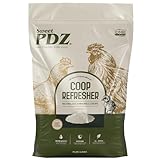
1. Sweet PDZ Coop Refresher — Best Overall
As an Amazon Associate I earn from qualifying purchases. This article contains affiliate links. If you buy through these links, I may earn a commission at no extra cost to you.
Sweet PDZ is the easiest place to start if the bedding gets damp under roosts or around the waterer. It uses zeolite granules rather than perfume, so the goal is odor and moisture control instead of simply covering a smell.
Sprinkle it where manure builds up, then add or turn the bedding as needed. It works especially well in spots you already clean often.
Do not use it as an excuse to leave soaked litter in place. A wet patch still needs to come out.
- Features: Zeolite-based granular coop refresher.
- Pros: Easy to spread; poultry-specific; useful around roost and litter areas.
- Cons: Cannot correct leaks, poor ventilation, or heavily saturated bedding.
- Best for: Routine odor control in dry-to-moderately damp coop litter.
Check Sweet PDZ Coop Refresher on Amazon
2. MICROBE-LIFT Chicken Coop Cleaner and Odor Eliminator — Best Poultry-Specific Liquid

As an Amazon Associate I earn from qualifying purchases. This article contains affiliate links. If you buy through these links, I may earn a commission at no extra cost to you.
Sometimes the smell is not in the bedding at all. Dried manure on walls, trays, floors, roost supports, and equipment can keep a coop smelling dirty after the loose litter is gone.
MICROBE-LIFT is made specifically for chicken-coop surfaces and supplies. That makes it a better fit than a random household cleaner when you are washing the coop during a full cleanout.
Use it according to the label, then let cleaned surfaces dry before you add fresh bedding. Moisture left behind after washing can create the next odor problem.
- Features: Concentrated liquid cleaner and odor-control product for poultry areas.
- Pros: Chicken-specific use; works on hard surfaces and equipment.
- Cons: Requires mixing/application and drying time.
- Best for: Full coop cleanouts when odor is stuck to hard surfaces.
Check MICROBE-LIFT Coop Cleaner on Amazon
3. The Chicken Chick Sweet Coop Zeolite — Best Zeolite Bedding Enhancer

As an Amazon Associate I earn from qualifying purchases. This article contains affiliate links. If you buy through these links, I may earn a commission at no extra cost to you.
This is another zeolite option, but it is packaged specifically for backyard poultry. It is handy when you want a dry granular product for litter, nest areas, or the messier spots under roosts.
The texture is easy to work into bedding instead of spraying another liquid into the coop. That makes more sense when moisture is already the problem.
A little goes further when you target the dirty areas instead of dusting every inch of the floor. Clean manure first, then use the product as part of the bedding routine.
- Features: Zeolite-based poultry bedding enhancer.
- Pros: Dry application; poultry-specific; simple to add during litter maintenance.
- Cons: Ongoing cost if used heavily across a large coop.
- Best for: Backyard keepers who prefer a dry litter additive.
Check The Chicken Chick Sweet Coop on Amazon
4. FlockLeader Healthy Coop Litter Additive — Best for Wet or Smelly Bedding Areas

As an Amazon Associate I earn from qualifying purchases. This article contains affiliate links. If you buy through these links, I may earn a commission at no extra cost to you.
FlockLeader Healthy Coop is aimed directly at litter management. It makes the most sense in the places where bedding gets dirty fastest rather than as a substitute for a clean floor.
Use it after you remove obvious wet clumps. That keeps you from wasting product on bedding that already belongs in the compost pile.
If the same corner keeps getting wet, find the cause. A leaking drinker or rain entering through the wall will beat any litter additive eventually.
- Features: Poultry litter additive for coop odor and moisture management.
- Pros: Easy dry application; useful for targeted litter maintenance.
- Cons: Does not fix recurring water leaks or ventilation problems.
- Best for: Trouble spots where litter tends to become damp or smelly.
Check FlockLeader Healthy Coop on Amazon
5. Strong Animals Coop Recuperate — Best Routine Coop Refresher

As an Amazon Associate I earn from qualifying purchases. This article contains affiliate links. If you buy through these links, I may earn a commission at no extra cost to you.
Coop Recuperate is designed for the in-between days when the coop does not need a complete cleanout but the bedding could use attention. You spread it through the litter according to the label and continue your normal cleanup routine.
This product includes aromatic ingredients, so more is not better. Follow the package directions and keep good airflow through the coop instead of trying to make the building smell strongly scented.
If the birds are coughing, tearing, or avoiding the coop, stop focusing on fragrance and check the air quality, dust, bedding, and ammonia.
- Features: Granular poultry coop refresher for bedding.
- Pros: Simple routine application; made for backyard coops.
- Cons: Scented/aromatic formula will not suit every keeper or every flock setup.
- Best for: Light odor control between normal bedding changes.
Check Strong Animals Coop Recuperate on Amazon
6. Absolutely Clean Chicken Coop Cleaner and Deodorizer — Best Ready-to-Use Surface Cleaner

As an Amazon Associate I earn from qualifying purchases. This article contains affiliate links. If you buy through these links, I may earn a commission at no extra cost to you.
This one is for the scraping-and-washing part of coop care. Spray it on dirty hard surfaces according to the label after loose manure and bedding have been removed.
A ready-to-use cleaner is convenient on nest boxes, trays, roost supports, and small coops. You do not have to mix a large bucket when only one section needs attention.
Give the area time to dry before the chickens go back onto fresh bedding. Cleaning a coop only to trap more moisture inside defeats the point.
- Features: Ready-to-use enzyme-style cleaner and deodorizer for chicken-coop surfaces.
- Pros: Convenient spray application; useful for targeted cleanup.
- Cons: Less economical than concentrate for a very large coop.
- Best for: Small coops, nest boxes, trays, and spot cleaning.
Check Absolutely Clean Coop Cleaner on Amazon
7. NaturVet Yard Odor Eliminator — Best for Outdoor Run and Patio Areas

As an Amazon Associate I earn from qualifying purchases. This article contains affiliate links. If you buy through these links, I may earn a commission at no extra cost to you.
NaturVet belongs outside more than inside the bedding. The hose-end application works well when droppings have built up on grass, gravel, concrete, or another washable area around the run.
That is useful if the coop itself is clean but the space around it still smells after rain or heavy flock use.
Follow the label around animals, plants, and surfaces. Keep birds away while you are applying anything that leaves an area wet or slippery.
- Features: Hose-end outdoor odor-control liquid.
- Pros: Covers a larger outdoor area; practical for patios, gravel, and yard zones.
- Cons: Not a dry litter treatment for the coop floor.
- Best for: Outdoor chicken-run surroundings and hard surfaces.
Check NaturVet Yard Odor Eliminator on Amazon
8. PureAyre Pet Odor Eliminator—Best General Animal-Area Spray

As an Amazon Associate I earn from qualifying purchases. This article contains affiliate links. If you buy through these links, I may earn a commission at no extra cost to you.
PureAyre is a general pet-area odor product rather than a chicken-specific coop additive. That makes it more useful for washable surfaces, carriers, storage areas, or other animal spaces than for mixing into deep litter.
Use it only where the product label allows. A general odor spray should never be misted around birds simply because the coop smells bad.
For litter odor, the poultry-specific products above are the better starting point. This one earns a place because it handles a different cleaning job.
- Features: General pet-area liquid odor eliminator.
- Pros: Multipurpose; useful beyond the coop.
- Cons: Not specifically designed as a poultry litter amendment.
- Best for: General animal-area surfaces used around your poultry setup.
Check PureAyre Pet Odor Eliminator on Amazon
9. Nature’s Pure Edge Yard Odor Eliminator — Best High-Feedback Outdoor Option

As an Amazon Associate I earn from qualifying purchases. This article contains affiliate links. If you buy through these links, I may earn a commission at no extra cost to you.
This product has a large amount of customer feedback, but its main job is outdoor odor control. Think lawn, artificial grass, patio, gravel, or the outside of a run rather than the enclosed sleeping area.
It can be useful after you remove droppings from a heavily used yard section. It should not become a shortcut for poor drainage or a muddy run.
If puddles sit around the coop after every storm, fix that first. Odor usually follows moisture.
- Features: Outdoor liquid odor-control product for yard and kennel-style surfaces.
- Pros: Strong feedback history; covers outdoor areas.
- Cons: General outdoor product, not a chicken-litter additive.
- Best for: Exterior run areas where droppings cause lingering odor.
Check Nature’s Pure Edge on Amazon
10. SMELLEZE Outdoor Yard Odor Eliminator — Best Granular Outdoor Option

As an Amazon Associate I earn from qualifying purchases. This article contains affiliate links. If you buy through these links, I may earn a commission at no extra cost to you.
SMELLEZE gives you an outdoor granular option instead of another hose-end spray. That can be useful around gravel, patios, kennel-style areas, or other exterior surfaces where liquids are inconvenient.
Keep it in the job it was made for. It is not a replacement for fresh chicken bedding or a fix for ammonia inside a poorly ventilated coop.
Follow the package directions around animals and water sources. Avoid treating feed, drinkers, eggs, or anything chickens are likely to peck directly.
- Features: Granular outdoor odor-control material.
- Pros: No hose required; useful on some exterior surfaces.
- Cons: General yard product; not meant to replace litter management.
- Best for: Outdoor areas around the coop and run.
Check SMELLEZE Outdoor Odor Eliminator on Amazon
Why Does a Chicken Coop Smell Like Ammonia?
Chicken manure contains a lot of moisture. As manure and litter stay wet, microbial activity increases and more ammonia can be released into the coop air.
University of Minnesota Extension advises increasing ventilation and cleaning manure when you smell ammonia or see moisture collecting inside the coop. Mississippi State also identifies dry litter and adequate ventilation as key parts of ammonia control.
Do not rely completely on your nose. Penn State notes that people can become less sensitive to ammonia after spending time in poultry housing.
A Deodorizer Does Not Replace Ventilation
This is the biggest mistake to avoid. You can make the floor smell better for a while and still have poor air quality above the birds.
Extension guidance is consistent on this point: litter treatments can help, but moisture removal and fresh-air exchange still have to happen. The University of Georgia specifically notes that litter treatments are not a substitute for good ventilation.
Keep vents open enough to move damp air out without creating a direct cold draft across the roost. The exact amount depends on your coop size, flock size, weather, and bedding system.
Fix Wet Bedding Before Adding More Product
Start around the waterer. Small leaks and daily splashing can keep one patch damp even when the rest of the coop looks fine.
If that happens often, changing the drinker setup may help more than changing deodorizer. See the comparison of chicken waterers and nipple waterers.
Roof leaks, condensation, poor drainage, and manure buildup under roosts are other common wet spots. Remove the wet bedding instead of burying it under another dry layer.
Powder, Granules, or Liquid: Which Is Better?
Dry granules make sense when you are working directly with litter. They do not add more water to a floor that is already struggling with moisture.
Liquid cleaners make more sense during a full cleanout when the coop is empty and hard surfaces need washing. Give everything enough time to dry afterward.
Outdoor hose-end products belong around runs, gravel, patios, or grass when their labels allow. They are not interchangeable with bedding additives.
Can You Use Coop Deodorizer With Deep Litter?
You can use a compatible litter product if the label allows it, but the deep litter still has to stay manageable. Caked wet material and strong ammonia mean the system needs attention.
Turn the litter, remove saturated sections, add fresh dry bedding, and keep moisture moving out through ventilation. The full deep litter guide covers the method in more detail.
What About Baking Soda, Lime, or Strong Fragrances?
Do not start sprinkling random household powders into the coop just because they absorb odor somewhere else. Chickens scratch close to the floor, which can turn fine material into airborne dust.
Lime products also vary greatly. Some are caustic, so you should never assume a product is safe around live birds unless it is specifically intended and labeled for that use.
Strong fragrance is not a measure of cleanliness either. A lightly scented coop can still have wet litter and poor air quality underneath.
How Often Should You Use a Coop Deodorizer?
Follow the individual product label instead of using one universal schedule. Products differ in concentration, application method, and where they are meant to be used.
For daily care, focus on droppings, wet spots, drinker leaks, and airflow. Use deodorizer as one small part of that routine rather than the routine itself.
Best Overall Setup for a Fresher Chicken Coop
Start with dry, absorbent bedding. Pine shavings, hemp, and other appropriate materials work better when they are deep enough to absorb moisture but not left wet and caked.
The updated chicken bedding guide explains which materials work best on coop floors, in nest boxes, and in covered runs.
Then keep water contained, clean manure-heavy areas, and maintain ventilation. Add a suitable odor-control product only after those basics are working.
Final Verdict
For everyday litter management, Sweet PDZ Coop Refresher is the strongest overall choice in this list because it is poultry-focused, dry, easy to apply, and backed by a large amount of customer feedback.
For a full coop cleanout, MICROBE-LIFT Chicken Coop Cleaner makes more sense because it is designed for surfaces and supplies rather than simply being mixed into litter.
If the odor is outside the coop, use an outdoor product such as NaturVet Yard Odor Eliminator according to its label. Keep interior ammonia control focused on dry litter, manure removal, and ventilation.
FAQs About Chicken Coop Deodorizers
What is the best chicken coop deodorizer?
A poultry-specific dry litter product such as a zeolite-based coop refresher is a practical choice for routine odor control. The right product still depends on whether the smell is coming from bedding, hard surfaces, or the outdoor run.
Will a coop deodorizer remove ammonia?
Some litter products can help reduce ammonia release or manage the conditions that contribute to odor, but they do not replace moisture control, manure removal, or ventilation. Strong ammonia odor means the coop needs management attention.
How do I get rid of chicken coop smell naturally?
Keep litter dry, remove manure and wet bedding, stop water leaks, and maintain good ventilation. Those steps do more for long-term odor control than simply adding fragrance.
Can I use a deodorizer with the deep litter method?
Yes, if the product label allows litter use. The bedding still needs to remain loose and reasonably dry, and wet or caked sections should be removed rather than buried.
Can I use baking soda in a chicken coop?
Avoid adding random household powders simply for odor control. Chickens scratch close to the floor, and fine powders can become airborne. Use products intended and labeled for poultry or animal areas instead.
Why does my chicken coop smell bad after rain?
Rain can increase moisture in litter, soil, and outdoor droppings. Check roof leaks, run drainage, damp bedding, and ventilation before adding an odor-control product.
How often should I use chicken coop deodorizer?
Follow the product label because application rates vary. Daily coop care should focus on removing wet spots and manure, controlling water spills, and maintaining airflow.
Sources and Further Reading
- University of Minnesota Extension — Caring for Chickens in Cold Weather
- Penn State Extension — Detecting Ammonia in Poultry Housing
- Mississippi State University Extension — Poultry Litter Management
- Mississippi State University Extension — Managing Litter Moisture
- University of Georgia Extension — Litter Quality and Broiler Performance
- University of Minnesota Extension — Raising Layer Chicks and Pullets
