Cleaning a chicken coop is easier when you have the right tool. A big rake can move bedding across the floor, but it is awkward under a low roost. A small scoop can collect droppings, but it takes too long to empty a coop full of shavings.
Choose a rake based on the job you do most often. Do you lift loose bedding, pull litter out of corners, or pick up droppings from the run? Those jobs need slightly different tools.
Here are nine rakes, bedding forks, and scoop sets worth comparing. Some are sold for stable or pet cleanup, but they also work for particular chicken-keeping chores. You do not need all nine. Most backyard keepers can manage with one bedding tool and one small cleanup scoop.
Remember: A rake does not disinfect a coop or make manure handling risk-free. Wear suitable gloves, wash your hands afterward, and remove damp bedding instead of mixing it back into the floor.
Quick Comparison of Chicken Coop Rakes and Scoops
| Tool | Type | Use It For | Amazon |
|---|---|---|---|
| 1. TOOGE Metal Tray and Rake | Tray and rake | Daily droppings on firm ground | Check |
| 2. Little Giant DuraFork Bedding Fork | Bedding fork | Lifting loose shavings or straw | Check |
| 3. Ergie Systems Muck Rake | Muck fork | Lifting larger piles of litter | Check |
| 4. Corona RK 62060 Shrub Rake | Narrow rake | Corners and run edges | Check |
| 5. Snagle Paw Metal Tray and Rake | Scoop set | Standing cleanup in the run | Check |
| 6. TNELTUEB Large Tray and Rake | Large scoop set | Concentrated waste piles | Check |
| 7. SKYFIELD Extendable Rake | Adjustable rake | A small tool for a tray or bucket | Check |
| 8. Metal Rake, Tray and Spade Kit | Three-piece set | Mixed wet spots and loose debris | Check |
| 9. Arm & Hammer Swivel Bin and Rake | Bag-lined bin and rake | Small daily pickups | Check |
Check the exact handle length, pack contents, and delivery options before buying. A tool made for large stalls can be awkward in a small coop.
9 Chicken Coop Rakes and Scoops for Easier Cleaning
1. TOOGE Metal Tray and Rake: For Everyday Droppings

As an Amazon Associate I earn from qualifying purchases. This article contains affiliate links. If you buy through these links, I may earn a commission at no extra cost to you.
If you are tired of bending down for droppings around the run, this metal tray-and-rake set is a convenient choice. Rake the waste into the tray, empty it into your bucket, and move on to the next spot.
It is sold as a pet-waste tool, but it can help around a coop door, under a raised feeder, or on a firm patch of the run. The metal tray is also easy to rinse clean.
Use it for quick pickups rather than digging through deep shavings. Small bits of litter may slip between the rake teeth.
Pros
- Metal tray and long-handled rake.
- Useful for small concentrated messes.
- Easy to rinse and store together.
Cons
- Not meant for a full bedding cleanout.
- Small droppings may slip between the teeth.
Check the TOOGE set on Amazon.
2. Little Giant DuraFork: For Lifting Loose Bedding
As an Amazon Associate I earn from qualifying purchases. This article contains affiliate links. If you buy through these links, I may earn a commission at no extra cost to you.
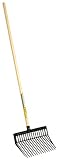
For a full cleanout, a bedding fork is far more useful than a little waste tray. The Little Giant DuraFork has a broad polycarbonate head with angled tines to lift shavings, straw, and larger clumps of soiled material.
It makes sense in a walk-in coop or larger run where you have space to move. Gather the bedding into a pile and lift it into a bucket or wheelbarrow.
The wide gaps are less helpful if you use fine sand. Small droppings and fine material fall through.
Pros
- Wide head lifts plenty of loose bedding.
- Angled tines help hold the load.
- Useful for full coop cleanouts.
Cons
- Too wide for tight corners.
- Not a fine sifter for sand or small droppings.
See the Little Giant DuraFork.
3. Ergie Systems Muck Rake: For Two-Handed Control

As an Amazon Associate I earn from qualifying purchases. This article contains affiliate links. If you buy through these links, I may earn a commission at no extra cost to you.
The Ergie rake has a second grip on the shaft. That gives your other hand a comfortable place to hold while you lift a pile of bedding and move it into a cart.
Its fork-style head has 22 plastic tines. It is suited to loose litter and larger clumps, not scraping firmly stuck manure from a wooden board.
If you clean a full-size coop often, the extra handle can be more useful than owning another small tray set.
Pros
- Second grip helps control heavier loads.
- Works with loose shavings and straw.
- Long handle helps reduce bending.
Cons
- Plastic tines are not for hard scraping.
- Large head may be awkward in a small coop.
4. Corona RK 62060 Shrub Rake: For Coop Corners

As an Amazon Associate I earn from qualifying purchases. This article contains affiliate links. If you buy through these links, I may earn a commission at no extra cost to you.
Shavings can build up behind the nesting boxes or along the back wall. This Corona rake has a narrow eight-inch head, so you can pull loose bedding out of spots that a wide fork cannot reach.
The lightweight aluminum handle makes it easy to use around a small coop or narrow run. Gather the debris into a pile, then pick it up with a scoop.
It is a garden rake, not a manure fork. Think of it as a useful second tool for getting into awkward places.
Pros
- Narrow head reaches corners.
- Lightweight, easy-to-handle shaft.
- Good for loose litter and leaves.
Cons
- Does not lift much by itself.
- Not suitable for scraping hard, caked manure.
See the Corona rake on Amazon.
5. Snagle Paw Tray and Rake: For Standing Cleanup
As an Amazon Associate I earn from qualifying purchases. This article contains affiliate links. If you buy through these links, I may earn a commission at no extra cost to you.
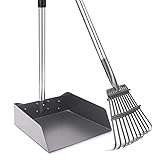
The Snagle Paw set has a metal tray and rake with adjustable handles. You can stand while collecting droppings beside the feeder, near the waterer, or around the run entrance.
It is handy to keep near the coop for quick chores. The tray holds a small amount of waste before you empty it.
It will not replace a bedding fork when the floor is covered in wet shavings. Remove the bad patch properly instead of trying to sort individual droppings from it.
Pros
- Long handles mean less bending.
- Tray catches waste as you rake.
- Good for daily spot cleaning.
Cons
- Rake teeth can miss small pieces.
- Too small for a full bedding change.
6. TNELTUEB Large Tray and Rake: For Bigger Pickup Piles

As an Amazon Associate I earn from qualifying purchases. This article contains affiliate links. If you buy through these links, I may earn a commission at no extra cost to you.
If you collect waste from several spots in the run, a large tray can save trips to the bucket. This TNELTUEB set gives you a metal tray, rake, and adjustable handles.
It works better on firm ground than in very loose sand or deep shavings. You might pick up a little dirt with the droppings, which is normal for this style of tool.
I would use it around the outdoor run and keep a separate scraper for a droppings board.
Pros
- Larger tray carries more waste.
- Adjustable handles for comfortable reach.
- Metal parts rinse clean easily.
Cons
- Bulky inside a small coop.
- Not made to sift fine sand.
7. SKYFIELD Extendable Rake: A Simple Run Rake
As an Amazon Associate I earn from qualifying purchases. This article contains affiliate links. If you buy through these links, I may earn a commission at no extra cost to you.
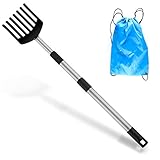
If you already have a tray or bucket, you might only need a small rake to gather droppings and loose debris. The SKYFIELD has an adjustable metal handle and a small rake head.
It is useful along the run entrance or under a raised feeder. You can shorten the handle for storage and extend it when you work.
The head is narrow, so cleaning a large floor takes time. It works better as a spot-cleaning tool than as your only bedding rake.
Pros
- Adjustable handle is easy to store.
- Metal head gathers scattered debris.
- Useful in smaller spaces.
Cons
- Slow for a large coop floor.
- A separate scoop or bucket makes collection easier.
8. Metal Rake, Tray and Spade Kit: For Different Cleanup Jobs
As an Amazon Associate I earn from qualifying purchases. This article contains affiliate links. If you buy through these links, I may earn a commission at no extra cost to you.
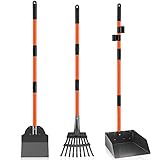
One day you may be gathering dry droppings from the run. The next day, you may have to lift a sticky patch near a leaking waterer. A rake, tray, and spade set gives you different heads for each job.
Use the rake for loose material, the spade for a thicker patch, and the tray to carry waste away. It is better than trying to force a thin rake through a heavy lump of wet bedding.
This is a multipurpose pet-cleaning kit rather than a dedicated poultry tool, so check the handle connections before lifting heavy loads.
Pros
- Three heads cover different small chores.
- Spade can lift stubborn patches.
- Tray makes waste collection easy.
Cons
- More pieces to assemble and store.
- Not as fast as a wide fork for a full cleanout.
9. Arm & Hammer Swivel Bin and Rake: For Small Daily Pickups

As an Amazon Associate I earn from qualifying purchases. This article contains affiliate links. If you buy through these links, I may earn a commission at no extra cost to you.
The Arm & Hammer kit has a swivel bin with a liner. Rake the waste straight into the bin and remove the bag when you finish.
That is useful for small amounts around a patio-side run or yard. It is not meant for shoveling a whole coop of old bedding into your compost cart.
Check the cost and availability of replacement liners. You do not need scented bags as part of your routine inside the sleeping coop.
Pros
- Bag-lined bin contains small messes.
- Rake and bin store together.
- Convenient for a short daily routine.
Cons
- Needs replacement bags or compatible liners.
- Capacity is limited for a large cleanout.
Which Rake Works With Your Coop Bedding?
The bedding you use matters more than the name of the tool. A fork that handles straw may let tiny droppings fall right through.
- Pine shavings: Use a bedding fork to lift larger soiled patches. A narrow rake helps gather loose shavings from corners.
- Straw: A wide fork can lift bundles, while a scraper helps with compacted spots.
- Sand: Choose a fine-mesh scoop or sifter for small droppings. Most wide-tine rakes in this list are not fine enough.
- Wooden droppings board: Use a separate scraper and tray rather than digging sharp tines into the board.
- Dirt run: A rake and tray work for concentrated messes, although you may collect a little soil too.
If you are choosing a floor material, see our guide to chicken coop bedding. Pick a tool that suits the bedding you actually use.
How Often Should You Rake the Coop?
Check the coop every day. Remove obvious droppings, spilled feed, and wet bedding, especially around the waterer. You do not need to empty the whole floor every day, but you should not let it stay damp or smell strongly of ammonia.
If bedding stays wet, find and fix the moisture source. Raking it back into the clean litter does not solve the problem. Check your coop ventilation too. For the rest of the routine, read our chicken coop cleaning guide.
If you follow the deep-litter method, stirring dry litter may be part of your management, but you still need to remove caked or soaked sections and watch the air quality.
A Simple Cleaning Routine
- Move the flock to a safe part of the run before a full cleanout.
- Wear gloves and dedicated footwear. Avoid stirring up dust, and use suitable respiratory protection when needed.
- Pick up large droppings and remove wet bedding first.
- Rake loose material into a pile, then lift it with a fork or scoop.
- Move manure and used bedding into an appropriate waste or compost container.
- Clean the tools, let them dry, and replace the bedding with fresh material.
Keep coop tools separate from household tools. Wash your hands afterward. Check the nesting boxes while you clean, and replace any dirty lining. Do not apply fresh chicken manure directly to food crops; compost it safely before using it in the garden.
Do You Need a Rake or a Scoop?
For a small flock, a tray-and-rake kit is convenient for the little messes you handle every day. A wide bedding fork makes more sense if you use lots of straw or shavings in a walk-in coop. A narrow rake is a helpful extra for awkward corners.
You do not need several versions of the same scoop. Choose a tool for your daily cleanup first and add a second only if you need it.
FAQs About Chicken Coop Rakes
What is a chicken coop rake used for?
It gathers loose bedding, feathers, leaves, and droppings. A fork lifts larger bedding piles, while a tray-and-rake set handles quick pickups.
Can I use a garden rake inside a chicken coop?
Yes, if it suits your bedding and space. A narrow rake can reach corners. Keep damaged or sharp tines away from chickens.
What works best for pine shavings?
A bedding fork helps lift larger soiled areas. A smaller rake is useful for pulling shavings from the edges before you scoop them up.
Can I use these rakes with sand bedding?
For small droppings in sand, a fine-mesh scoop or sifter works better than a wide-tine fork.
How often should I remove droppings?
Check daily and remove concentrated waste and wet patches as needed. A full cleanout depends on flock size, bedding, and moisture.
Should I mix wet bedding back into the floor?
No. Remove wet or caked bedding, find the source of moisture, and replace it with dry material.
How do I clean a coop rake?
Remove debris, wash as appropriate, and let it dry. Keep it separate from household tools and wash your hands after cleaning.