

Oregano is safe for chickens to peck in small amounts as an ordinary culinary herb. Where things get confusing is when fresh oregano, dried oregano, commercial feed additives, and concentrated oregano essential oil are all treated as though they are the same thing.
They are not.
Poultry researchers have studied standardized oregano powders, extracts, and essential-oil products in carefully formulated diets. Some trials report effects on performance, gut measurements, oxidative stability, or egg characteristics. That is interesting nutrition research, but it does not turn a handful of garden oregano into an antibiotic, dewormer, respiratory medicine, or coccidiosis treatment.
If you grow oregano, you can let your flock nibble clean leaves or offer a little fresh or dried herb for variety. Keep the complete poultry ration as the nutritional foundation and leave disease treatment to proven veterinary care.
What Is Oregano?
Oregano, Origanum vulgare, is an aromatic herb in the mint family. Its characteristic smell comes from volatile plant compounds, including carvacrol and thymol.
Those compounds are one reason oregano has attracted so much interest in animal-nutrition research. They can show antimicrobial and antioxidant activity under laboratory or controlled feeding conditions.
The important detail is concentration. A fresh leaf, a spoonful of dried herb, a standardized feed additive, and a bottle of essential oil contain very different amounts of these compounds.
Can Chickens Eat Fresh or Dried Oregano?
 Share on Pinterest
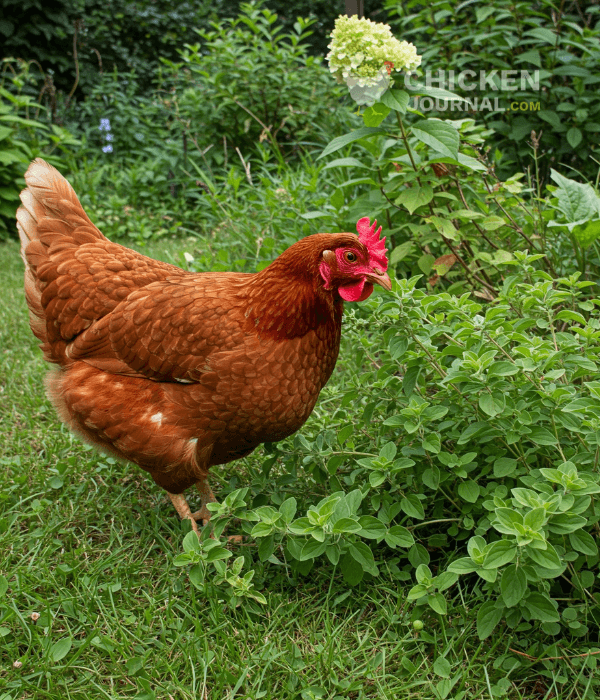
Yes. Healthy chickens can peck small amounts of clean fresh oregano or eat a little dried culinary oregano mixed with other occasional treats.
You do not need to add oregano to a flock’s diet for the birds to be healthy. A nutritionally complete feed already supplies the nutrients chickens need when it is appropriate for their age and production stage.
If you offer herbs, think of them as variety and enrichment rather than a required supplement. Our guide to feeding chickens explains why complete feed should remain the main ration.
What Poultry Research Actually Says About Oregano
Oregano is not a made-up poultry ingredient. It has been studied extensively, especially as the poultry industry looks for feed additives that may influence performance, gut conditions, oxidative stability, and product quality.
A 2026 systematic review and meta-analysis of randomized laying-hen trials reported improvements in several outcomes, including egg production, egg weight, shell thickness, and yolk color when oregano products were included in experimental diets.
Another 2026 meta-analysis looked at oregano extracts in broilers experimentally challenged with Eimeria. The pooled studies suggested improvements in growth and reductions in oocyst output and intestinal lesion scores, but heterogeneity between studies was very high and the authors called for more large-scale field validation.
Older controlled trials have also reported changes in egg storage characteristics, gut microbiota, antioxidant measurements, and performance.
That evidence supports continued research into standardized phytogenic feed additives. It does not show that sprinkling an unknown amount of oregano into a backyard feeder will reproduce those results.
Why Research Doses Should Not Become Backyard Recipes
Research diets are formulated in measured concentrations, often in milligrams of a characterized product per kilogram of complete feed. Researchers know the ingredient composition, bird age, base diet, treatment period, and comparison group.
A household essential-oil bottle may have a different chemical profile and concentration. “One drop” is not a scientific dose, and the amount of water a chicken drinks changes with temperature, age, diet, and health.
For that reason, I would not convert research data into a homemade essential-oil dose for a waterer or chick brooder.
Oregano Essential Oil Is Not the Same as the Herb
Essential oil is highly concentrated. It should not be treated like a stronger version of dried oregano.
European feed-safety assessments of specific oregano essential oils have established safe inclusion levels for particular standardized products under defined feed-use conditions. The same assessments also describe oregano essential oil as a potential skin, eye, or respiratory irritant or sensitizer.
That is another reason not to put undiluted oil on a chicken, diffuse it into a coop, drip it on bedding, or add a homemade amount to drinking water.
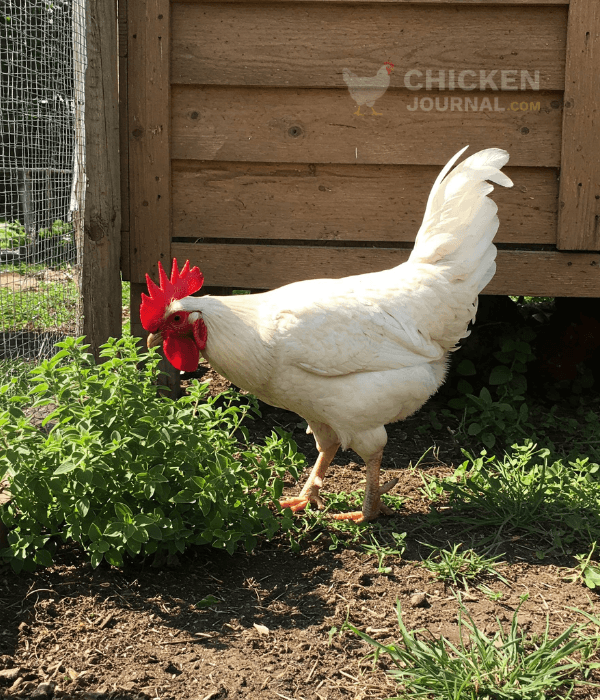
If a commercial poultry feed or supplement contains a standardized oregano-derived additive, use the product only as labeled. Do not add extra essential oil on top because more is not automatically better.
 Share on Pinterest
Is Oregano a Natural Antibiotic for Chickens?
No. Calling oregano a “natural antibiotic” is misleading in a backyard health guide.
Carvacrol, thymol, and oregano-derived products can show antimicrobial effects in laboratory work and controlled feed studies. That does not mean fresh oregano can diagnose or treat bacterial disease in a sick hen.
A chicken with swollen sinuses, respiratory noise, diarrhea, weakness, a wound infection, or a sudden drop in condition needs the cause investigated. An antibiotic is appropriate only for certain bacterial problems, and oregano is not a substitute for that decision.
Does Oregano Treat Coccidiosis?
Do not rely on oregano to treat a chicken with suspected coccidiosis.
There is research on oregano extracts and other phytogenic additives in broilers challenged with Eimeria, including a 2026 meta-analysis that found promising average effects. Those experiments used measured dietary products and controlled challenge models.
A backyard chick that is lethargic, losing weight, going off feed, or passing blood may deteriorate quickly. Diagnosis, flock history, age, litter conditions, and an appropriate anticoccidial plan matter far more than adding oregano to the water.
Does Oregano Deworm Chickens or Repel Mites and Lice?
Oregano should not be used as a dewormer or as treatment for a mite or lice infestation.
Plant compounds can show activity against parasites in laboratory or experimental settings, but there is no practical backyard dose of fresh oregano that has been established as a reliable treatment for worms, mites, or lice.
If you see parasites, identify what you are dealing with and use an appropriate poultry treatment. A bird losing weight despite eating, developing pale tissues, or showing severe infestation deserves veterinary advice.
Will Oregano Cure Respiratory Problems?
No. Do not put oregano essential oil into the coop air to “open” a chicken’s breathing passages.
Respiratory signs in chickens can come from infectious bronchitis, mycoplasma, avian influenza, Newcastle disease, fungal exposure, ammonia, dust, aspiration, or other causes. Those problems are not interchangeable.
A bird with persistent respiratory noise, swollen eyes or sinuses, open-mouth breathing at rest, or obvious effort to breathe needs assessment. See our guide on when to call a veterinarian for a chicken.
Can Oregano Improve Egg Production or Egg Quality?
This is one area where the research is more interesting than the usual backyard claim.
The 2026 laying-hen meta-analysis found statistically significant improvements in several production and egg-quality measurements across controlled trials. Individual studies have also reported effects on oxidative stability during egg storage.
However, those findings concern formulated diets containing defined oregano products. They do not mean that feeding a few leaves will make a hen lay more eggs, improve shell strength, or extend the shelf life of your backyard eggs.
If egg production falls, first look at age, season, molt, broodiness, nutrition, health, stress, and light rather than trying to correct production with an herb.
How to Offer Fresh Oregano to Chickens
If oregano is growing in a pesticide-free area your birds can access, you can simply let them investigate the plant. Some chickens will peck the leaves; others may ignore it.
You can also offer a small amount of washed fresh oregano with other greens or sprinkle a little culinary dried oregano over an occasional treat. There is no evidence-based household teaspoon dose that every backyard flock needs.
Do not replace part of the complete ration just to make room for herbs. If the chickens do not want the oregano, there is no health reason to make them eat it.
What About Oregano for Chicks?
Young chicks have very little room in their diet for extras because rapid growth depends on a correctly formulated starter ration.
There is no need to add oregano essential oil to chick water. Fresh plain water and complete chick starter are the priorities. If you offer any plant material once chicks are established on starter feed, keep it minimal and provide appropriate chick grit when the food requires grinding.
Our baby chick care guide covers the basic brooder priorities.
When Oregano Becomes a Distraction
The biggest risk with many “medicinal herb” articles is not the herb itself. It is the time lost while a real health problem is being treated with something that cannot fix it.
If a chicken is weak, losing weight, struggling to breathe, passing blood, unable to stand, or rapidly worsening, oregano should not be the plan. Separate the bird when appropriate, provide normal feed and clean water, and get qualified help.
The same applies to flock prevention. Good everyday flock health comes from nutrition, water, ventilation, dry housing, biosecurity, appropriate parasite control, and observation, not from one “power herb.”
Frequently Asked Questions
Can chickens eat fresh oregano?
Yes. Healthy chickens can peck small amounts of clean fresh oregano as an optional herb or forage item. It is not required for health and should not replace a nutritionally complete poultry ration.
How much oregano should I give my chickens?
There is no evidence-based household teaspoon dose that every backyard flock needs. If you offer fresh or dried culinary oregano, keep it to a small optional amount so the flock continues eating its complete feed.
Can I put oregano essential oil in chicken water?
Do not make a homemade essential-oil water dose. Research uses standardized products at measured concentrations, and essential oils can be irritating. Use only poultry products as labeled or follow specific veterinary guidance.
Is oregano a natural antibiotic for chickens?
No. Oregano compounds have been studied for antimicrobial effects, but the herb is not a replacement for diagnosis or appropriate treatment of bacterial disease.
Does oregano prevent worms or coccidiosis?
Do not rely on oregano to prevent or treat worms or coccidiosis. Some standardized oregano extracts have shown effects in experimental poultry studies, but that does not establish an effective backyard-herb dose. Suspected parasite disease needs proper identification and treatment.
Can oregano increase egg production?
A 2026 meta-analysis found production and egg-quality effects in controlled laying-hen trials using formulated oregano products. That does not show that feeding fresh oregano leaves will make a backyard hen lay more eggs.
Final Thoughts
Oregano is a perfectly reasonable herb for chickens to nibble. It also happens to be an interesting subject in poultry-feed research. Those two facts can coexist without turning oregano into medicine.
If your flock enjoys a few leaves, fine. If a commercial feed uses a standardized oregano additive, follow the label. But skip homemade essential-oil dosing and do not delay real treatment because an herb has laboratory antimicrobial activity.
Sources
- 2026 Meta-analysis: Origanum vulgare and Laying-Hen Egg Production and Quality
- 2026 Meta-analysis: Oregano Extracts in Eimeria-Challenged Broilers
- EFSA/PubMed: Safety and Efficacy of Origanum vulgare Essential Oil as an Animal Feed Additive
- Oregano Essential Oil in Laying-Hen Feed and Animal Health
- Oregano Essential Oil and Egg Storage Characteristics in Laying Hens
