

If you want one flock to do more than one job, a so-called triple-purpose chicken can make a lot of sense. The term is informal rather than an official poultry classification, but backyard keepers commonly use it for birds that provide eggs and useful body size plus a third value such as broodiness, exhibition appeal, self-replacement, or an especially manageable temperament.
That is different from calling every friendly dual-purpose chicken “triple-purpose.” A useful third role should be something the breed is genuinely known for.
The breeds below all have a reason to be here. Some are better layers, some are heavier table birds, some are outstanding setters and mothers, and a few are especially useful for exhibition or maintaining a self-replacing farm flock.
What Does Triple-Purpose Mean in Chickens?
There is no American Poultry Association class called “triple-purpose.” In practical backyard terms, I use the phrase for a chicken that offers three useful traits:
- Egg production that is worthwhile for a household or small farm.
- Enough body size to have traditional meat or roasting value.
- A meaningful third use, such as broodiness, exhibition, ornamental value, calm family-flock temperament, or reliable self-replacement.
No breed is the best at all three jobs. A Leghorn will outlay most birds on this list. A modern broiler will grow faster. But these breeds make sense when you want one flock to stay useful in several ways.
11 Triple-Purpose Chicken Breeds at a Glance
| Breed | Typical eggs/year | Adult size | Strongest third use |
|---|---|---|---|
| Jersey Giant | About 150–200 | Very large | Large heritage farm bird |
| Cubalaya | About 125–175 | Medium | Exhibition / ornamental value |
| American Bresse | Variable by line | Medium-large | Niche farm production |
| Brahma | About 150–200 | Very large | Cold-weather utility |
| Orpington | About 150–200 | Large | Broodiness / calm temperament |
| Australorp | Often 200–250+, line dependent | Large | Stronger egg production |
| Wyandotte | About 150–200 | Large | Exhibition / cold hardiness |
| Sussex | About 200–250 | Large | Foraging / all-around farm use |
| Delaware | Up to about 200 | Medium-large | Historic production value |
| Cochin | About 150–200 | Very large | Broodiness / mothering |
| Barred Plymouth Rock | About 200 | Large | Beginner-friendly farm utility |
1. Jersey Giant: Best if Size Matters Most

The Jersey Giant is the bird to consider when your idea of “all-purpose” starts with body size.
Standard adults are genuinely large, with males commonly reaching roughly 13 to 15 pounds and females around 10 to 11 pounds in well-bred stock. Hens can still give you about 150 to 200 large brown eggs in a productive year.
The tradeoff is time. Jersey Giants mature slowly, and pullets often begin laying later than lighter breeds. They also need more feed, sturdier roosts, and more floor space.
Broodiness varies, so I would not choose them specifically as a broody breed. Their third value is better described as large heritage farm utility: substantial body size, useful eggs, and a calm disposition in a self-replacing breed.
2. Cubalaya: Eggs, Meat, and Exhibition Appeal

The Cubalaya is a much different kind of triple-purpose bird. It is smaller than the heavy American farm breeds, but it combines utility with real exhibition value.
U.S. standard weights are about 6 pounds for a mature male and 4 pounds for a mature female. Hens are moderate layers of tinted eggs, commonly around 125 to 175 per year depending on the line.
The breed is especially well suited to warm climates and is known as an active forager. Its flowing feathering and distinctive downward-carried tail also make it stand out in an exhibition flock.
For today’s backyard keeper, the third purpose is best thought of as ornamental and show value, not historical animal-fighting use.
3. American Bresse: A Niche Small-Farm Option

American Bresse can make sense if you want a farm bird that sits between ordinary dual-purpose poultry and a specialty production flock.
They are useful for both eggs and body size, but production varies by breeder line. That is why I would avoid promising one fixed egg count or processing weight for every American Bresse flock.
They are active foragers and can fit pasture-based systems well. Their third value is niche farm production, especially for keepers who want to maintain breeding stock rather than buy fast-growing commercial broiler chicks every season.
One important distinction: American Bresse stock in the United States is not the same thing as poultry produced under France’s protected Bresse production system. French luxury-market claims should not be treated as a guaranteed value for U.S.-raised birds.
4. Brahma: Best Triple-Purpose Choice for Cold Climates
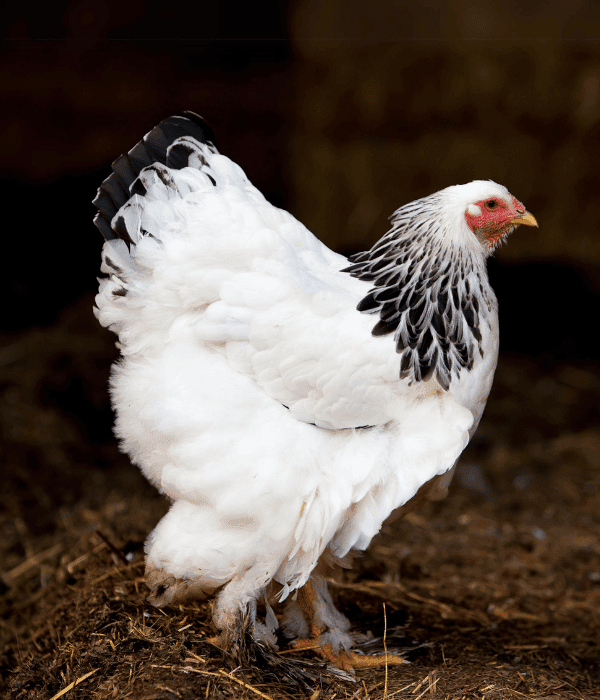
The Brahma is one of the easiest breeds to justify in this list. It gives you large body size, brown eggs, and strong cold-weather utility.
Standard mature weights are about 12 pounds for roosters and 10 pounds for hens. Productive hens can give roughly 150 to 200 brown eggs in a good year, and many lines have a reputation for continuing reasonably well into colder months.
The pea comb helps reduce exposed comb area in winter, while the dense body feathering suits cool climates. Still, those heavily feathered feet need attention in persistent mud, wet bedding, and snow that can ball around the toes.
Brahmas are generally calm, but individual behavior varies, especially among mature roosters. Their strongest third purpose is cold-weather utility.
5. Orpington: Best for Calm Temperament and Natural Hatching

Orpingtons were developed as useful egg-and-meat birds, and many backyard lines still retain a strong tendency toward broodiness.
Standard large-fowl adults are substantial, around 10 pounds for roosters and 8 pounds for hens. Egg production commonly falls around 150 to 200 brown eggs per year, though productive lines can do better.
Where Orpingtons really earn the third-purpose label is temperament and natural reproduction. Many are calm around routine handling, and broody hens can make dependable setters and mothers.
If you want a flock that feels less flighty and may help hatch its own replacements, Orpingtons are one of the stronger choices.
6. Australorp: Best if Egg Production Matters More
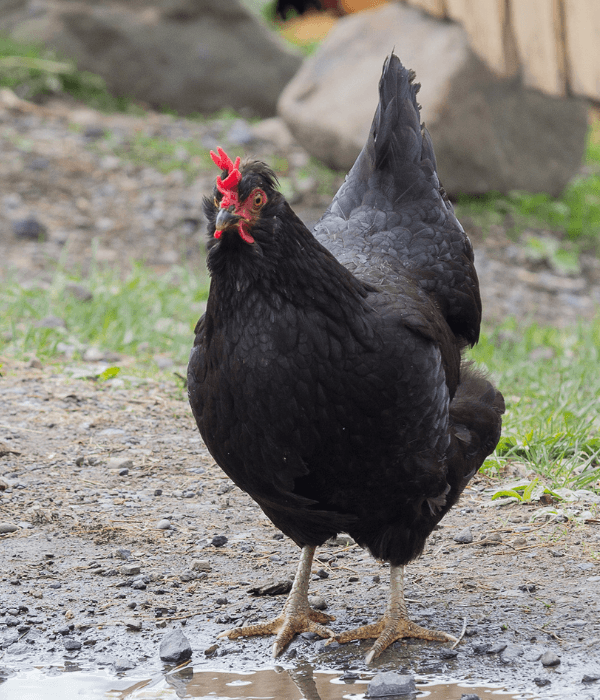
If you want a triple-purpose bird but still care strongly about egg numbers, the Australorp deserves a close look.
Well-selected Australorp lines can produce more than 200 eggs per year, and some backyard lines can reach the 250-plus range under good management. Historical laying records helped build the breed’s reputation, but record-setting hens should not be treated as the normal expectation for every flock.
The birds also have enough body size to retain traditional dual-purpose value. In the United States, Black is the APA-recognized variety, although other colors are recognized or bred in other countries.
Their third strength is simple: better egg production without giving up useful body size and a generally calm farm-flock temperament.
7. Wyandotte: Best for Utility Plus Exhibition

The Wyandotte combines old-fashioned farm usefulness with some of the best exhibition appeal on this list.
Standard weights are about 8.5 pounds for males and 6.5 pounds for females. Hens commonly produce around 150 to 200 brown eggs per year.
The rose comb is a practical advantage in cold areas because it has less exposed tissue than a large single comb. The rounded body and dense feathering also suit cooler weather.
The beautiful laced varieties give this breed a real third purpose: show and ornamental value. Broodiness occurs in some lines, but I would not make it the main reason to choose a Wyandotte.
8. Sussex: One of the Best All-Around Farm Choices

The Sussex is one of the most balanced birds here. Mature males are around 9 pounds and females around 7 pounds, giving them useful traditional table size.
Productive hens can give roughly 200 to 250 tinted or light-brown eggs in a good year, depending on strain and management.
Sussex chickens are active, curious foragers and generally easy to manage in mixed backyard flocks. Some hens also go broody and mother chicks well.
Their third purpose is really all-around farm versatility. If you do not want an extreme breed and simply want a useful bird that can forage, lay, grow to a respectable size, and fit a family flock, Sussex is hard to overlook.
9. Delaware: Historic Production Value in a Modern Backyard Breed

The Delaware deserves a place here because of its real production history, not because it is an exceptionally broody breed.
Delawares were developed in the 1940s for the poultry trade and were commercially important before faster Cornish-cross broilers took over. Modern hens can produce up to about 200 large to jumbo brown eggs per year in productive lines.
They are generally calm, fast enough growing for a heritage bird, and useful on small farms. However, Delaware hens are not known as consistently broody, so natural hatching should not be presented as one of their defining traits.
The third value here is historic production genetics and small-farm utility.
10. Cochin: Best Triple-Purpose Breed for Broodiness

The Cochin is not an efficient modern production bird, but that does not make it useless.
Standard adults are large, around 11 pounds for roosters and 8.5 pounds for hens. Egg production is moderate, commonly around 150 to 200 brown eggs per year, and pullets can mature later than lighter breeds.
The reason to choose Cochins is broodiness. They are among the best-known setters and mothers in backyard poultry and are often used to hatch eggs naturally.
Their calm temperament and heavy feathering also make them popular exhibition and pet birds. If your third purpose is natural hatching and mothering, Cochin is one of the strongest choices on this list.
11. Barred Plymouth Rock: Best Beginner-Friendly All-Rounder

The Barred Plymouth Rock is one of the easiest recommendations for a first mixed-purpose flock.
Standard Plymouth Rock weights are about 9.5 pounds for roosters and 7.5 pounds for hens. A productive hen can give around 200 large brown eggs in a year, while the broad body retains the breed’s traditional dual-purpose value.
They are generally calm, adaptable, and less nervous than many lightweight laying breeds. Some hens brood, although broodiness varies by line.
Their third purpose is beginner-friendly farm utility. You get a true American breed that can lay, forage, provide traditional table size, and fit comfortably into many backyard setups.
Best Triple-Purpose Chicken by Goal
| Your priority | Strong choices |
|---|---|
| Highest egg potential | Australorp, Sussex |
| Largest body size | Jersey Giant, Brahma |
| Natural hatching | Cochin, Orpington |
| Cold climate | Brahma, Wyandotte |
| Show or ornamental appeal | Wyandotte, Cubalaya, Cochin |
| Beginner-friendly utility | Barred Plymouth Rock, Sussex, Orpington |
| Historic production value | Delaware, Plymouth Rock |
| Niche small-farm production | American Bresse |
Triple-Purpose vs. Dual-Purpose Chickens
A dual-purpose chicken is traditionally useful for both eggs and meat. “Triple-purpose” simply adds another practical reason to keep the breed.
For example, a Cochin is not a better commercial layer than a Leghorn or a faster meat bird than a broiler. Its extra value comes from broodiness and mothering. A Wyandotte adds exhibition appeal. A Brahma adds stronger cold-weather suitability. A Plymouth Rock adds a forgiving, adaptable beginner-flock temperament.
If eggs and meat are your only goals, see our dual-purpose chicken breed guide instead.
Feeding Triple-Purpose Chickens
There is no special “triple-purpose feed.” Feed according to age, sex, growth stage, and whether the bird is actively laying.
- Chicks need a complete starter ration appropriate for their age.
- Growing birds need a balanced grower or developer feed rather than a layer ration too early.
- Actively laying hens need an appropriate complete adult/layer ration or equivalent feeding program.
- Offer supplemental calcium separately when appropriate for laying hens.
- Keep treats and kitchen scraps limited so they do not dilute the complete ration.
Large breeds such as Jersey Giants, Brahmas, Cochins, and Orpingtons naturally consume more feed than lightweight layers. If feed efficiency is your top priority, a specialized commercial layer or broiler will usually outperform these heritage birds.
Our complete chicken feeding guide covers life-stage feeding in more detail.
Housing Larger Utility Breeds
Several breeds on this list are much larger than an average production hen, so do not squeeze them into a coop designed for lightweight layers.
Use sturdy, comfortably sized roosts and keep them low enough that a heavy bird does not have to make a hard landing every morning. Give large hens roomy nest boxes and enough floor space to turn around without constantly pushing through flock mates.
Feather-footed Brahmas and Cochins need especially dry footing. Persistent mud can mat feathers, hide injuries, and make winter care harder.
See how much space chickens need if you are planning a mixed flock with several large breeds.
Can Triple-Purpose Breeds Build a Self-Replacing Flock?
Yes, and this is one of their biggest advantages over commercial hybrids.
True breeds can reproduce their basic breed characteristics more predictably when you use appropriate breeding stock. If you keep a rooster and enough unrelated hens, you can hatch replacements rather than buying every new generation.
If you prefer natural incubation, Cochin and Orpington hens are especially useful. Other breeds may brood too, but never assume every hen in a historically broody breed will sit.
Frequently Asked Questions
What is a triple-purpose chicken?
Triple-purpose is an informal backyard and small-farm term for a chicken useful for eggs and meat plus a third practical value such as broodiness, exhibition, ornamental appeal, cold-weather utility, self-replacement, or manageable temperament. It is not an official APA production category.
Which triple-purpose breed lays the most eggs?
Australorp and Sussex are among the stronger egg-producing choices on this list. Productive Australorp lines can exceed 200 eggs per year and some reach 250 or more, while Sussex hens commonly produce around 200 to 250 depending on strain and management.
Which triple-purpose breed is best for meat size?
Jersey Giants and Brahmas have the largest mature body size among the breeds listed. They grow much more slowly than commercial broilers, so they are better viewed as traditional large farm birds rather than feed-efficient meat hybrids.
Which breeds are best for natural hatching?
Cochins and Orpingtons are especially well known for broodiness and mothering. Broodiness still varies by individual hen and breeder line, so no breed guarantees that every hen will sit.
Are triple-purpose chickens good for beginners?
Many are. Barred Plymouth Rocks, Sussex, Orpingtons, Australorps, and Wyandottes are generally manageable backyard breeds. Large breeds still need adequate space, sturdy housing, and proper feeding, and individual temperament can vary.
Do triple-purpose chickens need special feed?
No. Feed them according to life stage and purpose using a complete starter, grower or developer, and appropriate adult or layer ration. Treats should remain limited so they do not dilute the balanced feed.
Can I breed triple-purpose chickens to replace my own flock?
Yes. Because these are true breeds rather than production hybrids, you can maintain breeding stock and hatch replacements with more predictable breed traits. Use healthy, appropriate breeding birds and avoid relying on one closely related family year after year.
Final Thoughts
The best triple-purpose breed depends on which third purpose actually matters to you.
Choose Australorp or Sussex if egg output still matters most. Choose Jersey Giant or Brahma when body size is a priority. Pick Cochin or Orpington if you want hens that are more likely to help hatch replacements. Wyandottes and Cubalayas add stronger exhibition value, while the Barred Plymouth Rock remains one of the easiest all-around choices for a first utility flock.
None of these breeds will beat a specialized layer for maximum egg efficiency or a commercial broiler for rapid meat growth. Their advantage is balance. For a backyard keeper or small farm that wants one flock to stay useful in several different ways, that balance can be more valuable than chasing one production record.
Sources
- The Livestock Conservancy: Chicken Breed Comparison Charts
- The Livestock Conservancy: Jersey Giant Chicken
- The Livestock Conservancy: Cubalaya Chicken
- The Livestock Conservancy: Brahma Chicken
- The Livestock Conservancy: Orpington Chicken
- The Livestock Conservancy: Australorp Chicken
- The Livestock Conservancy: Wyandotte Chicken
- The Livestock Conservancy: Sussex Chicken
- The Livestock Conservancy: Delaware Chicken
- The Livestock Conservancy: Cochin Chicken
- The Livestock Conservancy: Plymouth Rock Chicken
