

A clamp lamp can look harmless when you first set up a brooder. Then you add a hot bulb, dry shavings, a power cord, and a bunch of curious chicks underneath it.
That is why the fixture matters just as much as the bulb. A good reflector should handle the rated wattage, stay where you put it, and give chicks one warm area without turning the whole brooder into an oven.
The seven lamps below are not all meant for the same job. Some are compact 150-watt fixtures for mild indoor brooding, while others are heavier 250–300 watt reflectors made for traditional brooder bulbs.
If you are still building the brooder itself, start with the complete chick brooding guide. It will make choosing the lamp much easier.
Quick Comparison: Best Clamp Light Reflectors for Chicks
| Product | Max Wattage | Best Use | Amazon |
|---|---|---|---|
| Fluker’s Repta-Clamp 8.5″ | 150W | Small indoor brooders | Check |
| VIVOSUN 8.5″ Clamp Lamp | 150W | Compact lower-watt setups | Check |
| Simple Deluxe 8.5″ Clamp Lamp | 150W | Budget indoor brooding | Check |
| Bayco SL-300 8.5″ | 150W | General utility use | Check |
| Woods 10″ Brooder Lamp | 300W | Higher-output brooding | Check |
| Bayco SL-302B3 10.5″ | 300W | Porcelain-socket setup | Check |
| Little Giant Brooder Reflector | 250W | Traditional poultry brooder | Check |
One rule is non-negotiable: never put a 250-watt bulb into a fixture rated for 150 watts.
7 Best Clamp Light Reflectors for Chick Brooders
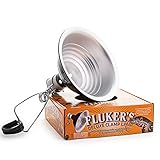
1. Fluker’s Repta-Clamp 8.5-Inch Lamp — Best High-Rated 150W Option
As an Amazon Associate I earn from qualifying purchases. This article contains affiliate links. If you buy through these links, I may earn a commission at no extra cost to you.
This is the kind of lamp that suits a small brooder in a room that is already fairly warm. It does not try to be a heavy farm brooder fixture, and that is actually its strength.
The 8.5-inch reflector is easy to place over one end of a tote or brooder box. You can create a warm corner without covering the entire top with a huge shade.
The catch is the 150-watt limit. If you are planning to use a 250-watt infrared bulb, skip this one and move down to a higher-rated reflector.
- What stands out: Compact reflector and a long feedback history.
- Good fit: Small indoor brooders and moderate heat needs.
- Watch for: The 150W ceiling.
Check Fluker’s Repta-Clamp on Amazon
2. VIVOSUN 8.5-Inch Clamp Lamp — Best Compact Alternative

As an Amazon Associate I earn from qualifying purchases. This article contains affiliate links. If you buy through these links, I may earn a commission at no extra cost to you.
VIVOSUN makes sense when space is tight and you want a simple reflector above a smaller brooder. The shade is large enough to direct heat, but it does not feel oversized over a tote or short brooder wall.
Use it where the room itself is doing part of the work. In a warm basement, laundry room, or utility room, a lower-watt setup may be all the chicks need.
If the room is cold enough that you keep thinking about installing a hotter bulb, that is a sign to change the fixture rather than push this one past its rating.
- Useful for: Compact indoor brooders.
- Why it works: Small reflector and standard E26 socket.
- Limitation: Keep bulb wattage at or below 150W.
Check VIVOSUN Clamp Lamp on Amazon
3. Simple Deluxe 8.5-Inch Clamp Lamp — Best Budget Lower-Watt Pick

As an Amazon Associate I earn from qualifying purchases. This article contains affiliate links. If you buy through these links, I may earn a commission at no extra cost to you.
There is nothing complicated about this one, which will appeal to some keepers. You get a basic 8.5-inch reflector, an E26 socket, and a cord long enough for a normal indoor brooder setup.
It is a sensible choice when you need gentle supplemental heat rather than maximum output. The lower price also makes more sense if the brooder is only used for a few weeks each year.
Do not let the socket size fool you. A 250-watt bulb may screw in physically, but the fixture is still a 150-watt model.
- Good point: Straightforward and compact.
- Best use: Warm indoor rooms and smaller broods.
- Not for: High-output 250W brooder bulbs.
Check Simple Deluxe Clamp Lamp on Amazon
4. Bayco SL-300 8.5-Inch Clamp Light — Best General Utility Pick

As an Amazon Associate I earn from qualifying purchases. This article contains affiliate links. If you buy through these links, I may earn a commission at no extra cost to you.
The Bayco SL-300 is more of an all-purpose clamp light than a dedicated poultry product. That can be useful if you want a fixture that still has a job after brooding season is over.
Over chicks, it works best with a moderate-watt bulb and a brooder that gives them plenty of room to move away from the warm spot. Raising or lowering the lamp is a better adjustment than chasing more heat with an oversized bulb.
Its smaller shade is also easier to position in a cramped space. Just remember that versatility does not turn a 150-watt utility lamp into a 300-watt brooder fixture.
- Strong point: Useful beyond chick brooding.
- Best for: Light-to-moderate indoor heating.
- Downside: Limited wattage for colder brooder rooms.
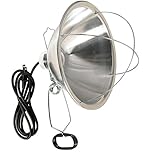
5. Woods 10-Inch 300W Brooder Clamp Lamp with Guard — Best Heavy-Duty Brooder Reflector
As an Amazon Associate I earn from qualifying purchases. This article contains affiliate links. If you buy through these links, I may earn a commission at no extra cost to you.
This is where the list shifts from light utility lamps to a true brooder-style fixture. The Woods reflector is wider, rated up to 300 watts, and includes a bulb guard.
That extra capacity is useful in a colder room or a larger brooder, but you may not need all of it. A 300-watt rating means the fixture can handle more; it does not mean every brooder needs a 300-watt bulb.
The guard is a welcome feature, especially when you are reaching into the brooder several times a day. Still, the whole lamp needs a second chain or wire support in case the clamp slips.
- Why choose it: Higher wattage capacity and a wider reflector.
- Useful extra: Bulb guard.
- Remember: Use only as much heat as the chicks actually need.
Check Woods 300W Brooder Lamp on Amazon
6. Bayco SL-302B3 10.5-Inch Brooder Clamp Light — Best Porcelain-Socket Option

As an Amazon Associate I earn from qualifying purchases. This article contains affiliate links. If you buy through these links, I may earn a commission at no extra cost to you.
The porcelain socket is the reason this Bayco model stands out. If you plan to use a hotter infrared brooder bulb, that is a more appropriate setup than a light-duty socket.
The 10.5-inch reflector also spreads warmth over a broader area. That is handy with a larger brooder, as long as you leave a cooler side where chicks can get away from the heat.
It is heavier and bulkier than the small 150-watt lamps, so mounting deserves more attention. Do not let the clamp hold the full weight by itself.
- Main advantage: Porcelain socket and 300W rating.
- Works well for: Traditional infrared brooder bulbs.
- Tradeoff: More fixture than you need for a tiny brooder.
Check Bayco SL-302B3 on Amazon
7. Little Giant 10.5-Inch Brooder Reflector Lamp — Best Poultry-Specific Traditional Option

As an Amazon Associate I earn from qualifying purchases. This article contains affiliate links. If you buy through these links, I may earn a commission at no extra cost to you.
Little Giant is the most obviously poultry-focused fixture here. The broad reflector and 250-watt rating are aimed at the sort of traditional chick brooder many backyard keepers already recognize.
That does not automatically make it the best value. The products above have stronger rating or feedback histories, which is why this one stays lower in the order.
It is still a reasonable fit if you prefer a purpose-built poultry reflector and plan to use a compatible brooder bulb. Check the clamp, chain, cord, guard, and bedding clearance every day.
- Best feature: Poultry-specific 10.5-inch reflector.
- Rated for: Up to 250W.
- Best fit: A traditional brooder setup where a poultry-branded fixture is preferred.
Check Little Giant Brooder Reflector on Amazon
The Clamp Should Never Be Your Only Safety Point
This is the part that is easy to underestimate. A clamp that feels tight today can loosen after you bump the brooder, move a feeder, or tug the cord by accident.
Penn State recommends suspending brooder heat sources with a chain or cable. Minnesota Extension also advises hanging infrared lamps with chain or wire rather than letting the electrical cord carry the fixture.
Clamp the reflector where you want it, then add a second support to a solid point above. If the clamp lets go, the lamp should still stay well above the bedding.
150W, 250W, or 300W: Which Fixture Do You Actually Need?
A warmer brooder does not always need a hotter bulb. Room temperature, brooder size, chick age, reflector width, and lamp height all change how much warmth reaches the chicks.
A 150-watt fixture can be perfectly adequate in a warm indoor room. A colder garage or larger brooder may call for a higher-rated lamp.
What should never change is the fixture limit. If the reflector says 150 watts maximum, stay at or below 150 watts.
Why Porcelain Sockets Are Worth Paying Attention To
Infrared heat bulbs run much hotter than an ordinary household bulb. That heat sits right at the socket for hours at a time.
Minnesota Extension recommends porcelain sockets approved for infrared lamps. If you are using a high-watt brooder bulb, this is one detail that deserves more attention than reflector color or appearance.
A Bulb Guard Helps, but It Is Not a Backup Hanger
A metal guard can keep the bulb from making direct contact with a surface if the lamp shifts slightly. It also gives your hand a little more protection when you reach into the brooder.
What it cannot do is save a lamp that falls into dry shavings. Secure hanging still comes first.
How High Should the Lamp Sit Above the Chicks?
There is no magic height that works in every brooder. A 100-watt bulb in a warm room behaves very differently from a 250-watt infrared bulb in a cold outbuilding.
Start with the fixture and bulb instructions, keep the required clearance from anything flammable, and check temperature at chick level. Then let the chicks tell you whether the warm zone feels right.
Chick Behavior Tells You More Than One Thermometer Reading
Comfortable chicks do not spend the whole day in one pile. They move between the warm area, feed, water, and the cooler side of the brooder.
Tight huddling directly under the lamp usually means they want more warmth. Birds pressed against the far wall may be trying to get away from too much heat.
The chicken stress guide explains other behavior changes worth watching, while the baby chick care guide covers early feeding, water, and brooder management.
Heat Lamp or Brooder Plate?
A heat lamp warms an open patch of the brooder. A brooder plate works differently: chicks tuck underneath it and warm themselves against the heated surface.
For a small backyard brood, a plate can be easier to live with because it uses much less power and does not leave an exposed hot bulb hanging over litter.
A traditional lamp may still make sense in a colder room or a larger brooder. The heat lamps for baby chicks guide compares the wider heating options.
Be Careful With Extension Cords
Heat lamps are not the place for a thin, worn extension cord that happened to be lying in the garage. The cord needs to be rated for the electrical load and appropriate for the location.
Keep every plug and connection away from drinkers. Do not coil extra cord beside bedding, and route it where chicks cannot peck or pull it.
Leave One Side of the Brooder Cooler
Chicks need a choice. If the entire brooder is equally hot, they have nowhere to go when they want to cool down.
Put the heat source toward one end, with feed and water nearby but not directly under the hottest spot. The chicken waterer guide can help with drinker placement.
For the floor, use bedding that stays dry and gives chicks secure footing. The chicken bedding guide covers the common options.
Red Bulb or White Bulb?
Color is less important than safe heat output, but very bright light can change how chicks behave. Penn State advises against overly bright white brooder bulbs and notes that red or infrared bulbs are preferable when higher wattage is needed for heat.
Avoid coated bulbs unless they are clearly intended for poultry use. Penn State specifically warns against Teflon-coated bulbs in poultry housing.
A 30-Second Check Before You Walk Away
Look at the chain, clamp, socket, cord, plug, bulb guard, and the gap between the lamp and bedding. Make sure nothing has shifted since the last time you checked.
Then watch the chicks for a moment. If they are spread out, eating, drinking, and moving normally, the setup is probably much closer to where it should be.
Which One Makes the Most Sense?
For a small indoor brooder that only needs moderate heat, the Fluker’s Repta-Clamp is the most practical starting point.
If you are building a traditional higher-output brooder, the Woods 10-Inch 300W Brooder Lamp makes more sense because the fixture is designed for that level of heat.
The Bayco SL-302B3 is the better choice when a porcelain socket is a priority. In every case, stay within the stated wattage and give the lamp a second chain or wire support.
FAQs About Clamp Light Reflectors for Chicks
Can I use a clamp light for baby chicks?
Yes, as long as the fixture is approved for the bulb you use and is mounted safely. Add a separate chain or wire so the clamp is not the only support.
Can I put a 250-watt heat bulb in a 150-watt clamp lamp?
No. The fixture rating is a hard limit. Use a reflector specifically rated for 250 watts or more if you need that size bulb.
How high should a heat lamp be above chicks?
There is no single height for every brooder. Follow the lamp and bulb instructions, maintain safe clearance from flammable material, check temperature at chick level, and watch how the chicks behave.
Should a chick heat lamp have a porcelain socket?
A porcelain socket is a better choice for high-watt infrared brooder bulbs because it is designed to tolerate more heat. Always use a socket approved for the bulb type and wattage.
Is a brooder plate a better choice than a heat lamp?
A brooder plate can be a very practical choice for a small backyard brood because it uses less power and has no exposed hot bulb. Heat lamps can still work when installed and monitored correctly.
How can I tell if chicks are too hot?
Chicks that stay far from the heat source or press against the coolest edge may be too warm. Comfortable chicks usually spread out and move normally between heat, feed, and water.
Can I hang a brooder lamp by the electrical cord?
No. The electrical cord should carry power, not the weight of the fixture. Use a separate chain or wire for suspension.
Sources and Further Reading
- Penn State Extension — Brooding of Domestic Fowl
- University of Minnesota Extension — Raising Layer Chicks and Pullets
- University of Minnesota Extension — Caring for Chickens in Cold Weather
- Mississippi State University Extension — Grow Healthy Chicks
- Penn State Extension — Poultry Cannibalism: Prevention and Treatment
- Pennsylvania 4-H — The Brooder Box
