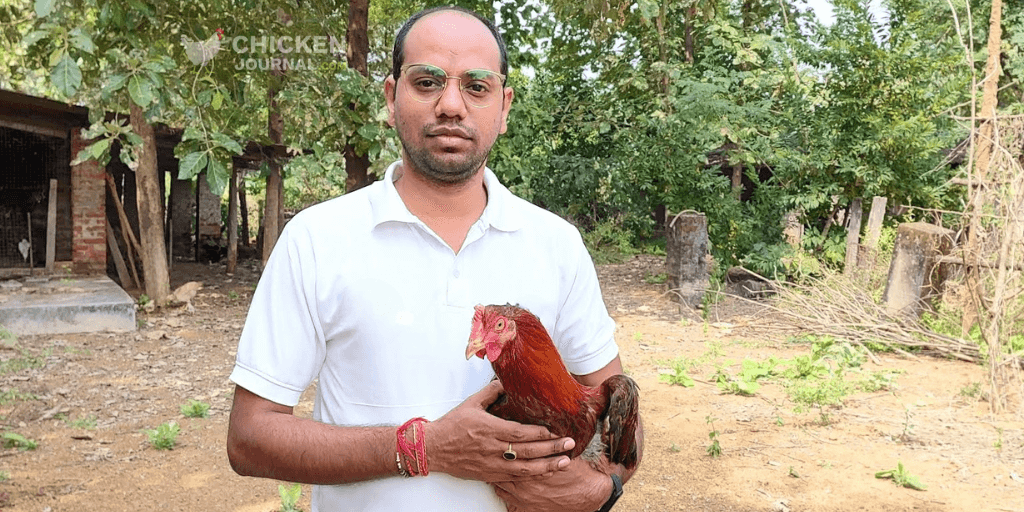

The Dong Tao chicken is a rare Vietnamese breed best known for its enormous, rough-scaled legs. Photos make the feet look almost unreal, but that heavy shank is a genuine breed trait, not an injury or disease.
You may also see the breed called the Vietnamese Dragon Chicken or Ga Dong Tao. It comes from Dong Tao commune in Hung Yen Province, Vietnam, where local families have raised these chickens for generations.
Dong Tao chickens are not practical high-production layers. They grow slowly, reproduction can be difficult, and the best traditional birds are raised for a long time. What keeps the breed important is a mix of cultural value, unusual appearance, meat quality, and local breeding tradition.
For a U.S. backyard keeper, there is another point to know before anything else: Dong Tao is not currently recognized by the American Poultry Association, and genuine purebred stock is much harder to find than common breeds such as Plymouth Rocks or Rhode Island Reds.
Dong Tao Chicken Quick Facts
| Origin | Dong Tao commune, Hung Yen Province, Vietnam |
| Other names | Ga Dong Tao, Vietnamese Dragon Chicken |
| Main use | Traditional meat breed and cultural specialty |
| Adult size | Often around 3.5+ kg hens and 4.5+ kg roosters in traditional mature stock; exceptional birds may be heavier |
| Egg production | Low, roughly 55–95 eggs per year depending on line and management |
| Egg color | White to tinted/light cream |
| Average egg weight | About 48–55 g in published studies and Vietnamese breed reports |
| First egg | About 160–170 days in controlled studies |
| APA recognized? | No |
| Special trait | Extremely enlarged, rough-scaled shanks and feet |
What Is a Dong Tao Chicken?

Dong Tao is an indigenous Vietnamese chicken associated with Dong Tao commune in Khoai Chau, Hung Yen. The breed is also called Dong Cao in some Vietnamese sources.
Stories about the breed often describe it as a “royal chicken.” I would treat that as cultural tradition rather than a precisely documented origin story. Vietnamese sources say these chickens were traditionally believed to have been offered to kings and used during festivals, ceremonies, and other important occasions.
That tradition is still taken seriously in Vietnam. In June 2025, the folk knowledge of raising and processing Dong Tao chickens in the breed’s home area was added to Vietnam’s National List of Intangible Cultural Heritage.
So this is not simply an odd-looking chicken that became popular online. The breed is tied to a real local farming culture.
Why Do Dong Tao Chickens Have Such Huge Feet?
The giant shanks are the first thing everybody notices. Mature birds can develop extremely thick legs covered with irregular, rough scales. The feet are broad, the toes are heavy, and the entire lower leg can look closer to a small reptile limb than the slim shank of a Leghorn.
For years, articles often explained the trait with a vague line about a “genetic mutation.” We now know more than that.
A 2026 genome-wide study compared Dong Tao chickens with other Vietnamese breeds and identified several genomic regions associated with the giant-shank phenotype. The strongest candidates included genes involved in growth regulation, skeletal development, tissue organization, and cell signaling.
The researchers did not find one simple “big leg gene.” Their results point toward a more complicated genetic architecture involving several regions. That fits what you would expect from a trait as dramatic as the Dong Tao leg.
Dong Tao Appearance: More Variation Than Most Photos Suggest
One of the biggest problems with older Dong Tao descriptions is that they make the breed sound visually uniform. It is not.
The old idea that “hens are white and roosters are multicolored” is too simple. Morphological research on Vietnamese Dong Tao populations found several feather-color patterns in both sexes.
Males in one large study mainly appeared in two plumage patterns, while females showed three common patterns. Tan, wheaten, and multicolored birds can all occur. Beak, shank, skin, and feather shades also vary.
The comb is variable too. Scientific surveys have reported rose, walnut, and pea-type comb forms. That is why I would not describe Dong Tao as a breed with one universal pea comb or one universal single comb.
The feature that stays unmistakable is the lower leg. A true traditional Dong Tao should have the thick, rough shanks that made the breed famous in the first place.
How Big Do Dong Tao Chickens Get?
Dong Tao is a large chicken, but weight depends heavily on age, line, feeding, and how long the bird is kept.
Scientific flock measurements have reported lower averages than many promotional articles. In controlled and field studies, males often averaged around the mid-3 kg range and females around the upper-2 kg range at the ages studied.
Traditional mature birds selected for the premium Vietnamese market can become much heavier. Current reporting from Hung Yen describes mature males above roughly 4.5 to 5.5 kg and females above about 3.5 to 4 kg, with exceptional individuals reaching higher weights.
I would not use “5 to 6 kg” as a promise for every Dong Tao. It is better viewed as the upper range of mature, well-developed traditional stock rather than an ordinary backyard average.
How Fast Do Dong Tao Chickens Grow?
Slowly compared with commercial meat chickens.
This is where two different ideas often get mixed together: slaughter efficiency and full maturity.
A controlled Vietnamese study found that processing Dong Tao birds at around 16–20 weeks could be more efficient than waiting until 28 weeks under that feeding system. That does not mean a 16-week-old Dong Tao is a fully developed premium adult.
Traditional high-quality birds in the home region are commonly raised much longer. Vietnamese reports describe roughly 12 to 18 months to produce premium chickens for the specialty market.
If you are comparing Dong Tao with Cornish Cross, they are not even trying to do the same job. Dong Tao is a slow-growing indigenous meat breed, not a rapid commercial broiler.
Dong Tao Egg Production
If your main goal is filling egg cartons, this is the wrong breed.
Older backyard figures often put Dong Tao hens around 55–66 eggs a year. A controlled 52-week laying study recorded an average of about 95 eggs per hen. That is still very low beside a productive backyard layer.
The same study recorded first lay at about 168 days, which is close to 24 weeks. Other Vietnamese breed reports put first lay near 160 days.
Eggs are generally white, cream, or lightly tinted rather than dark brown. Published figures put average egg weight close to 52 g, with many eggs falling roughly in the 48–55 g range.
Feed supplements will not turn a Dong Tao into a high-output layer. Good nutrition supports normal production, but genetics set the basic limit.
Temperament: Do Dong Tao Chickens Make Good Pets?
There is not enough solid breed-level evidence to promise that Dong Tao chickens are cuddly, harmless, or automatically good with children.
Many farm-raised Dong Tao birds are manageable around people because they are handled regularly. That is different from saying temperament is guaranteed.
A mature rooster from any large breed deserves respect. Individual behavior, handling, breeding line, flock setup, and breeding season all influence aggression.
If you are keeping Dong Tao as a novelty or pet breed, choose calm breeding stock and handle young birds consistently. Do not assume the giant legs make the bird either dangerous or gentle.
Dong Tao Meat and Traditional Food Value

Dong Tao is primarily valued as a meat breed in its home country. Its slow growth and large body do not make it commercially efficient in the modern broiler sense, but that is not why people pay a premium for it.
The bird has strong cultural and culinary value. Vietnamese cooks use the legs, thighs, skin, breast, bones, and other parts in a wide range of dishes, especially around holidays and important gatherings.
Research comparing the meat has found differences between breast and thigh texture and color. Thigh meat can be darker and firmer. Flavor, however, is much harder to reduce to one scientific sentence because age, diet, exercise, preparation, and personal preference all change the eating experience.
Claims that Dong Tao meat always tastes “like beef,” is always lower in fat, or is universally juicier than other chicken are too strong. It is safer to say it is considered a specialty meat in Vietnam and is traditionally prized for its distinctive texture and culinary use.
Why Breeding Dong Tao Chickens Can Be Difficult
Reproduction is one of the genuine challenges with this breed.
Dong Tao hens lay relatively few eggs to begin with. Their large bodies and heavy legs can also make natural mating and incubation less efficient than in lighter breeds.
I would not blame every hatching problem on hens “crushing eggs with giant feet.” That explanation gets repeated a lot, but the real reproductive picture is broader.
Vietnamese breeding programs use incubators and, in some flocks, artificial insemination to improve fertility and hatch rates. Current conservation work in the breed’s home region also includes artificial insemination as a way to preserve valuable genetics and improve reproductive efficiency.
If you plan to breed Dong Tao, an incubator is worth considering. Record fertility, hatchability, chick survival, and parentage instead of assuming every large-legged bird is automatically good breeding stock.
Housing and Space
A large, slow-moving chicken with oversized feet needs room to move comfortably.
I would avoid narrow ladders, high jumps, slippery flooring, and cramped perches. Low, broad roosts make more sense for a heavy bird. Deep, dry bedding also gives those large feet a softer landing.
Vietnamese reports from Dong Tao commune describe traditional birds as benefiting from ample movement rather than permanent tight confinement. For a backyard setup, a secure run with room to walk and forage is a better fit than a small pen.
Predator protection still matters. Heavy legs do not give these birds any special defense against dogs, raccoons, foxes, coyotes, or other predators.
Climate and Weather Care
The old claim that Dong Tao chickens “cannot survive weather changes” is much too dramatic.
They are a Vietnamese indigenous breed developed under local conditions. That does not mean every imported line will handle every U.S. climate equally well.
In summer, give them shade, clean water, airflow, and enough space to reduce heat stress. In winter, keep housing dry and well ventilated, with protection from direct drafts.
New birds moved between very different climates should be acclimated gradually when possible. General management matters more than trying to medicate healthy birds simply because the weather changed.
Feeding Dong Tao Chickens
Dong Tao chickens do not need a mysterious breed-specific diet.
Chicks need a complete starter appropriate for their age. Growing birds need a balanced grower ration, and laying hens need a complete layer diet once they are actively laying.
Because these chickens grow slowly and can become quite heavy, I would rather see steady body development than rapid weight gain from excessive grain or treats. A bird carrying a large body on unusually thick legs still benefits from staying fit.
If the flock free-ranges, remember that forage adds variety and activity but should not replace a balanced ration. You can read more in my chicken feeding guide.
Foot and Leg Care
Those giant legs are normal for the breed, but they still need normal chicken care.
Check the feet regularly for cuts, swelling, scabs, trapped mud, damaged scales, or tenderness. A naturally rough Dong Tao shank should not be confused with sudden inflammation or injury.
Keep litter dry and avoid surfaces that stay wet or muddy for long periods. Heavy birds can place more pressure on the footpad, so a clean walking surface and sensible roost height are important.
If you see a dark scab on the bottom of the foot, significant swelling, heat, or lameness, check for bumblefoot or another injury rather than assuming it is part of the breed’s unusual leg shape.
Health and Biosecurity
Dong Tao is rare, but rare does not mean fragile and it does not mean disease-proof either.
Use the same fundamentals you would with any valuable flock: clean water, balanced feed, dry housing, ventilation, parasite control, vaccination where appropriate, and a quarantine period for new birds.
Because genuine breeding stock can be expensive and difficult to replace, biosecurity is especially important. A rare bird is still vulnerable to respiratory disease, Marek’s disease, coccidiosis, mites, lice, worms, and injuries.
Purebred Dong Tao vs. Crossbred “Dragon Chickens”
This deserves more attention than it usually gets.
Researchers who genetically tested Vietnamese indigenous breeds found crossbred birds inside samples that had been assumed to be purebred. That does not mean most Dong Tao are crosses. It means appearance alone is not always enough to prove purity.
A chicken with oversized legs may have Dong Tao ancestry without being a well-documented purebred Dong Tao.
If you are paying a premium for breeding stock, ask about the breeder’s source flock, breeding records, generations of selection, parent photos, leg type, mature weights, egg production, and whether the line has been crossed with another breed.
Can You Raise Dong Tao Chickens in the United States?
Yes, if you can find legitimate stock and provide suitable care, but Dong Tao is not a common U.S. backyard breed.
The breed does not appear on the current American Poultry Association accepted-breed list, so there is no current APA Dong Tao breed standard comparable with standards for Plymouth Rocks, Leghorns, or Rhode Island Reds.
That also means you should be careful with online claims such as “APA-quality Dong Tao” unless the seller is simply using the phrase informally. APA recognition and a breeder’s private quality grading are not the same thing.
For most U.S. keepers, this is a specialty breeding project rather than a practical first chicken breed.
Pros and Cons of Dong Tao Chickens
Reasons People Keep Them
- One of the most distinctive leg types found in domestic chickens.
- Strong cultural importance in Vietnam.
- Large body and traditional meat value.
- Interesting genetics for serious breeders.
- Rare appearance that stands out in a specialty flock.
Reasons They Are Not for Everyone
- Low egg production.
- Slow growth compared with commercial meat chickens.
- Natural reproduction can be difficult.
- Purebred stock can be difficult to verify and source.
- Large feet and heavy body call for thoughtful housing.
- Not currently APA recognized.
Frequently Asked Questions
Why are Dong Tao chickens so expensive?
The highest-value birds combine rarity, documented breeding, large well-formed legs, mature size, cultural demand, and long rearing time. Prices vary widely by country, age, purity, leg quality, season, and whether the bird is being sold for breeding, meat, or a premium holiday market. There is no single reliable worldwide Dong Tao price.
How many eggs does a Dong Tao hen lay?
They are low-production layers. Published figures range from roughly 55–66 eggs in traditional reports to about 95 eggs over 52 weeks in a controlled study.
How big do Dong Tao chickens get?
Size varies. Traditional mature roosters are often reported above 4.5 kg and hens above 3.5 kg, while exceptional birds can be heavier. Scientific study averages may be lower depending on the birds’ age and management.
Are Dong Tao chickens friendly?
They can be manageable with regular handling, but temperament is not guaranteed. Individual hens and roosters vary, just as they do in other breeds.
Do Dong Tao hens hatch their own eggs?
Some may brood, but the breed is known for difficult reproduction and low efficiency compared with commercial chickens. Incubators and artificial insemination are used in some breeding programs to improve results.
Is Ayam Cemani a type of Dong Tao?
No. Ayam Cemani is a separate Indonesian chicken population known for fibromelanosis and black pigmentation. It is not a Philippine Dong Tao crossbreed.
Does the American Poultry Association recognize Dong Tao chickens?
No. Dong Tao does not appear on the current APA accepted breeds and varieties list.
Conclusion
Dong Tao chickens are easy to remember because of the legs, but the breed is more interesting once you look past them.
This is a slow-growing Vietnamese meat breed shaped by generations of local selection. Its breeding traditions now have national cultural-heritage recognition in Vietnam, and current genomic research is finally giving scientists a better look at how the remarkable giant-shank trait developed.
For a U.S. backyard flock, Dong Tao is a specialty choice. You should expect low egg output, slower growth, difficult sourcing, and more breeding work than you would have with a common dual-purpose breed.
If those challenges are part of what interests you, the Dong Tao is one of the most unusual chicken breeding projects you can take on. Just buy the bird for what it really is, not for exaggerated promises about guaranteed size, price, temperament, or production.
Sources
- Genes (2026): Genomic Insights into the Giant Shank Phenotype of Dong Tao Chickens
- Animals: Productive Performance and Egg and Meat Quality of Dong Tao Chickens
- Morphological Characteristics of Indigenous Dong Tao Chickens in Vietnam
- Frontiers in Genetics: High-Resolution Genomic Analysis of Vietnamese Chicken Breeds
- Vietnam.vn: Dong Tao Folk Knowledge and National Intangible Cultural Heritage
- American Poultry Association: Accepted Breeds and Varieties