
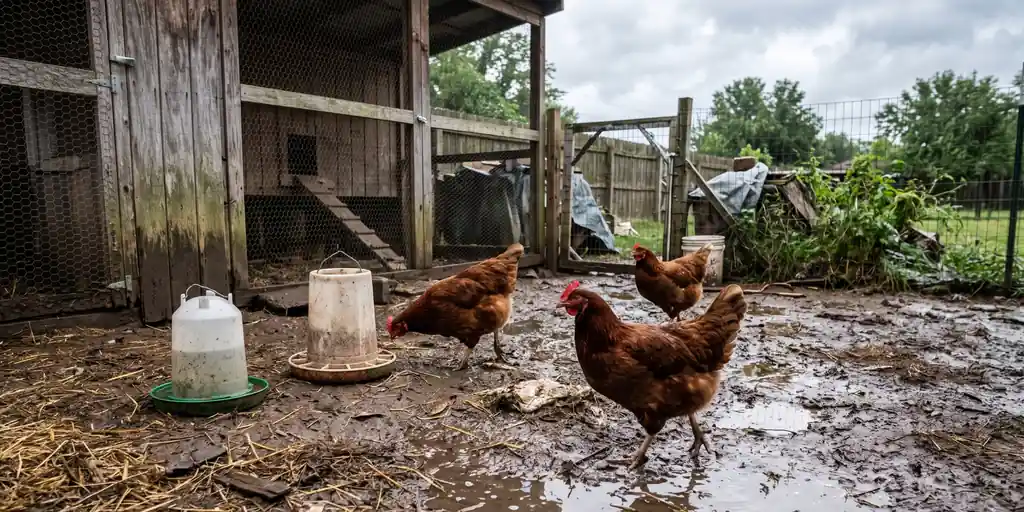
Your chicken run has become muddy after a night of heavy rain. You may notice that your chickens are walking in muddy soil, puddles have started to form around the feeder, and the ground is becoming quite slippery.
A little mud can be a normal occurrence in backyard runs, especially if the grass has been scratched up by your chickens. However, if your chicken run is consistently getting muddy, you may need to improve drainage, add ground cover, or protect it from rain.
You don’t necessarily need to completely renovate your chicken coop. In some cases, adding a waterer in a different place, diverting roof water, or adding the right ground cover can really make a difference.
In this article we will look at why your chicken run is becoming muddy, how to fix it, what ground cover is best, and what you can do to make the ground less muddy.
Why Does My Chicken Run Get Muddy?
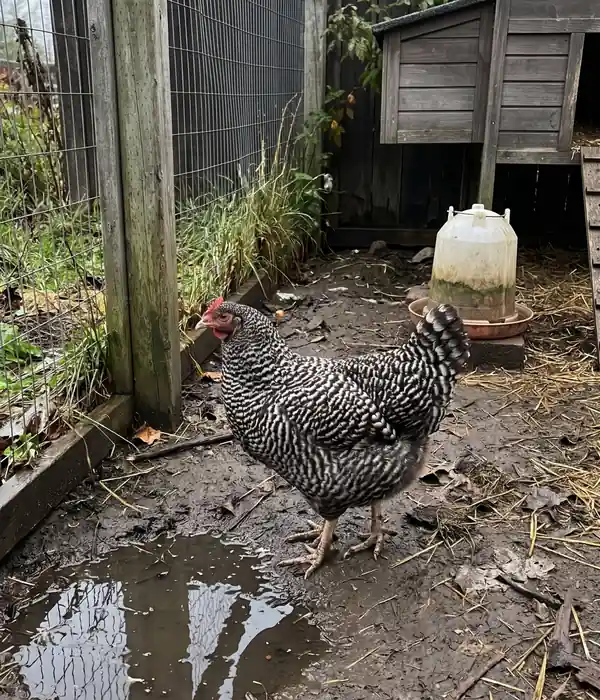
Chicken runs can become muddy as there is more water than can be absorbed or drained away. Rain, poor drainage, leaking waterers, and scratching can all contribute.
 Share on Pinterest
Chickens will naturally scratch the ground looking for insects, seeds, and other foods. This causes the grass to be scratched up and can leave little protection for the ground.
If your coop is in a low-lying area, water can run into the run from the rest of your yard.
Some common reasons a chicken run can become muddy are:
- Heavy rain causing exposed soil to become wet.
- Clay soil that does not drain well.
- Low-lying chicken run.
- Roof water running into the run.
- Leaking drinkers or overflowing water containers.
- Too many chickens in a small run.
- Grass being scratched up.
- Poor quality ground cover that holds too much moisture.
- Not much sun.
- Blocked drains or outlets.
Try to determine where the excess water is coming from before adding gravel, sand, or wood chips to the ground. We explain why drainage and elevated ground are important in our guide to choosing the best place for your chicken coop.
Is a Muddy Chicken Run a Problem?
If your chickens have somewhere dry to go and the ground doesn’t stay muddy for too long, then this is usually not a problem. However, constantly having wet ground can make the area uncomfortable and cause issues with keeping your chicken coop clean.
Wet ground can cause unpleasant smells with the chicken droppings and spilled feed. Puddles can cause problems with insects and wildlife. The ground will also become more compacted from constant walking.
The USDA APHIS suggests reducing stagnant water around poultry areas, as this can attract wild birds and wildlife. These can cause contamination.
The goal is not to have completely dry ground outside all year round but to ensure the run has good drainage and does not have a lot of stagnant water. Ensure your chickens always have somewhere clean and dry to rest.
How to Fix a Muddy Chicken Run After Rain
There are a few simple steps you can take to try and improve a muddy chicken run. Start with the simplest options and move onto permanent drainage solutions if needed.
1. Find Where the Water Is Coming From
The first thing to do is to determine how the water is getting into your chicken run. If it is safe to do so, look around your chicken run during or after the rain.
You may notice that water is running down from your yard, dripping from the roof of your coop or pooling around your waterer. This will help you choose the right solution.
Look at these areas:
- Low points in the chicken run.
- Base of coop walls.
- Underneath the edge of the roof.
- Around feeders and waterers.
- Entry point.
- Existing trenches, pipes, or outlets.
If water is running into your chicken run from outside, then adding extra bedding may not fix the issue. It is usually best to divert it.
2. Remove Standing Water and Wet Materials
If there are large puddles, then try to remove or safely drain the water. Keep your chickens away from deep, slippery, and dirty areas.
Remove any wet feed, built-up manure, and any bedding that becomes smelly or wet. This can cause the ground to retain a lot of moisture.
Avoid digging up the whole area too much if the ground is very wet. This can cause further issues, and some clay-heavy areas may become more of an issue.
We have a guide to cleaning your chicken coop.
3. Redirect Rainwater From the Coop Roof
A surprising amount of water can build up in your chicken run if it is getting direct rain from a large coop roof. This is especially true if the roof slopes into the run.
Adding the right gutter and downspout can help to divert the water away from your chickens. Ensure the outlet is going to somewhere approved and will not cause water to run back into your coop or neighboring properties.
You can also add extra overhang to your roof in areas where water is frequently coming in from the sides. Ensure any changes to your roof are secure and suitable for your weather.
If you are looking to improve your coop, then we have a guide to the best chicken coop roof types and ideas.
4. Add a Covered Area
Adding a covered area will help reduce the amount of rain getting into the ground. It will also provide your chickens with somewhere to go outside their coop.
A solid roof or waterproof tarpaulin may be useful to add. Ensure it is secure and the water will run off. Avoid fully covering your coop with plastic sheets or tarps, as your chickens need ventilation.
Read our article about the best tarps for chicken coops and runs.
5. Add Clean, Untreated Wood Chips
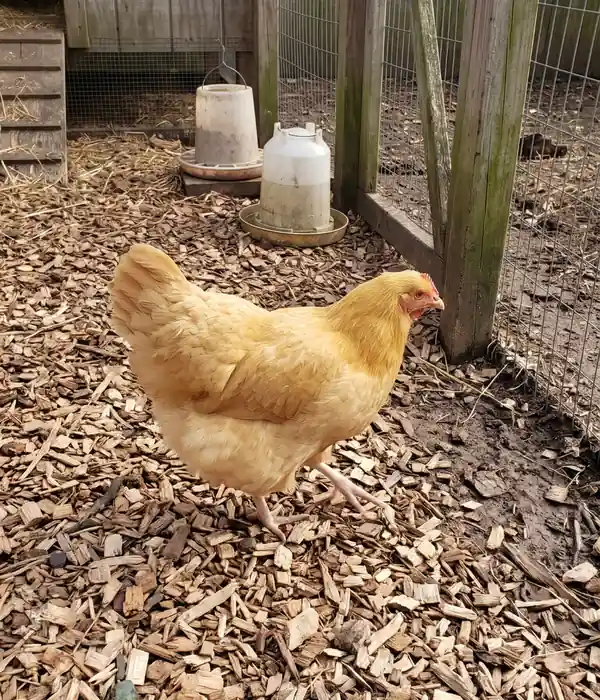
Adding coarse, untreated wood chips can help improve the walking surface of some muddy runs.
 Share on Pinterest
Wood chips are often useful in small backyard runs where there is no grass. They can be easier to refresh than adding loose straws.
Ensure you use clean, untreated wood chips. Avoid any painted, preserved, or obviously contaminated wood. Avoid using wood chips from unknown or potentially toxic plants. Check for mold.
Avoid adding a thick layer of wood chips on top of stagnant water. The ground will still need a way to release the extra moisture.
Regularly check the surface and remove any heavily dirty or wet wood chips. Adding the right ground cover should improve the situation.
6. Improve Ground Drainage
If your chicken run is becoming quite wet after most rainfall events, you may need to improve drainage in the ground. This can be an issue if you have heavy clay in your yard.
You can improve the grading around your chicken run or add the right gravel drain or pipe. This will help to move the water away.
French drains may help in some poultry areas. However, it is important to get the design right for your soil type, slope, and where the water can go. If you don’t place it correctly, it can cause issues elsewhere in your yard.
The USDA APHIS suggests grading, drainage, and culverts can help reduce stagnant water.
Before you dig, check for any underground utilities and any drainage restrictions. If your chicken run is constantly flooding or is in a lower position, it may be worth getting some professional help.
7. Move Feeders and Waterers
Water containers can make the ground muddy if they leak or spill. Chickens may also scratch around your feeders, leaving bare ground that can become muddy.
Place your waterers on a stable and level surface. This will make it easier to manage any spillages. A suitable stand or solid surface may help keep the area cleaner.
Feeders should be kept under cover. Remove any wet or spilled feed. Wet feed can go off and attract unwanted pests.
Always ensure your chickens have clean drinking water.
8. Add a Dry Walking Surface
Some chicken runs can become very muddy around gates, doors, and feeding areas. These areas will often have less vegetation due to constant walking.
Having a stable surface can help keep your run clean. Adding the right pavers or secure surface may help in areas you frequently walk.
Choose a surface that is stable for your chickens. Avoid anything too rough. Ensure it is easy to clean. Avoid using sharp, loose stones, exposed fixings, or unstable boards.
If the rest of your enclosure is draining well, then improving these areas may be enough.
9. Allow the Ground to Recover
If you have enough space in your backyard, then consider splitting your run into sections. This will allow one area to recover.
Rotating your chickens will help reduce constant scratching and allow vegetation to recover. Some areas may start to regrow grass, but this can be difficult in heavily used runs.
A larger enclosure will mean the chickens will walk over more ground. We have a guide to how much space your chickens need.
Best Ground Cover for a Muddy Chicken Run
Depending on how wet the area is, how well the ground drains, and if it is covered, you will need to choose the best ground cover. There isn’t one that will work well in all backyards.
| Material | Main benefit | Main limitation | Best use |
|---|---|---|---|
| Coarse untreated wood chips | More comfortable than bare ground | Break down and need replacing | Many covered or partially covered runs |
| Coarse sand | Can drain well on a suitable base | Can become compacted or wet without drainage | Properly prepared, drained areas |
| Washed gravel | Useful in drainage layers | Some grades are uncomfortable on the surface | Drainage layers and selected paths |
| Straw | Easy to spread | Can become wet quickly and needs frequent replacing | Temporary use in small areas |
| Grass | Natural surface with foraging opportunities | Can be damaged by constant scratching | Larger or rotated runs |
| Pavers | Stable and easy to maintain in selected areas | Hard surface and can be expensive | Gates and walking paths |
We have a detailed guide to the best chicken run flooring.
Wood Chips vs. Sand for Muddy Chicken Runs
Both wood chips and sand can be useful, but it depends on the drainage and maintenance of your run. If you have a naturally draining outdoor run then wood chips may be a practical option. However, if installed correctly, sand can be easier to rake and clean droppings from.
Sand will not help if you have a poorly draining dip. If there is nowhere for the water to go, the area may stay damp.
It is important to remember that an outdoor chicken run is different from the inside of the coop. We have an article about using sand as bedding in your chicken coop.
Should You Put Straw Over Muddy Ground?
Straw can be a quick solution to add some coverage but isn’t always the best option. Wet straw can become clumpy and can absorb dirt and droppings. It will need frequent replacement.
If using straw as a temporary solution, keep the layer to a reasonable thickness. Once it becomes soaked or very dirty, then remove it. Don’t keep adding fresh straw on top of old wet straw without checking the ground underneath.
We have a guide to bedding options for your chicken coop.
How to Improve Drainage in Your Chicken Run
 Share on Pinterest
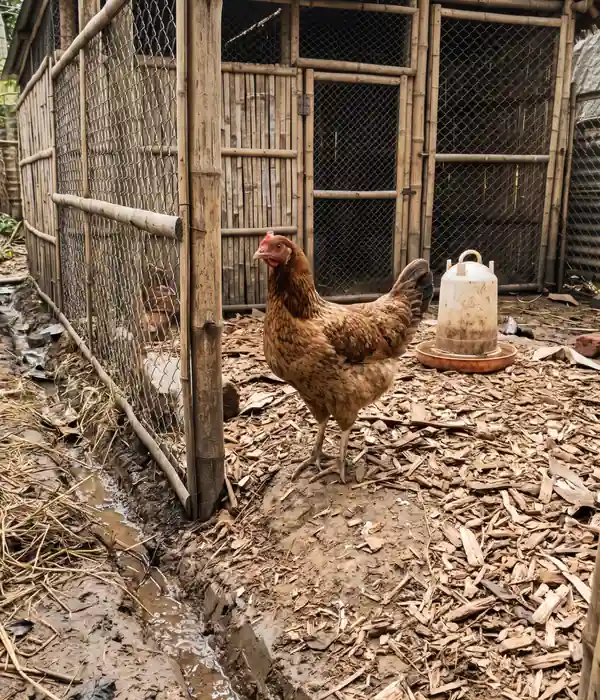
Having good drainage in your chicken run will mean the water can run away. The exact solution will depend on the slope, soil, and rainfall in your backyard.
Check the Ground Slope
Check if the ground slopes towards or away from your coop. If the entrance is lower than the rest of your yard, then water may be pooling around this area.
You may be able to improve the grading slightly to help the surface water run away. However, don’t change the landscape to cause water to run towards buildings or neighboring properties.
Check Soil Drainage
Sandy soil will generally allow more water to run through than heavy clay. However, this will depend on your area. Compacted soil can also cause poor drainage.
If it is safe to dig, you can check how quickly a small hole drains. If the ground is staying very wet for long periods, then consider getting a drainage professional to check.
Choose a Safe Drainage Outlet
Ensure the water has somewhere safe to go. Putting it into another enclosed low area won’t necessarily help.
Your drainage should be designed correctly and follow local rules. Do not direct contaminated water into drinking-water sources or onto neighboring land. If you need more grading or underground drainage, then it may be worth getting professional help.
How to Keep Your Chicken Run Dry in the Rainy Season
Prevention is usually the easiest way to stop your chicken run becoming muddy. Having a regular maintenance routine can make a big difference.
Before Heavy Rain
Ensure your gutters, downspouts, and outlets are clear. Remove any spilled feed. Ensure your waterers aren’t leaking.
Check your roof coverings and secure any loose tarps. Ensure your chickens have somewhere dry to go, including a dry dust-bathing area where practical.
We have a guide to raising chickens in the rain.
During Rain
Observe where the puddles are forming. Don’t put yourself or your chickens in any unsafe situations. Avoid walking through any muddy areas unnecessarily, as this can cause the ground to become worse.
Ensure your feeders are under cover. Ensure your chickens have clean drinking water. If water is running into your enclosed coop then check if your bedding has become wet.
After Rain
Check the ground for any stagnant water or heavily compacted areas. Remove any wet organic material, using suitable chicken coop rakes and scoops where useful. Refresh the surface when possible.
If the same area becomes muddy after every rainfall, note where the water is pooling. This can help you plan a longer-term drainage solution.
Common Mistakes to Avoid With a Muddy Chicken Run
While there are a few quick solutions you can carry out to help make your ground look nicer, there are also a few things you can do that could cause more maintenance issues.
- Putting new litter over deep puddles.
- Colored or chemically treated wood chips.
- Sharp gravel where your chickens will be walking.
- Allowing water from the roof to run back into the run.
- Ignoring leaking drinkers.
- Leaving wet feed.
- Covering vents with waterproof sheets.
- Keeping the inside litter damp.
- Creating drainage points that go onto neighboring land.
- Assuming it is fixed due to the ground being dry.
Instead, start by fixing the source of the water, improving drainage, and then choosing a comfortable surface. This can save you time and reduce the need to change your ground cover.
How to Fix a Wet Chicken Coop Floor
A muddy chicken run is different from having wet litter inside your chicken coop. Your chickens need a dry and suitable place to sleep and rest, especially in colder weather.
If water is entering your coop, check the roof, walls, doors, and ground. Check for condensation and poor airflow.
Remove any very wet litter and clean the area. Replace with suitable dry litter. Do not seal off the coop’s ventilation, because your chickens still need airflow.
Having good airflow in your coop can help with managing moisture. See our guide to chicken coop ventilation. If you use the deep litter method, it still needs proper management and should not become a wet, smelly floor.
How to Fix Muddy Areas Around Feeders and Waterers
Areas around your feeders can often become muddy. Chickens gather in these areas and scratch at the ground. They may also spill feed and water.
Improving this area with stable feeders and choosing a suitable surface can help. This will make it easier to clean but still allow your flock access.
Check daily for any small leaks or overflowing trays. Even a small leak can cause one area to remain damp.
Keeping your feed covered can also help to deter wild birds and rodents. See our guide to chicken biosecurity to see why it is important to manage wildlife access to your poultry feed and water.
When to Consider Rebuilding a Muddy Chicken Run
Not all muddy chicken runs will need a big build but some areas can be naturally hard to drain. If puddles keep forming on your coop floor or the area becomes wet even after light rain, changing the surface may not be enough.
- Constant water getting into your enclosed coop.
- The ground staying saturated for several days.
- Improving drainage hasn’t helped.
- The enclosure is in a low-lying area.
- You cannot easily divert roof water or yard drainage.
- The run is becoming unsafe or unusable during normal rainfall.
In some cases, it may be better to rebuild your run in a slightly raised and well-drained area. By putting the run in a more suitable area, you can reduce maintenance.
If you need to change the boundaries of your enclosure, our chicken fencing ideas can help you create secure fencing.
Frequently Asked Questions
How can I fix a muddy chicken run quickly?
Stop any leaks and divert any water getting into your enclosure. Remove any puddles and very wet material. Add a suitable temporary ground cover and plan to improve drainage.
Are wood chips good for a muddy chicken run?
Untreated coarse wood chips can help to improve some outdoor runs. However, they will need regular checking and replacing. They won’t fix serious drainage problems.
Can I use gravel?
Gravel can be useful for drainage or a well-built path. However, some gravel surfaces can be uncomfortable for your chickens.
Is sand good for a wet chicken run?
Sand can be a good option if the area is well prepared and has suitable drainage. However, adding sand to a low area may not resolve the issue.
How can I stop my chicken run flooding?
Check where the water is coming from, divert roof water, improve slope where needed and consider adding a suitable drainage system. If the run is constantly in a low area, you may need to make larger changes or move the run.
Should I cover my chicken run with a tarp?
A tarp can help to reduce the amount of rain hitting the ground. However, it needs to be secured and allow airflow. In some backyard setups, covering the most exposed area may be enough.
Can chickens be outside if the ground is muddy?
Your chickens can get the odd muddy area when outside but they should always have access to dry shelter. If there are constant puddles, this should be addressed.
Why is my chicken run muddy when it hasn’t rained?
It may be due to leaks from your drinkers, poor drainage, compacted ground or water running from another area of your yard. Check for any sources of water before adding extra litter.
Final Thoughts
A muddy chicken run after rain is a common issue, especially if you have a small backyard enclosure and your chickens have dug up most of the grass. While it is common to have wet ground, if it is constantly muddy and has puddles, this should be addressed.
Start by finding out why there is too much water and fix any leaks or roof water. Consider adding a suitable surface, improving drainage and adding areas to cover.
You don’t need to spend a fortune on flooring or rebuild your coop to make improvements. With regular maintenance and a drainage plan that suits your backyard, you can make caring for your chickens easier.
Research and Extension Sources
- USDA APHIS – Protect Your Birds From Wildlife
- University of Connecticut Extension – Basic Management of Small Poultry Flocks
- University of Florida IFAS Extension – Hurricane Preparedness for Poultry
- Merck Veterinary Manual – Management of Backyard Poultry
- Alabama Cooperative Extension – Biosecurity for Backyard Poultry Flocks
- USDA APHIS – Reducing Water Access Around Poultry Facilities
Practical Drainage Safety Tips
Always follow local guidelines when improving drainage. Avoid any underground utilities, contaminated water and damage to surrounding properties. If you have major or recurring flooding problems, you may need a professional assessment.
