
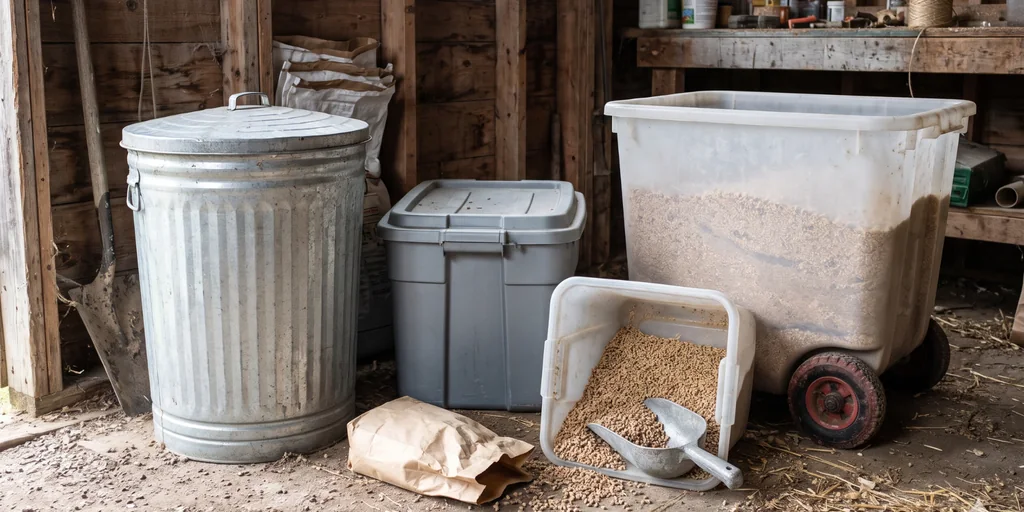
Buying fresh chicken feed is easy. Keeping it dry, clean, and protected from pests takes a little more planning.
An opened bag of feed can cause problems quickly. Damp pellets clump together, mice chew through packaging, and spilled grain attracts insects.
A good chicken feed storage container helps protect your investment and makes daily feeding easier. The right choice depends on how much feed you buy and where you keep it.
Some containers hold large bags of layer feed. Others work better for chick starters, scratch grains, or small amounts of treats. Material, lid design, capacity, and storage location all matter.
This guide compares seven chicken feed storage containers for 2026, whether you keep four backyard hens or a larger flock.
For each option, we’ll explain its features, pros and cons, and the chicken keepers it may suit best.
For general feeding advice, read our complete guide to feeding chickens.
Best Chicken Feed Storage Containers: Quick Comparison
| Container | Best for | Advertised capacity | Reported rating* |
|---|---|---|---|
| Gamma2 Vittles Vault | Best overall | Up to 50 lb of dry pet food | 4.7/5 |
| Behrens Galvanized Steel Can | Rodent-resistant storage | 20 gallons | 4.5/5 |
| IRIS USA Rolling Container | Easy movement | Up to 30 lb of dry pet food | 4.5–4.6/5 |
| Buddeez Roll-Away Dispenser | Convenient dispensing | 50 quarts | 4.6–4.7/5 |
| ePackageSupply 5-Gallon Bucket | Separate rations | 5 gallons | 4.6/5 |
| OXO Good Grips Pet POP | Small daily portions | 6 quarts | 4.6/5 |
| Vtopmart Airtight Containers | Multiple feed ingredients | Four 5.2-liter containers | 4.7/5 |
Choose the capacity and lid style for your actual feed volume. Ratings in this table are historical marketplace snapshots and must be rechecked on Amazon.com before this draft is published.
1. Gamma2 Vittles Vault Airtight Pet Food Storage Container — Best Overall

As an Amazon Associate I earn from qualifying purchases. This article contains affiliate links. If you buy through these links, I may earn a commission at no extra cost to you.
The Gamma2 Vittles Vault is worth considering if you regularly buy larger bags of chicken feed.
The 50-lb version has heavy-duty plastic construction and a threaded Gamma Seal lid designed to form a tight seal.
Its wide opening makes scooping pellets or crumble convenient during morning and evening feeding.
The food-grade plastic container is intended for dry pet food, birdseed, and similar products. Its advertised capacity is based on pet food, so an entire 50-lb bag of chicken feed may not fit.
Although the plastic is sturdy, it is not rodent-proof. Persistent rats may chew through it.
Pros
- Threaded lid with a gasket to help protect dry feed.
- Large opening to make scooping easier.
- Good for storing large amounts of pellets or crumble.
- Easy to clean with a food-grade plastic.
- Square shape to save space.
Cons
- Plastic can be damaged by persistent rodents.
- Threaded lid may be less convenient than a flip-top.
- May not fit as much chicken feed as stated for pet food.
Best for: Backyard chicken keepers with larger bags of feed to store in a dry and secure area such as a garage, feed room or shed.
2. Behrens 20-Gallon Galvanized Steel Can — Best for Rodent Resistance

As an Amazon Associate I earn from qualifying purchases. This article contains affiliate links. If you buy through these links, I may earn a commission at no extra cost to you.
Rodents are a major concern when storing chicken feed. Even a sealed plastic bin can be damaged by persistent rats.
The Behrens 20-Gallon Galvanized Steel Can has metal walls that resist rodent chewing better than plastic.
It can work well as an outer feed-storage container in a barn, garage, or shed where rodents are a concern.
It has a snug-fitting lid, carrying handles, and a 20-gallon capacity. The amount of chicken feed it can hold varies with feed type and packaging.
The manufacturer identifies livestock feed and pet food storage as suitable uses. However, the standard fitted lid is neither airtight nor a locking lid.
For added protection, fold the opening of the original feed bag and place it inside the steel can. That keeps the feed separated from direct metal contact and preserves its original batch information.
Pros
- Steel construction that is harder for rodents to chew through.
- Large 20-gallon capacity for bulk storage.
- Durable metal.
- Opaque walls.
- Handles to make it easier to move an empty container.
Cons
- Not an airtight container with a snug fitting lid.
- Metal can cause condensation if not stored properly.
- Large can can be hard to move when full.
- Should be stored under cover.
Best for: Chicken keepers with rodents looking for a tough outer container for dry feed bags.
Feed containers on their own won’t solve a rodent problem. If you have mice getting into your coop, view our guide to rat and mouse traps for chicken coops for more control options.
3. IRIS USA Airtight Rolling Pet Food Container — Best for Easy Movement

As an Amazon Associate I earn from qualifying purchases. This article contains affiliate links. If you buy through these links, I may earn a commission at no extra cost to you.
Large bags of feed can be awkward to move, especially if your storage area is some distance from the coop.
The IRIS USA Airtight Rolling Container has wheels that help you move feed across suitable indoor flooring.
The 30-lb version has a translucent body, so you can check remaining feed without opening the lid.
Its foam seal and snap-lock lid help limit moisture exposure, while the wide top opening makes refilling easier.
This is a practical everyday option for small to medium flocks when kept in a dry garage or enclosed storage area.
Its wheels are less useful on gravel, mud, or uneven outdoor surfaces.
Pros
- Swivel wheels to make moving feed easier.
- see-through body.
- snap-lock lid for easy everyday use.
- Foam seal to help reduce moisture.
- Narrow rectangular shape.
Cons
- Not great for moving on uneven outdoor surfaces.
- Plastic isn’t a reliable rodent-resistant option.
- May not fit as much chicken pellets or crumble as stated.
Best for: Small and medium sized backyard flocks who need to move feed regularly.
If you’re looking for feeders for your feeding area, view our guide to the best chicken feeders.
4. Buddeez 50-Quart Roll-Away Pet Food Dispenser — Best for Easy Dispensing

As an Amazon Associate I earn from qualifying purchases. This article contains affiliate links. If you buy through these links, I may earn a commission at no extra cost to you.
The Buddeez Roll-Away Dispenser is a larger storage option designed to make daily handling easier.
The 50-quart model has a slim body, recessed wheels, a large flip-top opening, and a measuring scoop.
Its bag-in design can accommodate suitable dry-food bags.
Keeping the original feed bag inside the container also lets you retain ingredient, lot, and best-by information.
The BPA-free plastic container has a gasket-sealed lid. Its advertised 44-lb pet-food capacity does not guarantee the same capacity for chicken pellets or crumble.
Compared with a basic storage tote, it offers several conveniences for daily feeding.
Pros
- Large 50-quart container to store large amounts of dry feed.
- Wheels to help move a full container.
- Measuring scoop to make daily feeding easier.
- Bag in design to keep original feed packaging.
- Slim design.
Cons
- May be too large for very small backyard flocks.
- Wheels aren’t designed for muddy or rough surfaces.
- Plastic isn’t rodent-resistant.
Best for: Chicken keepers who want a large, movable container with a measuring scoop.
If you’re using automatic feeding systems, view our guide to automatic chicken feeders.
5. ePackageSupply 5-Gallon Food-Grade Bucket with Gamma Seal Lid — Best for Different Feeds

As an Amazon Associate I earn from qualifying purchases. This article contains affiliate links. If you buy through these links, I may earn a commission at no extra cost to you.
Not every flock needs one large bin. If you raise birds of different ages, several smaller containers can be more useful.
The ePackageSupply 5-Gallon Bucket is designed for dry food storage and made from heavy-duty, food-grade HDPE plastic.
This version includes a Gamma-style screw-on lid for a secure closure.
The 5-gallon size works for keeping chick starter, grower feed, layer pellets, and scratch grains in separate containers.
Labeled buckets can help prevent mix-ups because starter, grower, and layer feeds serve different nutritional needs.
A carrying handle helps with transport, although the filled bucket may be heavy.
Its main limitation is capacity: it is unlikely to hold an entire large feed bag and works better for smaller amounts or a multi-container setup.
Pros
- food-grade HDPE construction.
- Secure screw-on lid.
- 5-gallon size to separate different rations.
- Carry handle.
- Multiple buckets to label.
Cons
- May not fit an entire large bag of feed.
- Screw-on lids take longer to open than flip-top lids.
- Plastic isn’t as rodent-resistant as steel.
Best for: Chicken keepers with multiple feeds or who have chicks and adult chickens.
You should choose different feeds depending on the age of your birds and their nutritional requirements. View our guides to protein requirements in chicken feed and nutritional deficiencies in chickens to see why its important to have the right ration.
6. OXO Good Grips Pet POP Container — Best for Small Daily Portions
As an Amazon Associate I earn from qualifying purchases. This article contains affiliate links. If you buy through these links, I may earn a commission at no extra cost to you.
If you keep only a few hens, you may not need a large rolling bin for every type of feed.
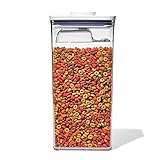
The OXO Good Grips Pet POP Container is a compact choice for small amounts of dry feed, grains, or treats.
The 6-quart container can hold a convenient daily supply while you keep your main feed bag in larger storage.
A push-button lid creates an airtight seal, and the included half-cup scoop helps measure smaller portions.
Its transparent body makes it easy to see what remains.
The manufacturer recommends using the button to open and close the lid, rather than carrying the container by its lid.
This is a secondary, daily-use container rather than a bulk-storage solution.
Pros
- Small size for small flocks and limited storage.
- Easy to open and close with a push button.
- Airtight seal.
- Measuring scoop.
- Transparent body.
Cons
- Too small for a standard large chicken feed bag.
- Transparent plastic should be kept away from direct sunlight.
- Push button lids have moving parts that need to be properly cleaned.
Best for: Small flock owners who want a handy container for daily feeding, dried mealworms or treats.
If you’re giving the occasional extra, view our guides to mealworms for chickens and safe chicken treats. Treats shouldn’t replace a complete chicken feed.
7. Vtopmart Airtight Food Storage Containers — Best for Organizing Feed Ingredients
As an Amazon Associate I earn from qualifying purchases. This article contains affiliate links. If you buy through these links, I may earn a commission at no extra cost to you.
Some chicken keepers store several dry ingredients alongside their main feed.
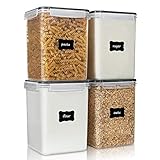
The Vtopmart Airtight Set includes four plastic containers, each holding approximately 5.2 liters.
Although designed for pantry items such as flour, rice, and cereal, the individual containers can also organize small quantities of dry poultry-feed ingredients.
For example, you could use separate containers for scratch grains and dried treats.
Each clear container has a locking lid, and the set includes labels and measuring cups to help keep contents organized.
Their rectangular shape fits neatly on shelves, but they are not intended for entire large feed bags.
Use these as supplementary organizers, not your flock’s main bulk-feed storage.
Pros
- Four separate containers to organize different dry ingredients.
- Transparent body.
- Locking lids.
- Rectangular shape.
- Labels and measuring cups.
Cons
- Too small for bulk feeds.
- Multiple lids to clean regularly.
- Plastic isn’t rodent-resistant.
- Transparent should be kept away from direct sunlight.
Best for: Chicken keepers who have multiple small amounts of dry grains, supplements and treats.
If you’re growing sprouted grains remember that wet or sprouted fodder will need to be handled differently. View our guide to growing fodder for chickens.
How to Choose the Best Chicken Feed Storage Container
Choosing the best chicken feed storage container involves more than finding the biggest bin.
A smaller, sealed container in a dry room may protect feed better than a larger bin kept somewhere damp or exposed to pests.
1. Storage Capacity
Start by thinking about how much chicken feed your flock actually eats.
Four laying hens need far less storage space than a flock of 20 or 30 chickens.
If you usually buy 40/50-lb bags of feed then you will want a container that can fit this in. Try to find one that will fit the whole bag, without squishing.
Chicken feed, dog food, grain, and birdseed have different densities.
A bin advertised for 30 lb of dog food may not hold 30 lb of chicken feed.
Check the measurements and how much it can actually fit.
2. Plastic vs. Metal Containers
Plastic containers are generally lighter, easier to clean and come with sealed gasket lids. This makes them ideal for keeping in dry and safe places.
However, they can be chewed by rodents.
Metal containers are much harder to chew through. They are also light proof and can withstand a lot of handling.
They are however heavier, can cause condensation and may not be fully sealed.
A great option is to put your feed bag into a sealed metal can.
The University of Maine Cooperative Extension recommends keeping feed clean, dry, and protected from rodents.
3. Lid Design
A good lid is one of the most important parts of a feed container.
If the lid doesn’t fit well then pests, insects, dust and moisture can get into your feed.
Common lid types include:
- screw-on: Good for keeping it sealed.
- snap-lock: Great for opening and closing often.
- flip-top: Quick access for scooping.
- Metal: Physical barrier, but may need extra to stop wildlife getting in.
An airtight lid is good, but will not make your container fully water proof or rodent-resistant.
4. Ease of Cleaning
Chicken feed can cause a lot of fine dust and particles to build up in the bottom, corners and around the lid of your container.
Leftover feed can cause insects to be attracted to it or mix with new feed.
Choose a container that will have a large enough opening to allow you to clean it properly.
Before refilling, clean out any old feed and follow the manufacturer’s cleaning instructions. Make sure it is completely dry before adding any new feed.
This is especially important if you are changing feeds.
5. Storage Location
Even if you have a great container you may still have issues if you don’t store it correctly.
Try to avoid keeping your feed in an area that could be affected by rain, leaking roofs, direct sunlight or condensation.
A dry garage, feed room or well maintained shed is usually better than keeping it in the open chicken run.
Avoid keeping feed near chemicals, pesticides, fertilizers or anything that could contaminate your feed.
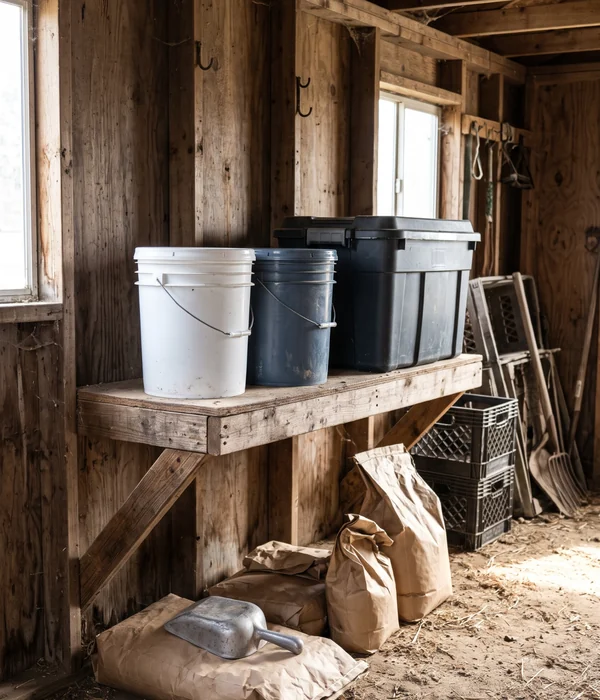
If you have a large amount of feed, try to keep it on shelves or pallets to reduce contact with damp floors.
How to Store Chicken Feed Safely
 Share on Pinterest
Once you have found the right container for your needs, you will want to store your feed correctly.
Keep Feed Cool and Dry
Moisture can cause mold to grow so it is best to keep your feed in a cool, dry place away from direct sunlight.
Even if you have an airtight container it won’t help if your feed was already damp.
Follow First In, First Out
Use older feed first, provided it is still sound and within the manufacturer’s recommended storage period. Open newer bags after using the older supply.
Label your containers with the type of feed and date you bought it or opened it.
If you are taking your feed out of its original packaging keep the manufacturer’s label and batch number.
This could be useful if there is a recall or if you need to look into any issues with the quality of your feed.
Avoid Mixing Old and New Feed
Adding new feed on top of old feed can make it hard to know how long some of your feed has been stored for.
Ideally empty your old feed and clean your container. Only fill once it is completely dry.
This will also give you a chance to check for any insects, damaged seals or moisture.
Keep Different Rations Separate
Don’t mix your feeds. Layer feed, chick starter, scratch and treats all have different purposes.
Scratch is just a treat to supplement their feed and should not be used as a full replacement for balanced layer feed.
See our guide to chicken scratch feed.
If you buy organic chicken feed, retain the label and protect it from contamination.
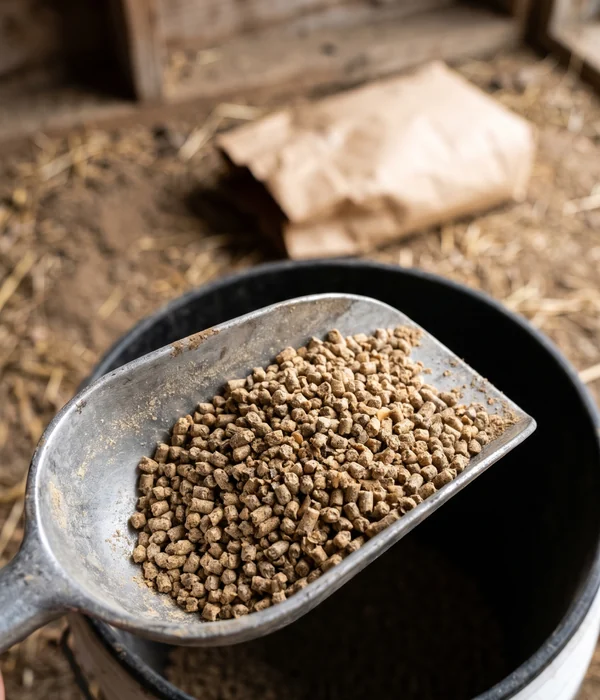
Check for Signs of Spoilage
 Share on Pinterest
Regularly check your feed.
Warning signs include:
- Visible mold or unusual discoloration.
- Smells musty, sour or rancid.
- Clumpy and damp.
- Insects or lots of insects.
- Rodent droppings or signs of chewing.
Don’t feed your chickens any visibly moldy or contaminated feed.
If you find insects in a bag, read our guide to bugs in chicken feed to learn what to check and when to discard the feed.
Common Chicken Feed Storage Mistakes
Leaving Feed Bags Open
Paper and woven feed bags are not designed to keep your feed safe once opened.
Leaving it in an open bag will make it easier for rodents and insects to get to. It can also cause moisture to get in.
A sealed container will add extra protection.
Storing Feed Directly on Concrete
Concrete can cause moisture to get into your bags and containers.
Keeping your feed off the ground on suitable shelving or pallets can help.
Buying More Feed Than You Need
Although buying in bulk can seem cost-effective, poultry feed won’t stay as fresh as you would like.
Vitamins and fats can start to break down. This is especially true in warm and humid conditions.
Only buy what your chickens can eat within the recommended time frame by the feed manufacturer.
The University of Maine Cooperative Extension recommend keeping your poultry feed as fresh as possible and not leaving it for too long, especially in the warmer months.
Reusing Chemical Containers
Never use containers that have previously contained pesticides, fertilizers, fuels or cleaning chemicals.
Even after washing there may still be residues.
Use new suitable containers for food storage or ones that you know have been used safely for food.
Ignoring Spilled Feed
No matter what container you use, if you are spilling feed every day your chickens will have issues with pests.
Keep your feed clean and regularly check.
Our guide to cleaning a chicken coop covers more backyard flock hygiene practices.
How Long Does Chicken Feed Stay Fresh in Storage?
There is no single storage period that applies to every type of chicken feed.
It will depend on several factors such as the ingredients, date of manufacture, packaging, temperature, humidity and if it has been opened.
Keeping it in an airtight container can help to keep it dry and away from pests but won’t stop it from losing nutrients.
Always follow the manufacturer’s instructions on how to store and date your feed.
The University of Maine Cooperative Extension recommends keeping poultry feed as fresh as possible and not storing it longer than one month in summer or two months in winter.
This is just a guideline.
If your feed has gone moldy, smells strange or shows signs of contamination then throw it away.
Keeping your feed in good condition will help your chickens have a balanced diet. However a good container won’t make an unsuitable ration a good one nutritionally.
Frequently Asked Questions
What Is the Best Container for Storing Chicken Feed?
A durable food-grade plastic container with a secure gasket lid would be a good option if you have a dry and rodent-controlled storage room.
If you have a problem with rats and mice then a galvanized steel container with a tight fitting lid would be a better option.
It will depend on where you are storing your feed and how much you use.
Can I Store Chicken Feed in a Trash Can?
If you have a new and clean metal trash can that states it can be used for dry feed storage then this could be a good option.
Choose one with a tight fitting lid and keep it away from the weather. Don’t use a container that has previously been used for trash or chemicals.
Not all trash cans will be food safe.
Does Chicken Feed Need an Airtight Container?
An airtight container would be a good option to help keep your feed dry and away from insects. However you also need to keep it away from heat, rodents, contamination and not leave it for too long.
Can Rats Chew Through Plastic Feed Containers?
Yes, many plastic containers can be chewed through by rats and mice. This includes some heavy-duty storage containers.
If you have a serious rodent issue then a metal container with a securely fitted lid would be a better option.
How Much Chicken Feed Fits in a 5-Gallon Bucket?
This will depend on what type of feed you have. Pellets, crumble, mash or grain.
Due to the different densities you cannot guarantee how much you will get.
A 5-gallon bucket would be more suitable for smaller amounts.
Should I Store Chicken Feed Inside the Coop?
Ideally you would want to keep your feed separate from your chickens. Keeping it in a dry and enclosed room or shed will reduce the chances of attracting rodents directly into your coop and will keep your feed cleaner.
Can I Store Treats and Table Scraps Together?
Dry treats that can be kept on the shelf can be stored in separate labeled containers. However moist table scraps need to be handled differently.
See our guide to feeding table scraps to chickens for safety information.
What Should I Do if My Chickens Run Out of Feed?
Keep enough complete feed for your flock and regularly check how much you have so you are less likely to run out. If you do run out get the right ration as soon as possible. Don’t use treats as a substitute.
See our guide to how long chickens can go without food.
Which Chicken Feed Storage Container Should You Buy?
For most backyard chicken keepers that are storing their feed in a dry building the Gamma2 Vittles Vault would be a great option. The large opening, food-grade material and screw lid makes it a good option.
If you are worried about rodents then the Behrens Galvanized Steel Can would be a better option. The steel will be harder to chew through but won’t be as airtight as some plastic containers.
If you want something that is easy to use then the IRIS USA Rolling Container and Buddeez Roll-Away Dispenser would be useful.
If you have a small flock or different rations the ePackageSupply Bucket, OXO Pet POP Container and Vtopmart Container Set would be a good option.
There is no one container that will do everything. Choose one that will fit with the feed you usually buy, keep your feed safe from the conditions in your storage area and will be easy to open, check and clean.
Remember it is more important to have fresh feed, store it correctly and keep it clean than to have a nice looking container.
How We Selected These Chicken Feed Storage Containers
We have compared the products based on the manufacturer’s specifications, ratings in the market, storage capacity, sealing, suitability for dry poultry feed, portability and practicality.
We have also considered how the design will help to keep your feed safe from moisture, rodents and contamination.
These recommendations are based on research and information available. We have not tested the products ourselves.
Ratings can change so we would recommend checking the current listing on Amazon.
