
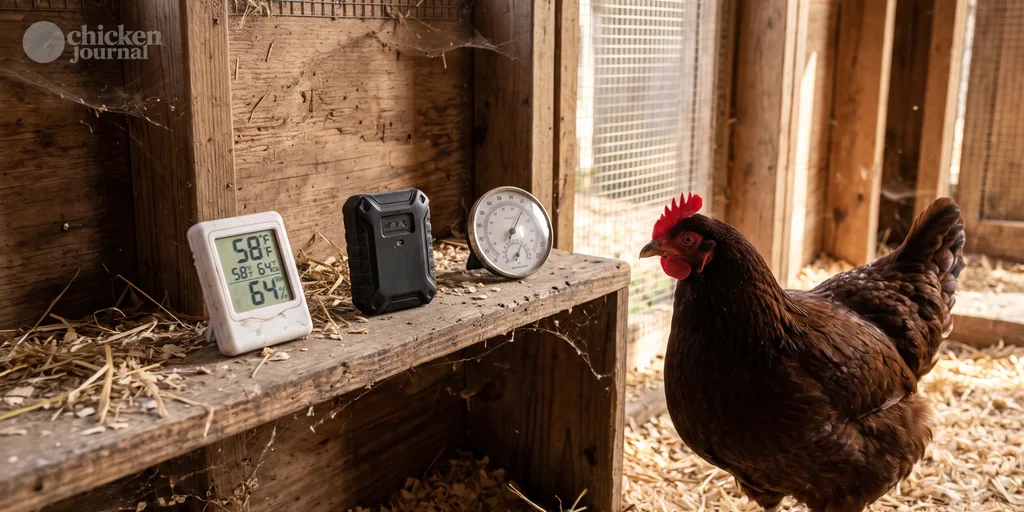
Temperature and humidity in chicken coops can change significantly. If the weather is cold in winter, excess humidity can create issues. This can cause condensation in the coop and damp bedding.
However, if it is very hot in the summer, high humidity in conjunction with high temperatures can become uncomfortable or even dangerous for your chickens.
Having a good thermometer in your chicken coop can be a great addition to helping maintain your flock.
Thermometers can be bought as individual models to show temperature. Humidity meters can be bought to measure relative humidity.
There are models that include both readings, models that can log changes in temperature/humidity over time, or models with Bluetooth capabilities. However, not all thermometers will be suitable for use in chicken coops.
Some thermometers are for dry indoor environments. Others are waterproof, making them better for harsher environments. For long-term moisture control, choosing a coop location with drainage and shade is equally important.
In this buying guide, we have picked 7 different thermometers and humidity meters from 7 different companies. We have focused on practical features, information given by the manufacturers, and significant customer reviews.
There are budget options, Bluetooth-enabled options, waterproof sensors, and multipacks to monitor multiple areas. We’ve also given tips on where to place temperature meters, how to interpret humidity levels, and what features will be useful for backyard chicken keepers.
Why Have a Thermometer & Humidity Meter in a Chicken Coop?
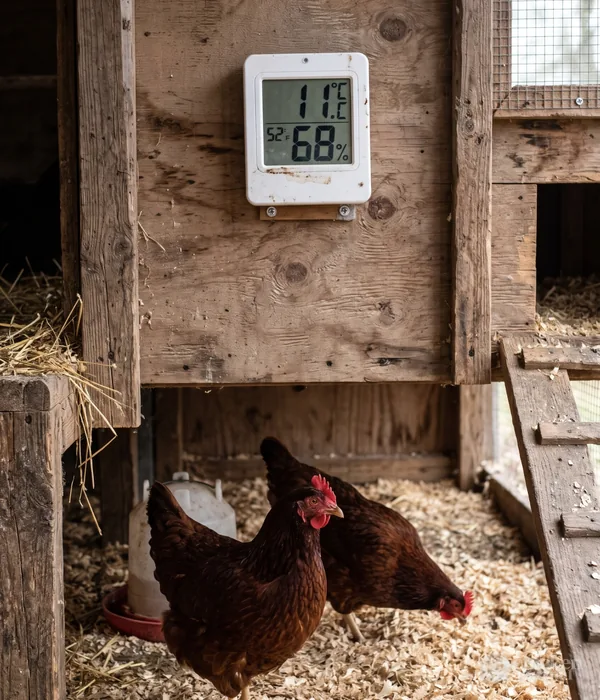
Although chickens are quite adaptable, it is important to ensure they are kept in good conditions. Using a thermometer in combination with a humidity meter will allow you to understand the temperatures and moisture levels in the air.
In cold weather, it is important to manage manure and ensure good ventilation to control humidity levels. Excessive humidity and cold weather can cause condensation and frostbite. For practical airflow improvements, see our guide to chicken coop ventilation.
For cold-weather prevention and warning signs, read about frostbite in chickens. On the other hand, in hot weather, excess humidity can make it difficult for chickens to cool down.
When readings climb in summer, use our chicken heat-stress prevention tips alongside the meter. Therefore, measuring temperature and humidity in the chicken coop can be very useful.
 Share on Pinterest
For more information on ensuring good air flow in your chicken coops, check out our ventilation guide.
What Can You Monitor?
Using a good thermometer or humidity meter can help you monitor:
- How cold the chicken coop gets overnight.
- Increasing temperatures in summer.
- Changes in humidity following rainfall.
- A wet run can contribute to ongoing moisture problems; our muddy chicken run drainage guide explains practical fixes.
- Differences in conditions inside and outside of the coop.
- Differences in temperature between different places.
- Historical data, if available.
- Whether adjustments to ventilation are working.
- If passive ventilation is insufficient during hot weather, compare chicken coop ventilation fans before making changes.
However, these meters will not give you data on ammonia, dust, and CO₂ levels. Good cleaning, ventilation, and observation of chickens are still very important. For daily and periodic hygiene, follow our chicken coop cleaning guide rather than relying on sensor readings.
Top Picks
| Product | Best for | Monitoring | Approx. review score* |
|---|---|---|---|
| SensorPush HT.w | Overall | Temperature and humidity | 4.6/5 |
| Govee H5075 | Smartphone | Bluetooth | 4.5/5 |
| TempPro TP50 | Budget | Local display | 4.6/5 |
| SwitchBot Meter Plus | Large display | Bluetooth; optional hub | 4.5/5 |
| AcuRite 00613 | Simple display | Local display | 4.5/5 |
| Antonki 2 Pack | Multiple locations | Two local meters | 4.5/5 |
| JEDEW 2 Pack | Compact | Two mini meters | 4.5/5 |
Note: Scores shown are approximate. They do not guarantee the scores shown on Amazon.com at the time of purchase. Different variations of each product may receive different scores and may be available in different formats.
1. SensorPush HT.w – Overall Best
As an Amazon Associate I earn from qualifying purchases. This article contains affiliate links. If you buy through these links, I may earn a commission at no extra cost to you.
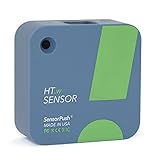
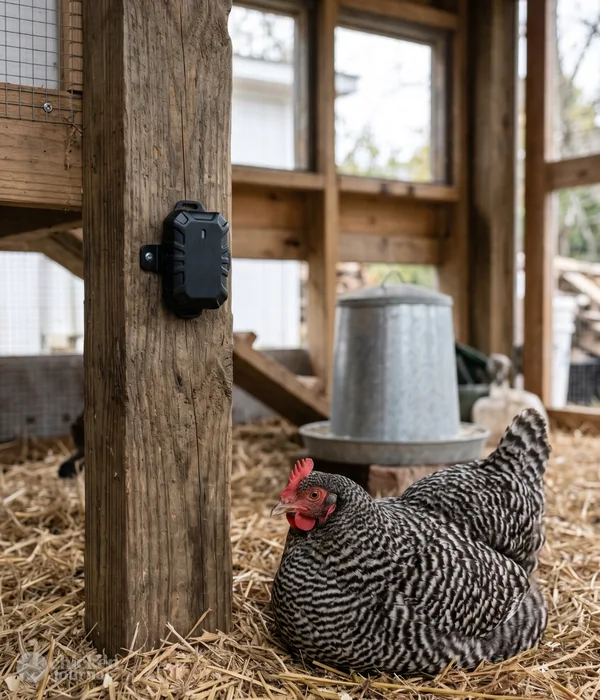
We recommend this SensorPush product for chicken keepers who wish to monitor temperature and humidity in their coops. The main advantage of this product over regular household thermometers is that it is waterproof.
As stated by SensorPush, this thermometer is designed to withstand harsher environments. It should not be submerged in water. It is therefore a good choice for a dry yet protected area in your chicken coops where occasional dampness/condensation may occur.
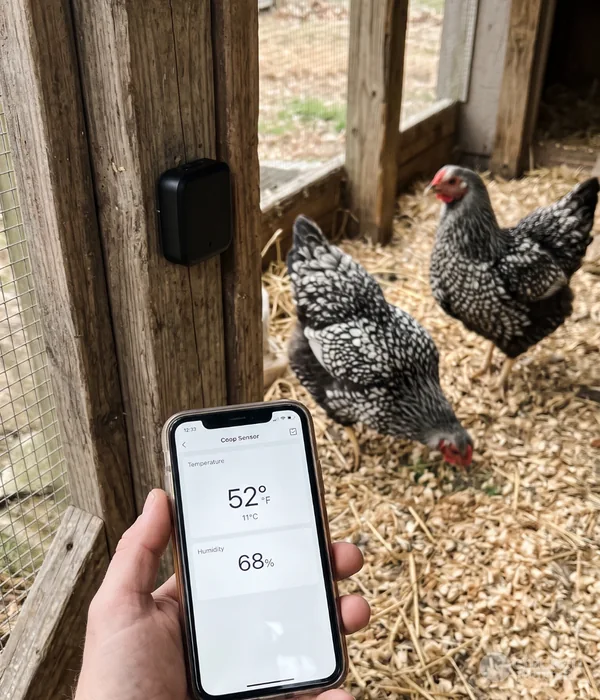
This product can be connected with the SensorPush app via Bluetooth. It allows you to view current temperature and humidity levels, and historical data. In particular, historical data can be very useful during the winter.
When temperatures fall below freezing, monitoring is only one part of winter care; keep drinking water accessible with a suitable heated waterer. See our guide to heated chicken waterers.
 Share on Pinterest
Temperature logs can help with decisions covered in our guide to keeping chickens warm without overheating the coop.
For example, if you check the temperature in your coop at 8am in the morning, you may not know how cold it got during the night (3am).
However, by using historical data, you can get a better idea of temperature changes throughout the night.
Note: This product does not have a screen; you’ll need to use your phone to view temperature and humidity.
If you wish to view this data remotely, a compatible G1 Wi-Fi Gateway can be purchased. This is optional and sold separately.
Pros
- Waterproof—suitable for protected damp areas.
- Measures temperature and relative humidity.
- Can be connected to a phone via Bluetooth.
- Can monitor changes in the environment over time.
- Option to add a Wi-Fi gateway to view remotely.
- Compact.
Cons
- Higher price than basic digital humidity meters.
- No screen.
- To view data from far away, you’ll need to buy an additional gateway.
- Water resistance has limits; follow the manufacturer’s installation guidance.
Best for: Chicken keepers who want to monitor temperature and humidity reliably and can benefit from historical data in coops where dampness may be a consideration.
View SensorPush HT.w on Amazon.com
2. Govee H5075 – Best for Use with Smartphone
As an Amazon Associate I earn from qualifying purchases. This article contains affiliate links. If you buy through these links, I may earn a commission at no extra cost to you.
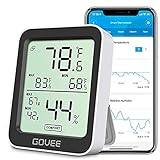
This Govee thermometer and humidity meter is a popular option with Bluetooth capabilities.
 Share on Pinterest
It measures temperature and relative humidity in the air. These readings can be viewed on the LCD screen. This can be connected to the Govee Home app to view historical data and set alerts for certain temperature and humidity levels.
This can be very useful if you are close to the coop and want to monitor your chickens without frequently entering the coop. For example, you could see if humidity levels have increased after the chickens settle in at night.
Data can also be logged and exported from this app.
Note: A limitation to this model.
This model only has Bluetooth capabilities. Therefore, to receive up-to-date readings and alerts, you must be within the range of Bluetooth.
The presence of walls and metal cladding in the coop, as well as other obstructions, may cause the effective range to be less than expected. Although this product is primarily designed for indoor use.
If you install this in a chicken coop, it should be in a consistently dry and protected area. It should be installed within the operational conditions given by the manufacturer.
Pros
- Connectable to smartphone (Govee Home app).
- LCD screen.
- Measures temperature and humidity.
- Historical data and alerts.
- Many customer reviews.
- Generally cheaper than premium sensor systems.
Cons
- No standalone Wi-Fi.
- Bluetooth range may be reduced due to buildings and obstructions.
- Not designed to be exposed to direct rain/water.
- Limited remote monitoring without a different compatible system.
Best for: Backyard chicken keepers wanting to monitor the temperature remotely from a house/yard nearby without purchasing a premium sensor.
View Govee H5075 on Amazon.com
3. TempPro TP50 – Best Budget

As an Amazon Associate I earn from qualifying purchases. This article contains affiliate links. If you buy through these links, I may earn a commission at no extra cost to you.
This is a budget option for temperature and humidity monitoring. It’s very easy to use. Temperature and humidity levels can be viewed on this compact screen. Minimum and maximum readings are also provided.
This can help you understand how conditions in the environment have changed since last checking. This can be very useful in small backyard chicken coops, and you should regularly check on your chickens.
Check the bedding while reading the meter: damp litter can signal a problem that a temperature number alone will miss. See our guide to choosing dry chicken coop bedding.
It is very easy to use. Simply place it in a protected area, and when entering the chicken coop, view the screen.
Combine this with observations of ventilation and bedding. One reason this product may be a good choice is that it has received a large amount of customer feedback.
This product has been found in highly reviewed thermometer/humidity meter products on the Amazon marketplace. However, it should be noted that this product is intended for indoor use.
It should not be placed in an area where it may be exposed to rain, leaking water, or high levels of condensation.
If the sensor area is exposed to leaks, address the building problem before relying on an indoor-only meter. See our guide to repairing leaks in a chicken coop.
If spills are a repeated issue, compare automatic chicken waterer designs that may reduce mess.
Pros
- Budget & easy to use.
- Measures temperature & humidity.
- Minimum and maximum readings.
- No app or Wi-Fi required.
- Many customer reviews.
- Compact.
Cons
- Indoor only.
- No remote monitoring.
- No smartphone alerts.
- Must be viewed in person.
Best for: Dry chicken coops (small in size) where a simple digital thermometer and humidity meter will be sufficient.
Keep readings in context with the condition of your chicken coop bedding.
View TempPro TP50 on Amazon.com
4. SwitchBot Meter Plus – Best Large Display & Smart Home

As an Amazon Associate I earn from qualifying purchases. This article contains affiliate links. If you buy through these links, I may earn a commission at no extra cost to you.
If you want a thermometer with a large display and the option to connect to smart home systems, this product may be a good choice.
Unlike the SensorPush HT.w, this product has a large LCD screen for viewing temperature and humidity. It also includes a basic comfort indicator, to help you understand changes in conditions.
It connects to the SwitchBot app via Bluetooth. This allows you to view historical data and understand changes in temperature and humidity.
Another advantage of this product is that it can connect to a SwitchBot Smart Home system. If you have a compatible SwitchBot Hub, you can receive supported remote monitoring features and automation features.
However, a hub is not included with this product. This product is primarily intended for indoor use. Therefore, to be suitable for a chicken coop, it must be in a dry protected area.
If you have other SwitchBot devices in your home, this product may be very convenient, as it can be added to the same smart home system.
Pros
- Large, easy to read LCD screen.
- Measures temperature and humidity.
- Connectable to App via Bluetooth.
- Historical data.
- Can connect to optional SwitchBot Hub.
- Ideal for existing SwitchBot Smart Home Users.
Cons
- Requires compatible hub for remote functionality.
- Intended for protected indoor use.
- Not designed for direct exposure to rain.
- Includes more features than needed for basic chicken coop monitoring.
Best for: Chicken keepers who want an easy-to-read digital display and possibly want to add smart home monitoring in the future.
View SwitchBot Meter Plus on Amazon.com
5. AcuRite 00613 Digital Thermometer & Humidity Meter – Best Simple Display

As an Amazon Associate I earn from qualifying purchases. This article contains affiliate links. If you buy through these links, I may earn a commission at no extra cost to you.
This is a simple temperature and humidity meter from a well-known weather instrument brand. The main advantage of this product is its simplicity. It can measure temperature and relative humidity in indoor areas.
It has no app or wireless requirements. It also includes a humidity comfort indicator to help you understand if humidity levels are becoming abnormally high or low.
This can be a useful addition to dry chicken coops or feed storage rooms in backyards.
It can also be used as a secondary temperature meter if you already have a wireless monitoring system. This product has received a large amount of customer feedback.
While comparing sensors, also consider practical water management: different chicken waterer designs can help you find an arrangement suited to your coop. However, it is very basic. It is intended for indoor use only.
It does not provide alerts on your smartphone, nor does it provide graphs of historical data. To view data, you must be in front of the meter. It should be protected from water and excess humidity.
Pros
- Simple temperature & humidity meter.
- No app or Wi-Fi required.
- Compact.
- Well known brand.
- Many customer reviews.
- Ideal for basic indoor monitoring.
Cons
- No remote monitoring.
- No app historical data graphs.
- Intended for indoor only.
- Fewer features compared to smart sensors.
Best for: Chicken keepers wishing to have a reliable looking simple humidity meter in a dry protected area.
View AcuRite 00613 on Amazon.com
6. Antonki 2 Pack Room Thermometer & Humidity Meter – Best for 2 Locations

As an Amazon Associate I earn from qualifying purchases. This article contains affiliate links. If you buy through these links, I may earn a commission at no extra cost to you.
This product is a good option if you want to monitor 2 locations. By purchasing this 2 pack, you gain 2 separate temperature and humidity meters.
This can be useful if you want to compare conditions in 2 different areas. Comparing areas is particularly helpful if you use deep litter, where monitoring dampness and bedding condition remains essential.
See our guide to deep litter bedding management. You may want to place one in a dry protected area of the coop, and one in a nearby feed storage area.
Humidity monitoring is also useful when checking for conditions that favor mold in chicken coops and storage areas. Alternatively, you may wish to compare the conditions in 2 protected areas in a larger chicken house.
Each meter has its own temperature and humidity readings. No app, Wi-Fi or subscriptions are required to use this product. This makes it very easy to use for regular checks.
If odors persist despite cleaning, see our discussion of coop deodorizers and odor control; they are not substitutes for ventilation.
This product has appeared with a large amount of customer reviews in available marketplace data. However, these are compact meters intended for indoor use. They should be protected from rain, splashing and consistent condensation.
Pros
- 2 meters.
- Good for comparing 2 locations.
- Measures temperature & humidity.
- Easy to use.
- No app or Wi-Fi required.
- Cheap alternative to multi sensor smart meters.
Cons
- Indoor only.
- No remote alerts.
- No app data logging.
- Each meter must be checked separately.
Best for: Chicken keepers who want to monitor a dry chicken coop and feed room, or for comparing 2 protected areas.
View Antonki Hygrometer 2 Pack on Amazon.com
7. JEDEW 2 Pack Mini Digital Humidity & Thermometer – Best Compact

As an Amazon Associate I earn from qualifying purchases. This article contains affiliate links. If you buy through these links, I may earn a commission at no extra cost to you.
This 2 pack is ideal for chicken keepers with a small space to fit large temperature meters. These mini digital meters can measure temperature and humidity in a small unit.
They are therefore ideal for measuring temperature in protected sections of your coop, feed rooms, or other protected areas. However, a large display may not be convenient in these areas. They can also be used as secondary meters.
For example, if you have a larger meter in your coop, these mini meters may be useful to compare readings in another protected area.
These meters are very easy to use. No app is required. However, the small screen may be hard to read from far away.
Note: Although some of the product listings have indoor/outdoor written in the description, this does not necessarily mean they are waterproof.
Do not expose these mini meters to direct rain, splashing or high levels of condensation, unless it is explicitly stated in the product specifications that they can.
Pros
- Compact.
- 2 meters.
- Measures temperature & humidity.
- No app or Wi-Fi required.
- Useful for secondary measurements.
- Cheap with lots of buyer feedback.
Cons
- Small screen.
- No app historical data.
- No remote alerts.
- Check moisture resistance in product specifications before installing.
Best for: Dry small chicken coops. Or for secondary temperature & humidity meters in compact spaces.
View JEDEW Hygrometer 2 Pack on Amazon.com
Which Thermometer Should I Choose?
Depending on where you would like to install the meter, and how regularly you wish to check the readings, different models may be more suitable.
If dampness may be an issue in your chicken coop, the SensorPush HT.w would be the best option from this list. It has been specifically described as waterproof.
If you want to use a cheaper thermometer with smartphone capabilities, and the area is dry and protected, the Govee H5075 would be a good choice.
If you simply want to check the temperature during feeding and cleaning, the TempPro TP50 provides useful features with no app required.
If you want a larger display or already have SwitchBot products, the SwitchBot Meter Plus would be a good option. If you just want a basic meter, the AcuRite 00613 is very simple.
The Antonki and JEDEW multipacks would be good if you want to monitor more than one location. However, an expensive monitoring system may not necessarily improve the health of your flock.
It is simply important to be aware of abnormal conditions and take the correct action.
Frequently Asked Questions About Chicken Coop Thermometers
Where should I put a thermometer in a chicken coop?
Mount it in a sheltered, well-ventilated area near bird height but out of pecking reach. Keep indoor-only models away from spills, direct sunlight, drafts and condensation. Follow the manufacturer’s installation and operating limits.
Do I need Wi-Fi to monitor coop temperature?
No. Basic digital meters work without an app. Bluetooth models typically need a phone nearby, while remote monitoring usually needs a compatible gateway or hub and reliable connectivity.
What humidity level should a chicken coop be?
There is no single safe percentage for every coop or climate. Consider the reading alongside temperature, ventilation, condensation, bedding dryness, odor and how the chickens behave; prioritize keeping litter dry and air fresh without creating drafts over roosting birds.
Can a thermometer prevent frostbite or heat stress?
No. A meter only provides measurements. Proper ventilation, shade, dry litter, fresh drinking water and prompt attention to distressed birds remain essential.
