
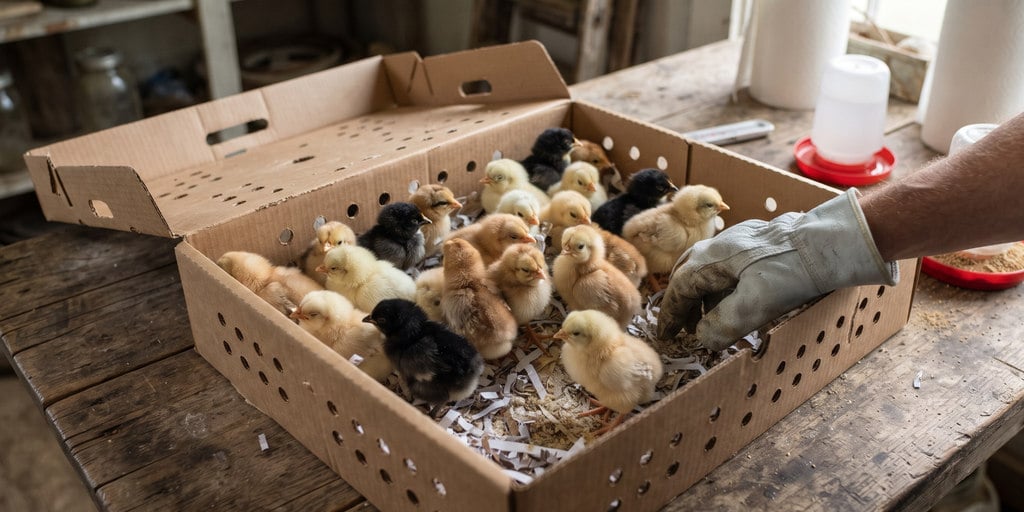
Ordering baby chicks from a hatchery can be convenient, especially when the breed you want isn’t available at your local farm store. If your mail-order chicks are delayed in shipping, it’s natural to worry about their health. Newborn chicks are vulnerable to extreme temperatures, dehydration, and stress.
Many healthy chicks recover from normal shipping stress when they arrive promptly and receive proper care. However, a longer delivery increases uncertainty, and some chicks may need urgent veterinary attention.
This guide explains what to do when mail-order chicks arrive late, how to prepare a brooder, how to care for weak or chilled chicks, and how to monitor your new flock during the first 24 hours.
What to Do if Mail-Order Chicks Are Delayed
- Check the shipment tracking details.
- Investigate the delivery status and anticipated delivery date.
- Inform your local Post Office that the item being shipped contains live baby chicks.
- Notify the hatchery of the late delivery.
- Ask whether the chicks can be picked up at the Post Office.
- Prepare a clean, heated brooder with chick starter feed and water.
- Collect chicks as soon as they are ready.
- Inspect the chicks and then place them into the prepared brooder.
- Carefully monitor the chicks throughout their first 24 hours.
Important: Don’t wait 72 hours before taking action. Contact the hatchery and your local Post Office as soon as you recognize a significant delay.
1. How Long Can Chicks Survive During Shipping?
Day-old chicks are usually shipped soon after hatching, after they absorb nutrients from their yolk. These remaining nutrients support them during the early days of life.
However, that doesn’t mean every chick can survive several days without appropriate water, warmth, and care.
Understanding the USPS 72-Hour Shipping Rule
According to USPS Publication 52, Section 526.3, live day-old poultry can be accepted for mailing when specific conditions are met:
- Chicks must be no more than 24 hours old when accepted for mailing.
- They must be shipped in suitable hatchery containers.
- Containers must allow adequate ventilation.
- The hatch date and hour must appear on the package.
- Delivery must be expected within 72 hours of hatching.
- Shipping must avoid Sunday and holiday delivery restrictions.
The 72-hour window begins at hatching, not when a tracking number is issued. This is a postal mailing condition, not a guarantee that chicks can remain healthy without care for that entire period.
Why late deliveries can be risky
Many factors affect how well chicks cope with being shipped. These include the chicks’ health at the time of shipping, along with temperature, airflow and handling. Furthermore, depending on the season, a shipping may become too cold in winter or too hot in summer.
Furthermore, even chicks shipped together can react differently. Some may be lively upon arrival whereas others may be weak or even be unable to stand. For further information on raising baby chicks please see our raising baby chicks article.
2. Prepare a Brooder
A common mistake is failing to prepare a brooder before the chicks arrive. As well as being affected by a late delivery, chicks can also be affected by the shipping process and so should not need to stay further in their shipping boxes while you prepare a brooder.
Before you go to the Post Office, ensure that your brooder is prepared, clean and suitably heated.
Correct Brooder Temperature
Compared to older chickens, young chicks are not as good at self-regulating their body temperature and so extra heating is required. Typically, for a traditional brooder with top heating, Extension publications advise that the temperature at chick height should initially be around 90-95°F.
There should also be a cooler part of the brooder for chicks to retreat to.
| Chick age | Traditional warm-zone temperature |
|---|---|
| Days 1–7 | 90–95°F (32–35°C) |
| Days 8–14 | About 85–90°F (29–32°C) |
| Days 15–21 | About 80–85°F (27–29°C) |
These are general starting temperatures. Follow your heater manufacturer’s instructions and adjust according to chick behavior. Heat plates operate differently from heat lamps. A radiant plate warms chicks underneath it rather than heating all the surrounding air.
For further information on brooder preparation, temperature and general care please see our brooding article.
Suitable heating
Appropriately installed heating plates or other specifically designed heating appliances can provide suitable heating for recently delivered chicks. Ensure that whatever heating appliance is used is both correctly fitted and working and that it is not placed near to flammable materials.
If you are yet to decide on a heating appliance, our heating plates and lamps for chicks article describes the main options available.
feed and water
Place clean chick feeders and waterers where every chick can reach them. For suitable equipment, see our chicken waterers guide.
Provide suitable chick starter food for the age and type of your birds. Typically, small chick starter crumbles are easier for day-old chicks to eat than larger pellets.
For details of the differences between pellets, crumbles and mash please see our chicken feed types article.
Have a thermometer at the correct height so that you can monitor the brooder temperature before and after chicks arrive. For help choosing a thermometer, see our chicken coop thermometers and hygrometers guide.
3. What to Do if USPS Tracking Indicates a Late Delivery
Late deliveries can occur for a number of reasons including postal issues, weather and processing delays. Sometimes it can be unclear whether a batch of chicks is still in transit or has already been delivered to a local postal facility.
Step 1: Check the Tracking Information
Review the tracking data for your chicks’ delivery. Identify the most recent location details, processing information and any delivery exceptions. Ensure that you have the tracking number to hand when contacting USPS or the hatchery.
Step 2: Contact Your Local Post Office
Call the Post Office that is responsible for delivering your chicks. Tell them that you are awaiting live baby chicks and quote the tracking number. Ask whether your chicks have been delivered, if they are due to be delivered soon and if you can collect them from the Post Office.
Note that not all Post Offices will have identical collection procedures.
Step 3: Notify the Hatchery
As soon as you recognize that there has been a late delivery, contact the hatchery. They may have further information regarding your chicks’ delivery and could have a set procedure for notifying them of delivery issues.
Include your order number, tracking details, anticipated delivery date and any information you have received from USPS.
Step 4: Keep the Brooder Ready
while waiting for chicks to be collected, continue to heat the brooder to the right temperature. Ensure that the heating appliance, thermometer, water and feeders are all working efficiently.
This avoids further delays in chick collection.
4. Collecting Late Baby Chicks from the Post Office
Collect chicks as soon as they are ready. Where possible, avoid extra trips and distractions between collection and getting home.
Inspection
while collecting your chicks, inspect the exterior of their shipping boxes without unnecessarily handling them. Look for:
- Damaged or damaged cardboard.
- Blocked air vents.
- High dampness.
- Unusual smells.
- Evidence of leakage or poor handling.
- Birds that appear weak or distressed through the ventilation openings.
If the shipping boxes appears to be damaged, let postal staff know. Also record details of the issue. Although it is good practice to take photographs, never prioritise this over timely chick care.
Should you open the shipping boxes at the Post Office?
Always adhere to the Post Office’s and hatchery’s guidelines for this. If the shipping boxes seems to be damaged or if chicks appear to be seriously weak, ask staff how best to record this.
Try not to open shipping boxes unnecessarily in public as this may allow chicks to escape or become cold. However, if chicks are in immediate danger, their welfare should be your primary concern. In such cases, consult suitable veterinary advice.
Keep Chicks Comfortable in the Car
Drive straight from the Post Office to where your brooder is situated. Ensure that the temperature of your car is comfortable and that the shipping box is not exposed to direct sunlight, powerful air conditioning or excessive heat.
Never position a shipping box in front of, or against, a heat source. Ensure that there is good airflow and that the shipping box is securely held in the car so that it does not fall or tip over.
5. The First 15 Minutes After Chicks Arrive
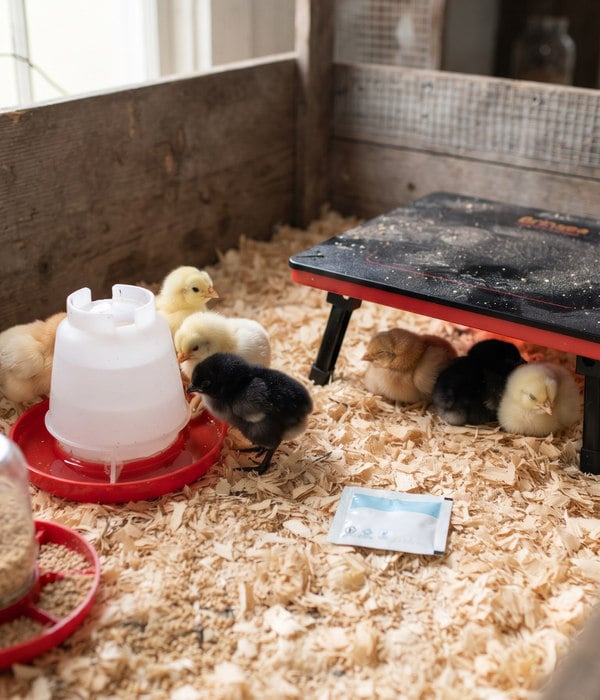
During this time, especially if there was a late delivery, it is important to evaluate chicks, provide suitable heating and ensure that clean water and food are available.
 Share on Pinterest
Step 1 – Transfer chicks to the brooder
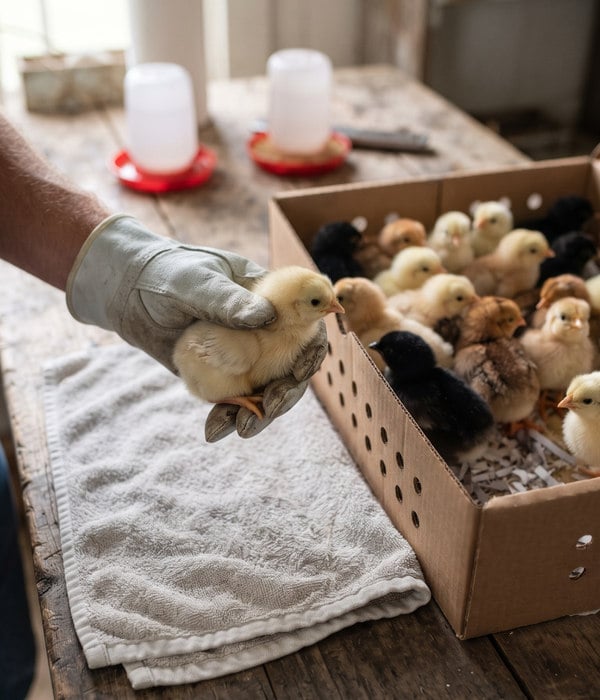
Take the shipping box to where your brooder is. Carefully open the container and inspect each chick. Handle the chicks with care and minimize handling. Look for indications of physical damage, weakness, or irregular breathing. Also check whether chicks are able to stand.
Step 2 – Establish whether chicks are too cold or too hot
Cold chicks may be weak, tend to group together or are less active. Hot chicks may breathe heavily or have their wings away from their bodies. They may also appear to be weak.
As with many other issues, it is important to analyse the whole situation as it may not always be temperature related. Chicks that are severely weak or struggling to breathe need urgent veterinary attention.
Step 3 – Provide suitable heating
Place chicks into the correctly heated brooder. Ensure that they also have access to a cooler area. If a chick is evidently too cold, enable it to slowly warm up in a suitable setting.
Never expose chicks to strong heating sources such as a hair dryer. Also, do not put chicks next to unprotected hot-water bottles. Avoid using improvised heating equipment.
Step 4 – Supply clean water
As soon as chicks are in the brooder, offer them fresh water. If chicks are lively but have not yet located the waterer, lightly touch the tip of their beak to the water in order to show them where it is.
Let the chick drink voluntarily. Never pour water into a weak chick’s mouth or throat. This can cause aspiration. If a chick is very cold, unresponsive or cannot drink then it may need veterinary intervention in order to stabilise it before it is able to drink.
For further information on providing suitable water access please see our fresh water for chicks article.
Step 5 – Offer chick starter food
As soon as chicks are suitably heated and are lively and able to drink, ensure that they can easily access chick starter food. Healthy chicks will often begin pecking at feed shortly after entering the brooder.
Nevertheless, some may need a little extra time to become accustomed to a new environment and to recover from shipping. Never attempt to force-feed an weak chick without veterinary guidance.
6. Evaluating the Health of Shipped Chicks
while some chicks may initially appear fatigued, many will then recover when placed into an appropriately set up brooder. However, other chicks may display signs that indicate that they require medical intervention.
 Share on Pinterest
Below is a table that can be used to help analyse chicks’ health.
| What to check | Encouraging signs | Warning signs |
|---|---|---|
| Activity | Lively and mobile | persistently weak or unresponsive |
| Mobility | Able to stand and walk | Frequently falls over or is unable to stand |
| breathing | Even and comfortable | Gasping, wheezing or labored breathing |
| Peeping | Soft and sporadic sounds | persistently loud and distressing peeping |
| Temperature preference | Alternates between the heat and cooler sections of the brooder | Excessive grouping together or heavy panting |
| Appetite | Displays an interest in food | Frequently refuses or is unable to eat |
| Thirst | Drinks at its own initiative | Unable or unwilling to drink |
| Vent | Clean and unobstructed | Hardened fecal matter around the vent |
| Social behavior | Normal sleeping and interaction | persistently isolates itself and is weak |
| Appearance | Clear eyes and normal body position | Closed eyes, physical damage or extreme weakness |
while one seemingly healthy indicator may be present, this does not necessarily mean that a chick is well. Individual chicks should be assessed, particularly if there was a significant late delivery.
7. Helping Chilled Shipped Chicks
Newly hatched chicks can be especially susceptible to cold. Cold can cause lethargy and affect a chick’s appetite. It can also contribute to weakness.
Signs That a Chick May Be Cold
- persistent grouping together.
- Loud peeping.
- Reduced mobility.
- weakness or inability to stand.
- Lack of interest in food.
- Tendency to stay under the heating source.
As with many other issues, there may be multiple reasons for these symptoms and so temperature should not automatically be considered as the only factor.
How to Help a Cold Chick
Ensure that the brooder heating is working and that the ‘heat area’ is suited to the chick’s age. Enable the chick to slowly warm up and provide a cooler section of the brooder so that it is not overheated.
Do not point a hair dryer or other strong heating source at a chick. Once a chick is lively and can swallow appropriately, ensure that it has access to both fresh water and food.
If a chick is still weak, is unable to stand or is unresponsive then obtain urgent veterinary advice. For further information on reasons why a chicken may be unable to stand or walk please see our chicken can’t stand or walk article.
8. Helping Shipped Chicks That Are Overheated
shipping boxes can become dangerously hot if either the temperature or airflow is unsuitable. Again, chicks can display different symptoms to those associated with cold.
Signs That a Chick May Be Too Hot
- Heavy panting.
- Open-mouthed breathing.
- Wings away from the body.
- weakness or reduced mobility.
- Attempts to move away from heat sources.
- Unusually distressing behavior.
How to Respond
Transfer chicks to a secure and well ventilated brooder with an appropriate temperature range. Eliminate further exposure to heat and ensure that chicks which can drink do so by providing fresh water.
Never immerse chicks in cold water or subject them to abrupt temperature changes. If a chick continues to breathe heavily, collapses or is severely weak then obtain urgent veterinary advice.
For further information on chickens gasping for air please see our chicken gasping for air article.
9. Helping Weak Shipped Chicks That Aren’t Drinking
One of the most worrying situations is when a chick is alive but is unable to drink or move in an appropriate manner.
while the reason for a chick’s poor state can sometimes be hard to determine, similar symptoms can be caused by a variety of issues including cold, heat, dehydration, physical damage, congenital or disease-related factors.
Immediate Evaluation
Establish whether a chick can:
- Stand without support.
- Open its eyes and respond.
- Breathe comfortably.
- Move its head.
- Appears excessively cold or hot.
- Has visible injuries.
- Can swallow.
Ensure that the chick is in a secure and suitably heated environment and then arrange professional assistance for it.
Should You Give Sugar Water?
while some older poultry care advice suggests that sugar water can be beneficial for recently delivered chicks, some commercial hatcheries may also suggest particular hydration products.
However, sugar water should not be used as a replacement for appropriate warmth, clean water, complete chick starter food and veterinary care. Never prepare homemade sugar or electrolyte mixtures unless doing so in accordance with product or veterinary guidance.
Never try to force water or other liquids into a chick’s mouth or throat if it is too weak to swallow normally.
When to Call a Veterinarian
Urgent veterinary advice should be sought if a chick:
- Cannot stand.
- Is unresponsive.
- Cannot swallow.
- Has breathing issues.
- Gradually becomes more weak.
- Does not improve despite rectification of initial environmental concerns.
For further information on reasons why a chicken may refuse to eat or drink please see our chicken not eating or drinking article.
10. Check Each Chick’s Vent After Delivery
Young chicks can sometimes suffer from pasted vents (also known as pasty butt). This occurs when droppings around a chick’s vent hardens and may impede normal fecal excretion.
while shipping stress and environmental change can play a part in causing early pasting, there are a number of potential causes. Signs of pasting include:
- Hard fecal matter around a chick’s vent.
- Straining.
- Discomfort.
- Lethargy.
- Difficulty in excreting droppings.
Action to Take
If a chick’s vent is obstructed by hardened droppings then use a soft cloth and comfortably warm water to help to soften this matter. Only remove the softened fecal matter. Avoid tearing off skin or feathers.
Thoroughly dry the area and then return the chick to an appropriate heating environment. Should the vent still become blocked, if there is tissue protrusion or if a chick remains weak then veterinary advice should be sought.
For details, see our pasty butt in chickens guide.
11. Monitor the Flock During the First 1–3 Hours
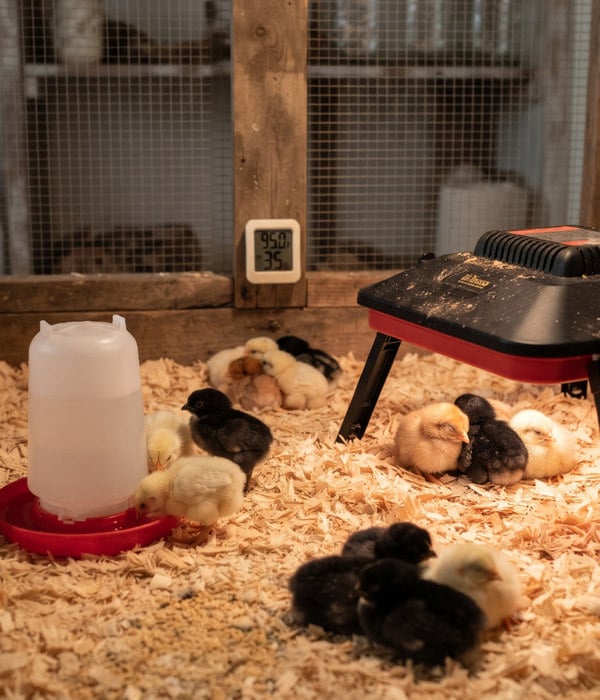
After chicks have been placed in a brooder, it is helpful to observe them with minimal handling. This can help to identify further issues that were not initially apparent.
 Share on Pinterest
Mobility
Healthy chicks should gradually become more mobile when they are awake. They may walk around, explore the bedding, approach the food or rest under the heating source.
Tired chicks may take frequent naps, which can be normal. However, sleeping alone does not explain persistent weakness. However, chicks that are persistently weak or are unable to stand need attention.
Ensure that all chicks can access feed and water
Pay particular attention to the smallest and quietest chicks and confirm that they can reach feed and water without being displaced by more lively individuals. Even if many of your chicks are eating, it is not always the case that all will do so.
Re-check brooder temperature
Observe how the chicks are distributed. Should they persistently congregate in the warmest section of the brooder then they may be too cold or be encountering drafts.
If chicks constantly avoid the heating source and are panting then the brooder may be overheated. With heating plates, chicks may also settle underneath these and intermittently exit this area.
Reduce Unnecessary Stress
Avoid frequently handling chicks, introducing new animals or allowing too many people to gather around the brooder. Allow chicks to become accustomed to their surroundings in a calm setting.
12. The First 6–12 Hours: What to Expect
Once chicks settle in, they should alternate between activity and sleep. They will typically visit the feeder, drink, scratch at bedding, and follow one another. Individuals can vary in their level of activity.
Normal Behavior
- Sleeping.
- Soft calls.
- Eating and drinking.
- Exploring.
- socializing.
- Stretching wings.
- Shifting between hot and cool areas.
Abnormal Behavior
- Constant noisy calling.
- Failure to improve in health.
- Failure or inability to drink.
- Falling frequently.
- Respiratory issues.
- Blocked vent.
- Being isolated and displaying atypical behavior or lack of activity.
Never leave a seriously ill chick unattended in the hope that it will then recover.
Check the Bedding
Ensure that the brooder is clean and dry. Promptly remove damp areas together with any spillages and soiled litter. For bedding options, read our pine shavings for chickens guide.
13. Overnight Care for Delayed Mail-Order Chicks
Even if chicks arrive later than anticipated, they may still require extra care in the evening. Good nighttime care should include suitable heating, airflow and access to water, as well as protection from predators.
Before Nighttime
Ensure that:
- The heating system is working.
- The brooder provides a good temperature range.
- All chicks can access water.
- Suitable chick feed is available.
- Bedding is clean and dry.
- No chicks are stuck or are persistently being pecked.
- The housing is secure.
How Often Should You Check Your Chicks?
while a set checking frequency does not exist, healthy chicks housed in a good quality brooder will usually require regular checking. However, flocks which include unwell or stressed chicks will often need more frequent checking. Veterinary advice may also be required.
while a temperature probe or video camera can be of assistance in identifying changes in the environment, physical examination of an ill appearing chick is still essential.
If it is not possible to provide suitable evening care then suitable alternative arrangements should be made.
14. The Next Morning: A 24-Hour Chick Health Check
By the following morning you should have a clearer understanding of how your flock is faring. Healthy chicks should be able to eat, drink, move around, and rest comfortably.
However, just because chicks have survived the previous evening does not necessarily mean that they are all well.
24-Hour Health Checklist
| Health check | What to look for |
|---|---|
| Alertness | Awake and responsive |
| Walking | Can stand and walk |
| Water | Drinks voluntarily |
| Feed | Eats starter feed |
| Breathing | No persistent gasping or obvious breathing difficulty |
| Vent | Clean and unobstructed |
| Droppings | No persistent watery or bloody droppings |
| Temperature | Has warmer and cooler areas |
| Social behavior | No persistent bullying or isolation |
| General condition | No progressive weakness |
Record unusual behavior so you can describe it accurately to a veterinarian or hatchery representative.
15. Continue Monitoring Chicks After Delivery
Issues arising from initial stress, poor diet or unwellness may not always be apparent immediately. Continue to check on chicks daily for a number of days after they are delivered.
Monitor Growth and Feeding
Identify and pay particular attention to chicks which are significantly smaller or less active than the rest of the flock. while a smaller size does not automatically equate to poor health, slow growth combined with poor health or poor eating behavior should be investigated.
For more information, see our nutritional deficiencies in chickens guide.
Watch for Respiratory Problems
Chicks can display a number of respiratory related issues including sneezing, coughing or nasal or throat discharge. They may also exhibit atypical breathing or be less active.
Although dust and initial shipping stress can often be responsible for such issues, this is not always the case. persistent respiratory related issues should be discussed with a poultry veterinarian.
For warning signs, see our chicken sneezing and coughing guide.
Watch for Unusual Head or Neck Movement
If a chick displays atypical head placement, persistent poor coordination or has difficulty in maintaining a typical neck position, then veterinary advice should be sought.
There are a number of reasons why these issues can occur. Learn more in our wry neck in chickens guide.
Keep the Brooder Clean
Remove damp bedding. Frequently clean waterers and ensure that feed is not contaminated. These cleaning principles also apply to poultry housing. See our chicken coop cleaning guide.
16. Protect Your Household From Salmonella
healthy-looking backyard poultry can still carry Salmonella. According to the CDC, poultry and poultry related items should not be present within areas of the home used for living or food preparation.
Neither children under the age of 5, nor the elderly or those with compromised immune systems should come into direct contact with poultry. Always thoroughly wash hands with soap and water after handling poultry or poultry equipment.
17. Keep New Mail-Order Chicks Separate From Your Flock
Yes, new chicks should be separated from existing adult poultry. Aside from differing housing, temperature and dietary needs, newly arrived chicks are also at risk of harm, aggression and disease if introduced directly into an adult flock.
Use Separate Housing
Provide a secure housing area fitted with suitable facilities for the age of the chicks. Ensure that feeders, waterers and bedding are all clean. Do not share soiled housing, feed or water equipment between new and more mature poultry.
Practice Biosecurity
Wash hands after handling poultry and its housing. Use separate footwear or other suitable measures when moving between different housing areas. Despite initial good health, do not mix new chicks with an existing flock.
Our backyard chicken biosecurity guide explains ways to reduce disease risks.
18. Prevent Problems With Future Mail-Order Chick Shipments
Although it is not always possible to avoid late deliveries, good planning can help to minimize avoidable risks.
Choose a Reliable Hatchery
When choosing a hatchery, ensure that it provides information relating to:
- Types of poultry and availability.
- Hatching and delivery dates.
- expected shipping arrangements.
- Weather related delivery limitations.
- Loss notification processes.
- Health and vaccination details.
- Customer care for late deliveries.
Also, ask as to whether the hatchery is part of, and the relevant disease categorisations for, the National Poultry Improvement Plan (NPIP). Although membership of NPIP is valuable information, it should not be considered as evidence that all poultry are free from all diseases.
Consider the Weather
Both excessive heat and cold can increase the risk of issues during delivery. ask of the hatchery as to whether anticipated weather conditions are suitable for delivery.
Avoid arranging deliveries at times when you know that you will not be able to collect chicks promptly.
Confirm Pickup Arrangements
Before placing an order, investigate how your local Post Office manages the collection of live poultry. Ensure that the hatchery has your correct phone number and mailing address.
Also, ensure that you have a suitable method of transport to the Post Office so that you can collect chicks as soon as they are available.
Keep Essential Supplies Ready
Prior to the anticipated delivery date, ensure that you have:
- A heating source for the brooder.
- A suitable thermometer.
- Chick feed.
- Clean, safe waterers.
- Appropriate bedding.
- Secure housing for the brooder.
- An alternative heating source or re-housing plan.
- Details of a local poultry veterinarian.
Good forward planning is a simple way of minimizing avoidable stress for chicks following an adverse delivery experience.
19. When to Call a Veterinarian About Delayed Chicks
As previously mentioned, shipping related stress can mimic unwellness. In some instances, it may also not be possible to recognize issues simply by observing chicks.
Seek immediate veterinary advice for chicks which:
- Cannot stand or walk.
- Are unresponsive.
- Experience severe respiratory issues.
- Are unable to swallow.
- Suffer from serious injuries.
- Display seizures, paralysis or severe poor coordination.
- Have a severely blocked vent and are also unwell.
- Are rapidly worsening in health.
Also, seek early veterinary advice for chicks which persistently refuse to eat; have poor water intake; fail to gain strength; or display persistent atypical droppings.
If a number of chicks suddenly become heavily unwell or die, then urgent veterinary or animal health advice should also be sought. For routine flock monitoring, see our keeping chickens healthy guide.
20. Mail-Order Chick Arrival Checklist
This list can be referred to when anticipating a delivery from a hatchery.
Before Pickup
- ☐ Review delivery tracking information.
- ☐ If delivery is running late, contact the USPS.
- ☐ Inform the hatchery of any issues.
- ☐ Ensure that the brooder is set up and check its temperature.
- ☐ Fill clean feeders and waterers.
- ☐ Arrange transport to the Post Office.
At Pickup
- ☐ Confirm that the delivery is ready for collection.
- ☐ Examine the delivery box for any visible damage.
- ☐ Notify the hatchery of any delivery issues where necessary.
- ☐ Ensure that chicks have good air flow and are comfortable.
- ☐ Immediately take the chicks home.
During the First Hour
- ☐ Carefully place chicks into the brooder.
- ☐ Check for signs of injury, cold, heat and poor health.
- ☐ Ensure that fresh water is available.
- ☐ Provide complete chick starter feed.
- ☐ Confirm that all chicks can access warmth, feed and water.
During the First 24 Hours
- ☐ Monitor activity levels and breathing.
- ☐ Check water and feed intake.
- ☐ Examine the vent of each chick.
- ☐ Ensure that bedding remains dry.
- ☐ Look for signs of aggressive behavior and isolation.
- ☐ Notify the hatchery of any delivery losses.
- ☐ Seek veterinary advice for any chick displaying serious health issues.
21. Frequently Asked Questions
How long can Mail-Order baby chicks survive without food or water?
Although newly hatched chicks can continue to benefit from nutrients still present in the yolk, several factors will affect their survival. Unfortunately, there is no universally safe timescale for how long chicks can survive without food or water. USPS guidelines stipulate that the mailing must be expected to reach the recipient within 72 hours of hatching. However, this does not necessarily ensure that chicks will remain well for this length of time.
What Should I Do if USPS Delays My Chicks?
Review tracking information. Contact your local Post Office. inform the hatchery of the late delivery. Find out whether it is possible to collect chicks from the hatchery and ensure that your brooder is set up ready for chicks so that you can provide care for them as soon as they arrive.
Can Baby Chicks Survive Three Days in Shipping?
Some chicks may be able to, but others can become seriously ill or even die. Factors affecting this include the chick’s age, initial health status, environment and handling. Late deliveries (those nearing or exceeding the usual shipping timescale) should be regarded as urgent.
Should I Give Newly Arrived Chicks Sugar Water?
Fresh, plain water should be available for chicks to drink as soon as they are alert and able to. Although some care guidelines suggest that sugar water or electrolyte products can be beneficial in particular situations, this is not universally applicable. Do not make or administer your own solutions and, in particular, do not attempt to force-feed a seriously ill chick as it may not be able to swallow.
Why Are My Mail-Order Chicks Sleeping So Much?
Alongside naturally occurring frequent napping behavior, chicks can become tired following delivery. However, if a chick is difficult to arouse, cannot stand or refuses to eat or drink, it may be unwell. Assess its general health status.
What if My Shipped Chicks Arrive Very Cold?
Transfer them to a properly prepared brooder and enable them to slowly warm up. Do not apply strong heat sources and avoid forcing-feedings weak chicks. Seek urgent veterinary advice for chicks which remain unresponsive, cannot stand or continue to worsen in health.
Why Are My Newly Arrived Chicks Constantly Peeping?
Constant noisy calling can be an indication that chicks are cold, hungry, thirsty, feel isolated or are unwell. Investigate the brooder environment, and ensure that both feed and water are accessible. Also assess the health of the individual chick.
Can I Open the Chick Shipping Box at the Post Office?
Adhere to both Post Office and hatchery guidelines. If you suspect that a delivery has been damaged or that chicks were unwell, ask Post Office staff how best to record this information. minimize chicks’ exposure to extreme temperatures and ensure that they are not at risk of escaping.
What if One Chick Is Weak but the Others Are Healthy?
Assess this chick’s temperature, ability to stand, breathing and access to water. Protect it from aggression and ensure that it receives suitable warmth. If the unwell chick does not improve or is unable to drink or stand, then seek early advice from a poultry veterinarian.
Should I Quarantine New Mail-Order Chicks?
Newly delivered chicks should be isolated as they have differing housing, temperature and dietary requirements. They may also pose a disease risk. Good hygiene and biosecurity practice should also be implemented. Consult a poultry veterinarian regarding suitable isolation and then re-integration procedures for new chicks.
How Soon Should Newly Shipped Chicks Start Eating?
As soon as new chicks are housed in an appropriate brooder they should have access to suitable feed and fresh water. Some will begin to eat soon after delivery, but others may take longer as they recover from the delivery process. If a chick is unwell or is unable to eat or drink then it should be assessed promptly.
When Can Mail-Order Chicks Go Outside?
This will depend on a number of factors including a chick’s age, level of feather development, outdoor temperature and weather conditions, as well as available shelter. Generally, newly delivered chicks will not yet require outdoor housing and will still benefit from being housed in a brooder. Our [moving chicks outdoors guide](https://chickenjournal.com/introducing-chicks-outdoors/) explains how to plan the transition.
Final Thoughts
Unexpected late deliveries of Mail-Order Chicks can cause considerable concern. This is further compounded if some chicks are unwell or are otherwise uncomfortable. Good pre- and during-delivery planning is fundamental. Additionally, a prompt response to late deliveries is important.
Notify the USPS and hatchery. Arrange early collection and ensure that a properly prepared brooder, along with suitable heating, clean water and full feed, is available.
Following delivery, closely monitor chicks’ health. Avoid excessive handling. Pay particular attention to those which are unwell, unable to drink or who are experiencing respiratory issues, as well as to those displaying atypical behavior.
Through good pre- and post-delivery planning, many chicks can effectively adapt to their new surroundings. Nevertheless, never assume that a seriously ill chick will automatically recover simply through allowing additional time to do so. Potentially crucial veterinary advice may be required.
