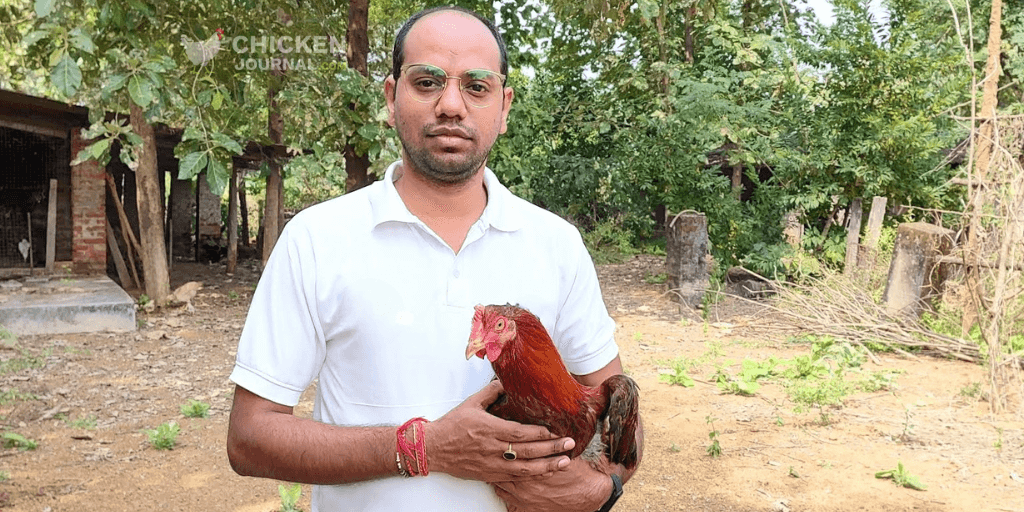

The Swedish Flower Hen is a colorful Swedish landrace chicken known for white-tipped “flowered” plumage, good foraging ability, a calm temperament, and useful egg production. What makes this chicken especially interesting is that it was never shaped into one tightly standardized show look. Variation is part of the breed’s history.
One Swedish Flower Hen may be dark with bold white mottling, another may be reddish or yellowish, and another may carry blue-gray tones. Some birds even have a crest. That diversity is not a flaw that breeders need to eliminate. It is one of the things conservationists are trying to preserve.
For a backyard keeper, Swedish Flower Hens offer a nice middle ground. They are larger than many decorative breeds, active enough to enjoy free-ranging, and capable of giving you a reasonable number of eggs without being a specialized production hybrid.
Swedish Flower Hen Quick Facts
| Trait | What to expect |
|---|---|
| Swedish name | Skånsk blommehöna |
| Origin | Skåne, southern Sweden |
| Type | Swedish landrace chicken |
| Hen weight | About 2–2.5 kg (4.4–5.5 lb) |
| Rooster weight | About 2.5–3.5 kg (5.5–7.7 lb) |
| Egg production | About 150 eggs per year as a traditional benchmark |
| Egg weight | Roughly 45–70 g |
| Egg color | Cream/off-white to light brown |
| Sexual maturity | Around 20 weeks, with individual variation |
| Broodiness | Variable |
| Temperament | Generally calm, alert and good at foraging |
| Crest | May be crested or non-crested |
| APA recognized? | No, not currently listed as an accepted APA breed |
| Conservation status | Endangered in Nordic conservation reporting |
What Is a Swedish Flower Hen?

The Swedish Flower Hen is best understood as a landrace, not a modern standardized breed created to match one exact exhibition ideal.
Landrace chickens develop over generations in a particular region while people select them mainly for usefulness and survival rather than for a narrow show appearance. The Swedish Association for Local Poultry makes an important distinction here: a landrace “framework” documents the natural variation already found in the population. It is not the same thing as a show standard describing one ideal bird.
That is why Swedish Flower Hens can look surprisingly different from one another while still belonging to the same historic landrace.
History: From Three Farm Flocks to a Living Gene Bank
The most reliable history is simpler, and more interesting, than many of the stories repeated online.
Swedish conservation sources trace today’s Skånsk blommehöna to surviving farm flocks in the villages of Vomb, Tofta and Esarp in Skåne, southern Sweden. By the 1970s, the old farmyard population had declined so badly that it was close to disappearing.
Those remaining flocks became the foundation for conservation work. In 2001, the Swedish Board of Agriculture granted the Swedish Flower Hen gene-bank status, and the Swedish Association for Local Poultry now manages the living gene-bank program.
This is important context if you buy them today. Swedish Flower Hens are not simply “pretty spotted chickens from Sweden.” They are part of an active effort to protect a native genetic resource.
How Rare Are Swedish Flower Hens?
They are still considered at risk in conservation reporting.
NordGen’s Nordic farm-animal genetic-resources report lists Skånsk Blommehöna as endangered. The DAD-IS population figure used in that report was 957 registered birds in 2021, down from higher counts earlier in the decade.
That number refers to the Swedish conservation population in the reporting system, not every Swedish Flower-type bird kept around the world. Still, it shows why conserving broad genetic diversity matters more than chasing one fashionable color.
When Did Swedish Flower Hens Reach the United States?
The breed is much newer in North America than it is in Sweden. Greenfire Farms documented Swedish Flower Hen chicks hatching from imported stock in November 2010 and described them at the time as among the first Swedish Flower chicks hatched on U.S. soil.
Since then, the birds have spread through specialty breeders in the United States. Because the American population began with imported stock and remains relatively uncommon, buying from breeders who understand line diversity is preferable to choosing birds only because one color happens to look attractive.
Colors and the “Flowered” Pattern
No two Swedish Flower Hens need to match.
The Swedish Association for Local Poultry describes base colors that can include black, blue-gray, wild-type reddish or brown tones, and light yellowish shades. Skansen also notes black, brown, red, yellow and grayish-blue combinations.
The feature that ties many of these birds together is the white at the tips of the feathers. Against a darker or warmer base color, those white tips create the scattered floral look that gave the landrace its name.
You will sometimes see people call this “Mille Fleur.” Visually, there can be a resemblance to millefleur-type mottling, but Swedish Flower Hen is not one standardized Mille Fleur variety. The natural range of colors and patterns is much broader.
I would also be cautious with breeder-made names such as “snow leopard” unless the seller clearly explains that it is a descriptive marketing name rather than an official Swedish landrace variety.
Crested and Non-Crested Swedish Flower Hens
Some Swedish Flower Hens develop a tuft or fuller crest on the head, while others are completely non-crested. Both appearances occur within the historic landrace.
That is another good example of why you should not expect every bird to look identical. If you are buying breeding stock for preservation rather than simply keeping a few pets, variation deserves to be maintained thoughtfully instead of automatically bred out.
Swedish Flower Hen Size and Appearance

This is a fairly substantial farm chicken. Swedish sources describe it as the largest of Sweden’s native landrace chickens.
- Hens: about 2–2.5 kg (4.4–5.5 lb)
- Roosters: about 2.5–3.5 kg (5.5–7.7 lb)
The body is rounded and robust rather than narrow and highly refined. Most have a red single comb with the usual serrations, clean legs, and an alert farmyard stance.
Leg, eye and plumage details can vary. That is exactly why fixed internet claims such as “every Swedish Flower Hen has bright yellow legs” are too rigid for this landrace.
Swedish Flower Hen Eggs

For a traditional landrace rather than a modern production hybrid, Swedish Flower Hens are useful layers.
Skansen gives a traditional figure of about 150 eggs per hen per year. Individual hens can lay more or less depending on age, season, daylight, diet, broodiness and the particular family line.
Eggs range roughly from 45 to 70 grams. Swedish landrace references describe shell color from off-white or cream through light brownish shades.
Young pullets naturally begin with smaller eggs. Egg size generally increases as the hen matures, but no diet will turn every bird into a guaranteed extra-large-egg layer. Feed should support normal development and shell quality, not force an egg size beyond the hen’s genetics.
When Do Swedish Flower Hens Start Laying?
Skansen lists sexual maturity at about 20 weeks. That is a useful benchmark, not a deadline.
A pullet raised through short winter days may start later. Another that reaches good body condition during longer spring or summer days may start earlier. I would not worry about a healthy pullet simply because she did not lay at exactly 17 or 20 weeks.
Are Swedish Flower Hens Broody?
Broodiness varies. That is the safest and most accurate answer.
Swedish conservation sources specifically note variation in the hens’ tendency to brood. Some may sit readily, while others show little interest in incubating eggs.
I would not use a fixed claim such as “only one-third of Swedish Flower Hens go broody.” There is too much variation between lines and individuals to turn broodiness into a reliable percentage.
If natural hatching is important to you, choose breeding stock from a family where broodiness and mothering behavior are already known rather than assuming the landrace as a whole will behave one way.
Temperament and Personality
Swedish sources describe these birds as calm, and that fits their reputation as practical farmyard chickens.
They tend to be active without being frantic. Given room, they spend a lot of time scratching, exploring and looking for food. Birds raised around people can also become quite comfortable with routine handling.
I would stop short of promising that every Swedish Flower Hen will follow commands, love being picked up, or ignore loud noises. Chickens are individuals. Early handling, flock dynamics and the temperament of the parent stock all matter.
If a gentle family flock is your priority, you can compare them with the birds in my friendliest chicken breeds guide.
Free-Range and Foraging Ability
This is one of the areas where the landrace background shows.
Swedish Flower Hens generally enjoy ranging and searching for food. In a safe area, that natural activity gives them exercise and lets them pick up insects, greens, seeds and other forage.
Foraging should still be treated as a supplement to a complete ration. Free-ranging does not guarantee the correct balance of amino acids, vitamins, minerals or calcium for a laying hen.
And do not rely on mottled plumage as predator protection. Their colors may blend into vegetation better than bright white feathers, but hawks, foxes, raccoons, dogs and other predators still require real fencing and secure nighttime housing.
Feeding Swedish Flower Hens
Feed them according to age and production stage rather than trying to create a special “Swedish Flower” diet.
Chicks need a complete starter ration. Growing pullets need a suitable grower or developer feed. Once hens are laying, a complete layer ration should make up most of what they eat.
Offer treats in moderation, especially if the flock free-ranges and already finds plenty of extras. A hen can fill up on scratch, table scraps or forage while still missing the balanced nutrition needed for steady laying and good body condition.
For a broader feeding plan, see my guide to feeding chickens.
Grit, Oyster Shell and Calcium
Grit and oyster shell do different jobs.
Insoluble grit helps the gizzard grind whole grains, fibrous plants and other coarse foods. Birds that eat only finely milled complete feed may need less supplemental grit than birds that forage and eat whole grains.
Oyster shell is supplemental calcium for laying hens. It supports shell formation but does not replace grit.
I prefer offering oyster shell separately to laying hens and providing appropriately sized grit when the diet and foraging conditions call for it.
Housing and Space
Swedish Flower Hens are not tiny chickens, so give them normal large-fowl space rather than squeezing them into a compact bantam setup.
Around four square feet of indoor coop space per adult is a reasonable backyard starting point when birds also have a good outdoor run. More room is useful whenever you can provide it, especially during long periods of bad weather when chickens spend extra time inside.
Ventilation belongs high on the priority list. Fresh air should move out moisture and ammonia without putting the birds in a direct cold draft while they roost.
For planning a new setup, see my guide on how much space chickens need.
Cold and Hot Weather Care
A landrace from southern Sweden has a long history in a cool climate, but that does not mean you should attach an invented “ideal temperature range” to it.
In winter, focus on a dry coop, good ventilation, unfrozen water and protection from wind. The single comb can still suffer frostbite during severe cold, especially when humidity inside the coop is high.
I would not routinely heat an adult flock with an exposed heat lamp. A dry, well-designed coop is safer and usually more important than trying to keep the building warm.
Summer needs the opposite approach: shade, moving air and plenty of cool clean water. Watch for panting, lethargy, wings held away from the body and reduced feed intake during hot spells.
Health and Lifespan
Swedish Flower Hens have a reputation for hardiness, but “landrace” does not mean disease-proof.
They can still develop the same problems seen in other backyard chickens, including mites, lice, internal parasites, respiratory disease, injuries, nutritional deficiencies and reproductive disorders.
Good care is pleasantly ordinary: clean water, balanced feed, dry bedding, good ventilation, predator protection and enough daily observation that you notice when one bird starts eating less or standing apart from the flock.
Skansen lists the Swedish Flower Hen lifespan as up to 10 years. I would treat that as a possible upper lifespan rather than promise that every hen will average 10 years. Predators, disease, genetics, reproductive health and management have a much bigger effect on what happens in an individual backyard flock.
Breeding Swedish Flower Hens Without Losing the Landrace

This is where owning a landrace is different from owning a highly standardized show breed.
If preservation is your goal, selecting every generation toward one narrow color can work against the historic diversity you are trying to keep. The Swedish conservation system uses a breed framework that records natural variation rather than defining one perfect exterior.
Choose vigorous, healthy birds that fit the known landrace characteristics. Keep records, avoid excessive inbreeding, and when possible maintain more than one male family rather than building the entire flock around a single fashionable rooster.
If you are in the United States, ask breeders where their stock came from and how they manage relatedness. “Rare color” is much less important than healthy birds and sensible genetic diversity.
Is the Swedish Flower Hen Recognized by the APA?
No. The Swedish Flower Hen is not currently listed among the American Poultry Association’s accepted breeds and varieties.
You may see “Swedish Flowers” in APA show-report statistics. For example, a Swedish Flower was reported at an APA show in 2023. That does not mean the landrace has been admitted to the Standard of Perfection. Exhibition appearance and official breed recognition are different things.
Pros and Cons of Swedish Flower Hens
- Beautiful natural variation: flock members can look strikingly different from one another.
- Useful body size: larger than many ornamental breeds without being a specialized meat chicken.
- Reasonable egg production: around 150 eggs per year is a useful traditional benchmark.
- Good foragers: well suited to keepers who can provide safe outdoor access.
- Generally calm: a practical temperament for many backyard flocks.
- Conservation value: keeping genetically thoughtful lines can help maintain a rare historic landrace.
- Not a maximum-production layer: commercial hybrids will usually lay far more eggs.
- Broodiness is unpredictable: do not choose them solely because you want a guaranteed broody hen.
- Not APA standardized: unsuitable if your main goal is breeding to an APA Swedish Flower standard that does not currently exist.
Frequently Asked Questions
Why is it called a Swedish Flower Hen if there are roosters too?
“Swedish Flower Hen” is simply the English breed name commonly used for the landrace. The population includes both hens and roosters. The Swedish name is Skånsk blommehöna.
How many eggs do Swedish Flower Hens lay?
About 150 eggs per year is a useful traditional figure from Swedish sources. Individual production varies with age, season, diet, daylight, broodiness and genetics.
What color eggs do Swedish Flower Hens lay?
Expect cream, off-white or lightly brown-tinted eggs rather than blue or green eggs.
How big are Swedish Flower Hens?
Hens are roughly 4.4–5.5 pounds, while roosters are about 5.5–7.7 pounds according to Swedish breed-conservation references.
Are Swedish Flower Hens cold hardy?
They developed in southern Sweden and generally handle cool conditions well when they have a dry, well-ventilated coop. Their single comb can still get frostbite in very cold, damp conditions.
Do all Swedish Flower Hens have crests?
No. Both crested and non-crested birds occur within the landrace.
Are Swedish Flower Hens broody?
Some are and some are not. Swedish sources describe broodiness as variable, so a fixed percentage is not reliable.
Is Swedish Flower Hen an APA-recognized breed?
No. It does not currently appear on the APA accepted breeds and varieties list, even though individual Swedish Flowers may appear at poultry shows.
Is a Swedish Flower Hen Right for Your Flock?
Swedish Flower Hens make the most sense for someone who enjoys a chicken that still looks and behaves like an old farmyard landrace.
You get useful eggs, a respectable adult size, good foraging behavior and a flock where individual birds are easy to tell apart. What you do not get is a perfectly uniform color pattern or the production numbers of a commercial layer.
That lack of uniformity is part of the appeal. If you decide to breed them, resist the temptation to turn the whole flock into one fashionable look. Healthy variation is one of the reasons this rare Swedish landrace survived in the first place.
Sources
- Skansen: Swedish Flower Hen
- Svenska Lanthönsklubben: Swedish Native Chickens and Skånsk Blommehöna
- NordGen: Nordic Farm Animal Genetic Resources Conservation Status
- American Poultry Association: Accepted Breeds and Varieties
- Greenfire Farms: Early U.S. Swedish Flower Hen Hatch Documentation